


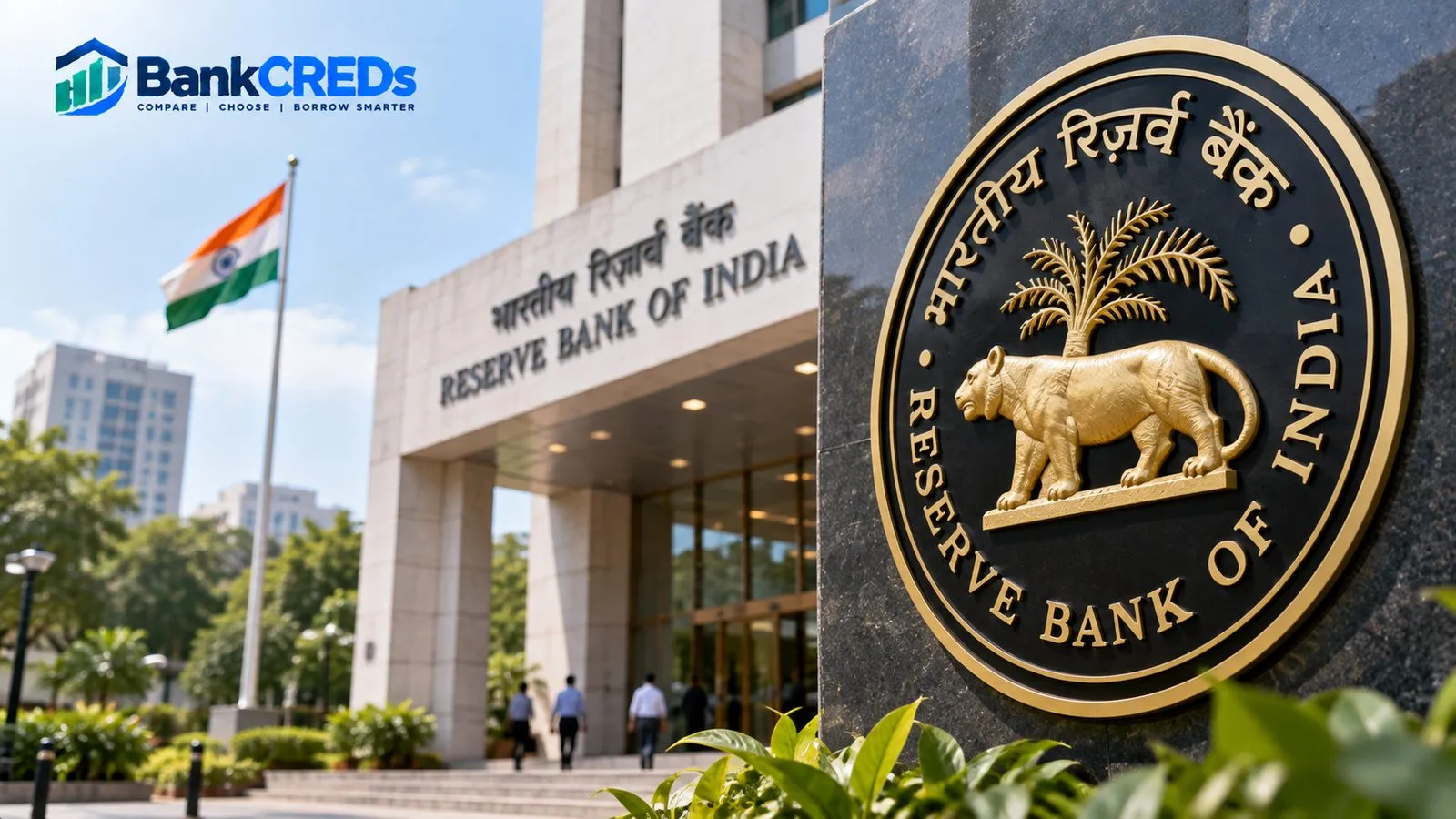
The Reserve Bank of India has reportedly moved to fix clear accountability on regulated lenders for decisions made by digital lending algorithms, according to reporting by Whalesbook. In plain terms: if an algorithm approves, prices, or rejects your instant loan or personal loan application, the bank or NBFC behind it — not just the app on your phone — will now have to answer for that decision.
Whalesbook's report frames this as an extension of RBI's ongoing push to bring machine-driven credit decisions under the same supervisory standards as manual underwriting. For borrowers, that generally translates into more disclosure around why an application was declined or priced a certain way, and a clearer path to complain when something looks off.
The report we're working from is a headline-level account, so we don't have the specific clauses, deadlines, or penalty structure RBI may have attached to this move. What follows is grounded context: how RBI's existing digital lending framework already treats algorithmic decisions, what tighter accountability typically looks like in practice, and what you should actually do differently as a borrower or someone comparing loan offers today.
Key takeaways
- RBI has reportedly acted to hold lenders directly accountable for decisions their digital lending algorithms make, as reported by Whalesbook.
- Accountability sits with the regulated bank or NBFC behind a lending app — the algorithm or its technology vendor doesn't get a free pass.
- This builds on RBI's existing Digital Lending Guidelines, which already require the regulated entity to remain the "principal" in any lending arrangement, even when tech is outsourced.
- Expect more disclosure around rejection reasons and pricing logic, plus a clearer grievance-redressal trail, rather than a change in who qualifies for a loan.
- Instant loan and personal loan apps that rely heavily on algorithmic underwriting are the most directly affected category.
- Comparing your eligibility and current interest rates before applying remains the most reliable way to protect yourself from opaque pricing.
Why RBI is tightening the screws on algorithmic lending
RBI's approach to digital lending has generally followed a "same activity, same risk, same rules" principle: whether a loan is sanctioned by a loan officer reading a file or a model scoring a data feed, the underlying obligations to the borrower don't change. Since 2022, RBI's Digital Lending Guidelines have required that the regulated entity — a bank or an NBFC — remain the principal party in any digital lending arrangement, even when a fintech lending service provider (LSP) handles the customer-facing app, sourcing, or scoring.
Under that framework, regulated entities are already expected to disclose a Key Fact Statement (KFS) with the all-in cost of the loan, appoint a grievance redressal officer, and ensure that outsourcing a function — including credit scoring — does not dilute their responsibility for the outcome. A push toward stricter "accountability for algorithms" reads as a natural tightening of that same principle: if a model, rather than a person, is making the call, the license holder must still be able to explain, defend, and where necessary reverse it.
How your instant loan or personal loan is actually scored
Most digital lending algorithms today combine a few standard inputs:
- Your credit bureau score and repayment history across existing loans and cards.
- Bank statement or UPI transaction analysis to estimate real cash flow, beyond what a payslip shows.
- Income multiples and existing debt obligations, used to cap the loan amount offered.
- In some instant loan products, alternate data such as utility bill payment patterns or app-based behavioural signals.
These inputs feed a risk model that sorts applicants into tiers, and that tier typically drives three things at once: whether you're approved, how much you're offered, and what interest rate or processing fee you're charged. Two applicants asking for the same loan amount can walk away with meaningfully different offers purely because the algorithm scored their risk differently — which is exactly the kind of black-box outcome that stricter accountability rules are aimed at.
What changes for borrowers under stricter accountability
If RBI is indeed formalising accountability for lending algorithms, borrowers should reasonably expect changes along these lines:
- Clearer reason codes — a decline should come with a substantive reason rather than a generic "not eligible at this time."
- A human escalation path — access to a grievance officer or an appeals process, not just an in-app chatbot loop.
- An auditable decision trail — the lender should be able to reconstruct why a specific applicant got a specific outcome if challenged, either by the customer or by RBI.
- Vendor accountability — where a bank or NBFC outsources scoring to a third-party fintech, the regulated entity remains the one liable to you and to the regulator, not the technology vendor.
None of this necessarily makes loans easier or harder to get. It mainly changes how defensible the decision has to be, and who is on the hook for defending it.
Worked example: how risk-based pricing changes your EMI
To see why algorithmic pricing actually matters in rupee terms, consider a ₹5,00,000 personal loan over a 3-year (36-month) tenure, priced at three illustrative risk-based rate bands typical of the current market. These are standing market rate ranges used for illustration, not figures tied to this specific RBI development.
| Risk tier (illustrative) | Typical annual rate band | Approx. EMI on ₹5,00,000 / 36 months* |
|---|---|---|
| Low risk — strong bureau score, salaried, existing banking relationship | ~10–12% | ≈ ₹16,100–₹16,600 |
| Medium risk — thin credit file, moderate score | ~15–18% | ≈ ₹17,300–₹18,100 |
| Higher risk — new-to-credit, gig income, short-tenure instant loan apps | ~20–24% | ≈ ₹18,600–₹19,700 |
*EMI calculated using the standard reducing-balance formula. Actual offers depend on the specific lender, tenure, processing fees, and any prepayment charges — always confirm with an EMI calculator before signing.
The gap between the lowest and highest tier here works out to roughly ₹3,000–₹3,600 extra per month, or well over ₹1 lakh across the loan's life, purely from how the algorithm classified the applicant's risk. That's the exact decision accountability rules are meant to make explainable rather than arbitrary.
Who is affected — and who isn't
- Directly affected: banks, NBFCs, and their partner lending apps that use algorithmic underwriting for instant loans and personal loans.
- Less affected: products priced mainly against collateral value rather than a behavioural risk score, where the algorithm's role in pricing is smaller.
- Outside RBI's reach entirely: unlicensed lending apps operating without a bank or NBFC backing them — a useful reminder to verify who you're actually borrowing from before you accept an offer.
What to do now: a practical checklist
- If you're declined or offered a high rate, ask the lender directly for the specific reason.
- Check your eligibility across a few lenders before settling on one app's offer.
- Compare the rate you're quoted against current interest rates for similar loan products.
- Run the full cost — not just the EMI — through an EMI calculator, including processing fees.
- Save your Key Fact Statement and loan agreement; these are your reference if you need to dispute a decision later.
- If unresolved, escalate to the lender's grievance redressal officer, and then to the RBI Ombudsman for Digital Transactions if needed.
Common mistakes borrowers make — and the road ahead
- Accepting the first offer an app shows without checking whether a bank or another NBFC would price the same loan lower.
- Comparing a quoted "flat rate" instead of the effective annual percentage rate (APR), which is almost always higher.
- Ignoring processing fees and prepayment charges, which can meaningfully change the true cost even when the headline rate looks attractive.
- Assuming the app you downloaded is the actual lender, when in many cases it's merely the front end for a regulated bank or NBFC behind it.
Expect accountability measures like this to roll out gradually, with disclosure and grievance-handling changes likely visible before any dramatic shift in approval patterns. Keep an eye on the news section for follow-up reporting as more concrete details of RBI's move emerge.
Frequently asked questions
Does this RBI move affect loans I've already taken?
Based on what's been reported, this appears to be forward-looking, targeting how algorithmic decisions are made and disclosed going forward. Your existing loan agreement terms don't change automatically, but you can still raise a grievance with your lender if you believe your loan was priced unfairly.
Will my loan application get rejected more often now?
Not necessarily. Accountability rules are primarily about explainability and audit trails, not about making eligibility criteria stricter. A clean credit history and complete documentation remain your best lever either way.
Are instant loan apps treated differently from personal loan products here?
Not fundamentally — both typically rely on algorithmic underwriting, so both fall under the same accountability expectations as long as a regulated bank or NBFC stands behind the product.
What can I do if I think an algorithm unfairly rejected or overpriced my loan?
Request the specific reason from the lender in writing, escalate to its grievance redressal officer if the explanation is unsatisfactory, and approach the RBI Ombudsman for Digital Transactions if the issue remains unresolved.
How do I check if I'm being offered a fair rate?
Compare the quoted rate against current interest rates for similar loan amounts and tenures, verify your eligibility with more than one lender, and use an EMI calculator to see the true monthly and total cost before accepting.
BankCreds analysis
Read past the headline, this looks less like a new rulebook and more like RBI closing a loophole that was mostly theoretical anyway. Regulated entities were already on the hook for KFS disclosure and grievance handling; what changes is enforcement teeth on the scoring model itself, not the borrower's odds of approval.
Who this actually helps
The real beneficiaries are thin-file and gig-income borrowers whose applications get bounced around between lenders with wildly inconsistent reasoning. Consider someone applying to five instant-loan apps in a month after one rejection, hoping a different algorithm scores them better. Each application typically triggers a hard credit bureau inquiry, and multiple inquiries in a short window can shave 15-25 points off a CIBIL score — enough to tip a borrower from a medium-risk pricing band into a higher one on their next application, adding a percentage point or two to whatever rate they eventually get. If clearer reason codes let a borrower actually identify the fixable problem (say, credit utilization above 50%) instead of blindly reapplying, that's a real saving — not in the rejected loan, but in the next one.
Who doesn't gain: anyone expecting looser underwriting or lower headline rates. Accountability rules change who has to defend a decision, not the risk math behind it. A borrower with a genuinely weak profile will still get priced at the higher end; they'll just get a paper trail explaining why.
What to actually do differently: not much, yet. Until RBI publishes the actual clauses, treat this as a compliance-side development. Keep doing what already worked — pulling your own bureau report before applying, comparing KFS-disclosed all-in costs across three or four lenders rather than accepting the first offer, and avoiding the reapply-until-something-sticks pattern that damages your score faster than any algorithm change will fix it.
The over-reading to avoid: this is not RBI capping interest rates, mandating approval thresholds, or creating a formal appeals tribunal for declined loans. It's a supervisory tightening on an existing principle, arriving in a market where algorithmic personal and instant loans have been standard for years — evolution, not a reset.
This section is BankCreds' own assessment of what the development means for Indian borrowers and savers. It is independent commentary, not part of the source reporting above.
Sources & references
- Whalesbook — originating report https://www.whalesbook.com/news/English/rbi/RBI-Sets-Strict-Accountability-for-Digital-Lending-Algorithms/6aa4854775fe79b492e45f9e
- RBI Master Directions — Supports reference to RBI's Digital Lending Guidelines making the regulated entity the principal party https://www.rbi.org.in/Scripts/BS_ViewMasDirections.aspx
- RBI notifications and circulars — Supports reference to Key Fact Statement disclosure and grievance redressal officer requirements https://www.rbi.org.in/Scripts/NotificationUser.aspx
Source links are shown as plain text, not clickable links. Copy a URL into your browser to read the original report.
Editorial note & disclaimer
How this was reported. The development above is attributed to the source or sources listed. BankCreds does not independently verify a third party's reporting; where a figure or a regulatory position is stated as fact, it is either attributed or drawn from the regulator's own published material. Everything under "BankCreds analysis" is our own assessment.
Rates and figures. Interest rates, per-gram values and premium bands quoted here are indicative, move daily, and differ by borrower profile, city and lender policy. Confirm the final number with the institution before you act on it — the sanction letter or policy schedule governs, not a news report.
Not financial advice. This article is general information for an Indian audience. It is not investment, tax, credit or insurance advice, takes no account of your circumstances, and BankCreds is not a lender, broker, distributor or advisor. Consider speaking to a SEBI-registered investment adviser or a qualified professional before acting.
Editorial policy · Fact-checking policy · Corrections policy · Our authors · About BankCreds · Contact us
Spotted an error? Corrections are published, not quietly edited — write to us via the contact page and see our corrections policy.