
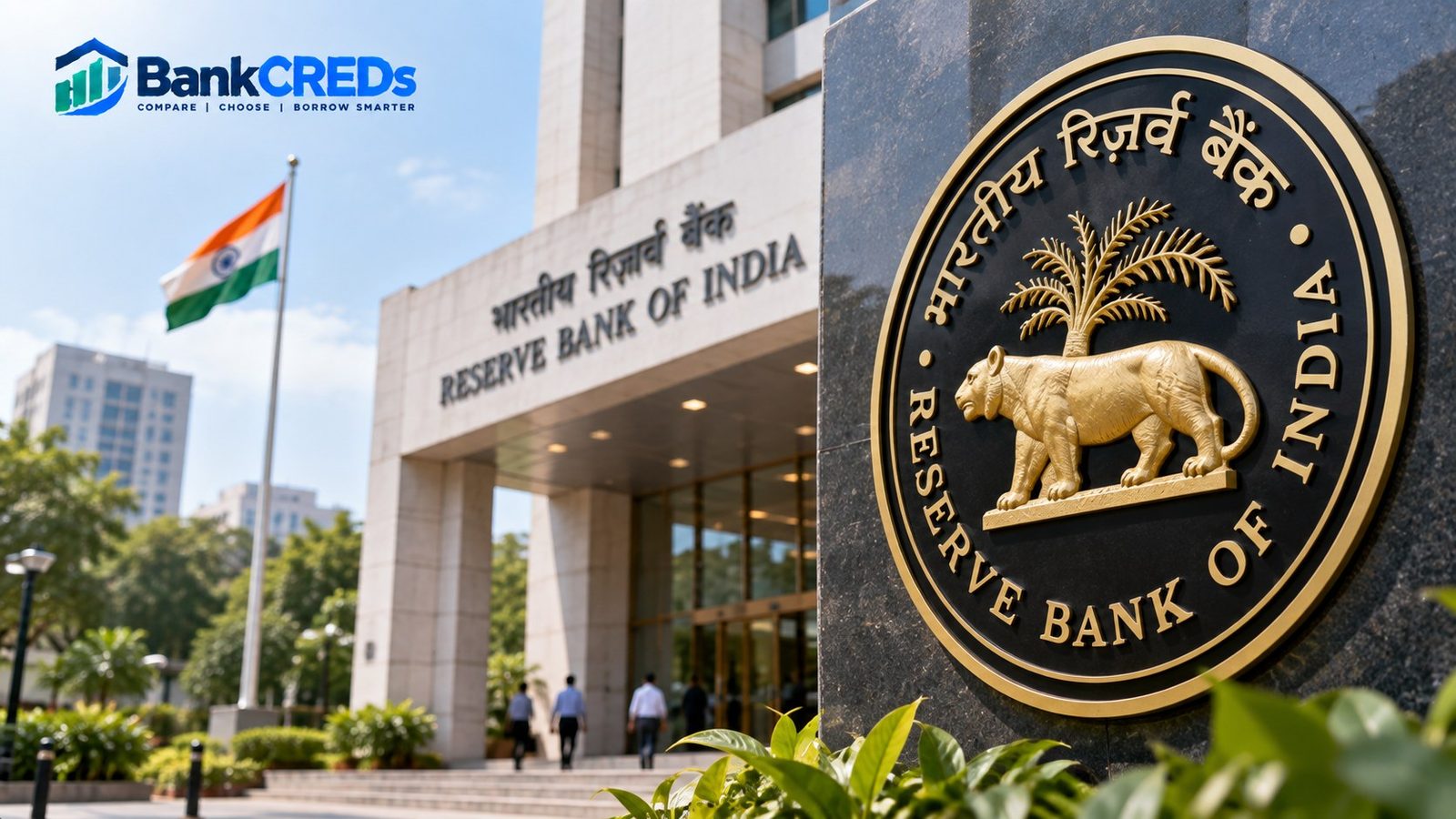
Reserve Bank of India watchers currently believe the central bank has enough headroom to raise its policy rate, but according to reporting by Fortune India, economists expect it to hold off until the next scheduled review in December rather than move at the earliest opportunity. For borrowers, that means EMIs on floating-rate home and personal loans are unlikely to move in the immediate term, but the calculus could change once the December Monetary Policy Committee (MPC) meeting rolls around.
The reasoning, as described in the reporting, is that the RBI has room to act — inflation and growth conditions apparently support a hike — but sees no urgency to do so before its scheduled window. That is a meaningfully different signal than a rate cut or an unscheduled move: it tells savers and borrowers that the direction of travel, if anything, points up rather than down over the next few months.
For a household with a home loan, a credit card balance, or a fixed deposit maturing soon, this is a "watch and prepare" moment rather than a "panic" one. Nothing changes on your EMI or FD receipt tomorrow. What changes is the probability of what happens two to three months from now.
Key takeaways
- Economists cited by Fortune India say the RBI has scope for a rate hike but is unlikely to use it before the December policy review.
- Existing floating-rate home and personal loan EMIs are not expected to change immediately.
- If a hike does come in December, it would hit repo-linked loans (RLLR) faster than MCLR-linked ones.
- Savers with fixed deposits maturing in the next few months may want to watch the December decision before locking into long tenures.
- A 25-50 basis point hike on a large, long-tenure home loan translates into a modest but real monthly EMI increase, not a dramatic one.
- Nothing in the current reporting confirms a hike will actually happen in December — only that economists see room for one.
Where India's policy rate stands right now
The RBI's Monetary Policy Committee meets on a bi-monthly cycle and sets the repo rate — the rate at which the RBI lends to commercial banks — which in turn anchors most floating-rate retail loans in India. Since 2019, most banks price new floating-rate retail loans (home, auto, and many personal loans) off an external benchmark, commonly the repo rate itself, rather than the older MCLR (Marginal Cost of Funds based Lending Rate) system. That means repo rate changes now transmit to borrower EMIs faster and more directly than they used to.
When the RBI moves the repo rate up or down, banks are required to reset their repo-linked lending rates within a defined interval, and your EMI (or loan tenure, depending on how your bank structures the reset) adjusts accordingly. The mechanics of how banks must implement this transmission sit within the RBI's master directions framework, which is worth knowing if your bank is slow to pass on a rate benefit or unusually quick to pass on an increase.
Why economists see room for a hike, but not urgency
A central bank typically has "room" to raise rates when inflation is tracking above its comfort zone, when growth data can absorb tighter credit conditions without stalling, or when global rate cycles make holding rates unchanged risky for the rupee and capital flows. Fortune India's reporting frames the current view among economists as exactly this kind of scenario — conditions technically support a move.
But "room to hike" is not the same as "reason to hike immediately." Central banks generally prefer to act at scheduled review dates unless there is a shock that demands an emergency move, since unscheduled changes tend to unsettle bond and currency markets more than they help. That is consistent with the reported expectation that the RBI will wait for its December review rather than act sooner.
Why the December policy meeting is the one to watch
The MPC's calendar typically runs on a bi-monthly rhythm, which is why a hike being "possible but not immediate" points economists toward the next scheduled window later in the year rather than an inter-meeting move. A bi-monthly cycle doesn't guarantee a hike will materialize in December — it simply means that is the next formal opportunity for the RBI to act if it chooses to, and the timing this reporting flags as more likely.
Until then, existing loan pricing, deposit rates, and lending benchmarks stay where they are unless an individual bank moves independently on its own spread or margin — something banks can technically do even without an RBI move, though it's less common outside of a broader rate-cycle shift.
What a repo rate move would mean for your home and personal loan
If the RBI does raise the repo rate in December, the impact would not be identical for every borrower:
- Borrowers on repo-linked loans (most home loans sanctioned since 2019) would see their lending rate reset within the interval specified in their loan agreement, typically within a quarter.
- Borrowers still on older MCLR-linked loans would see slower transmission, since MCLR resets on the bank's own internal review cycle.
- Fixed-rate loans (common for smaller personal loans and some gold loans) would be unaffected until renewal or refinancing.
- New borrowers taking a loan after a hike would simply see a higher starting rate quoted to them.
If you're unsure which benchmark your loan sits on, your sanction letter or latest statement will specify it — worth checking now, before any change happens, using an EMI calculator to see how sensitive your specific loan is to a 25 or 50 basis point move.
What it means for savers and fixed deposit holders
Banks tend to move deposit rates in the same broad direction as the repo rate, though not always in lockstep and without a formal obligation to do so — deposit pricing is more a function of each bank's own funding needs. If a hike materializes in December, savers renewing fixed deposits after that point could see marginally better rates than those locking in today. That's a reasonable argument for shorter-tenure FDs or a laddered approach over the next couple of months rather than a large lump sum locked into a long tenure right now — though it cuts both ways if the hike doesn't happen, since early lock-ins would have looked smarter in hindsight.
Worked example: EMI impact of a possible rate hike
To put the stakes in perspective, consider a home loan of ₹40 lakh over a 20-year (240-month) tenure. Using a standard reducing-balance EMI formula and an illustrative starting rate in the range banks currently quote a well-qualified borrower, here is roughly how the monthly EMI would move under different hike scenarios:
| Scenario | Illustrative rate | EMI on ₹40 lakh / 20 years | Change vs current |
|---|---|---|---|
| No change (current) | 8.50% | ~₹34,710 | — |
| +25 bps (quarter-point hike) | 8.75% | ~₹35,350 | +₹640/month (~₹7,700/year) |
| +50 bps (half-point hike) | 9.00% | ~₹35,990 | +₹1,280/month (~₹15,400/year) |
These figures are illustrative — your actual rate, sanction terms, and reset timeline will differ by lender and by when you took the loan. But the pattern holds broadly across loan sizes: a 25-50 basis point move is a real but manageable increase for most salaried borrowers, not the kind of shock that should drive a refinancing decision on its own. Run your own loan's numbers through an EMI calculator rather than relying on a generic example.
What to do between now and December
- Check whether your existing loan is repo-linked or MCLR-linked — this determines how fast any December move would reach your EMI.
- Run your own numbers through an EMI calculator at both a 25 bps and 50 bps higher rate so a possible increase isn't a surprise.
- If you're shopping for a new home loan or personal loan, compare current interest rates across lenders now, since a hike, if it comes, would apply to fresh sanctions too.
- If you have a fixed deposit maturing in the next two to three months, consider a shorter renewal tenure so you're not locked in if deposit rates improve after December.
- Avoid making a large prepayment or refinancing decision purely on rate-hike speculation — wait for the actual MPC outcome before committing to structural changes in your loan.
Common mistakes to avoid
- Treating "room for a hike" as confirmation of a hike — the reporting describes a possibility economists see, not a decision the RBI has announced.
- Assuming every loan resets at the same speed — MCLR-linked loans lag repo-linked ones by design.
- Overreacting by prepaying large amounts now out of fear, when a 25-50 bps move is a modest EMI change for most borrowers.
- Ignoring the deposit side of the story — a rate-hike cycle is generally good news for new FD investors, even as it's a mild headwind for borrowers.
Frequently asked questions
Will my home loan EMI go up immediately after this news?
No. This reporting describes what economists expect the RBI to do at its December review, not a rate change that has already happened. Your EMI only moves if the RBI actually raises the repo rate and your bank resets your lending rate accordingly.
What is a repo-linked lending rate, and how do I know if I have one?
It's a loan pricing benchmark tied directly to the RBI's repo rate, used for most floating-rate retail loans sanctioned since 2019. Check your loan sanction letter or latest statement — it will name the benchmark, repo-linked or MCLR, your rate is based on.
Should I switch to a fixed-rate loan now to avoid a possible hike?
Fixed rates are usually priced higher than floating rates to compensate the lender for taking on rate risk, so switching purely on speculation about a December hike is rarely worth it for a 25-50 bps move. It's a decision better made on your broader risk tolerance and loan tenure than on a single news report.
Will fixed deposit rates rise before December?
Not necessarily. Banks can adjust deposit rates independently of the RBI's policy calendar based on their own funding needs, but a broad repricing of FD rates is more likely to follow an actual MPC decision than to run ahead of it.
What happens if the RBI doesn't hike rates in December at all?
Nothing changes for existing borrowers or savers — loan and deposit pricing stays on its current track. Economists' expectations are not guarantees, and the MPC's actual decision depends on the inflation and growth data available closer to the meeting.
BankCreds analysis
The headline detail worth sitting with is "may wait till December" — not "will hike in December." That six-to-eight-week gap between room existing and a decision being taken is where most of the anxiety around rate-hike news is misplaced. For a household with a ₹40 lakh, 20-year home loan, the realistic outcome range is somewhere between no change and roughly ₹1,000-1,300 more a month — noticeable, but not the kind of shift that should trigger panic prepayment or a scramble to refinance today.
What this doesn't mean
It does not mean home loan rates are about to spike sharply, and it does not mean the RBI has committed to anything. "Room to hike" describes macro conditions — inflation and growth data allowing tighter policy — not a forecast of central bank intent. Indian retail borrowers have seen this pattern before: an RBI with policy space that chooses to hold for one or two more cycles before acting, or that never acts at all if incoming data softens. Reading this as an imminent EMI shock overstates what economists are actually saying.
Who benefits from this window: borrowers with variable-rate loans who use the next two to three months productively — paying down high-cost debt, building a small EMI buffer, or comparing lenders before any repricing — come out ahead regardless of what December brings. Who is worse off if a hike does land: borrowers who are already stretched on EMI-to-income ratio, since even a modest 25-50 bps move eats into a thinner margin for them than for a comfortably placed borrower.
The more useful signal for savers is on the deposit side, which gets less attention in hike-speculation coverage. If the RBI's bias genuinely is upward heading into next year, savers holding cash for a large FD are arguably better served waiting for December than locking into a multi-year tenure now — a small opportunity cost against a modest potential upside. That said, this is a rate-cycle nuance, not a reason to delay meaningfully needed liquidity decisions.
This section is BankCreds' own assessment of what the development means for Indian borrowers and savers. It is independent commentary, not part of the source reporting above.
Sources & references
- Fortune India — originating report https://www.fortuneindia.com/personal-finance/banking/rbi-policy-room-for-a-rate-hike-but-may-wait-till-december-say-economists/159631
- Reserve Bank of India — Repo rate and Monetary Policy Committee framework https://www.rbi.org.in/
- RBI Master Directions — Governs reset intervals and transmission rules for external benchmark-linked lending rates https://www.rbi.org.in/Scripts/BS_ViewMasDirections.aspx
Source links are shown as plain text, not clickable links. Copy a URL into your browser to read the original report.
Editorial note & disclaimer
How this was reported. The development above is attributed to the source or sources listed. BankCreds does not independently verify a third party's reporting; where a figure or a regulatory position is stated as fact, it is either attributed or drawn from the regulator's own published material. Everything under "BankCreds analysis" is our own assessment.
Rates and figures. Interest rates, per-gram values and premium bands quoted here are indicative, move daily, and differ by borrower profile, city and lender policy. Confirm the final number with the institution before you act on it — the sanction letter or policy schedule governs, not a news report.
Not financial advice. This article is general information for an Indian audience. It is not investment, tax, credit or insurance advice, takes no account of your circumstances, and BankCreds is not a lender, broker, distributor or advisor. Consider speaking to a SEBI-registered investment adviser or a qualified professional before acting.
Editorial policy · Fact-checking policy · Corrections policy · Our authors · About BankCreds · Contact us
Spotted an error? Corrections are published, not quietly edited — write to us via the contact page and see our corrections policy.