
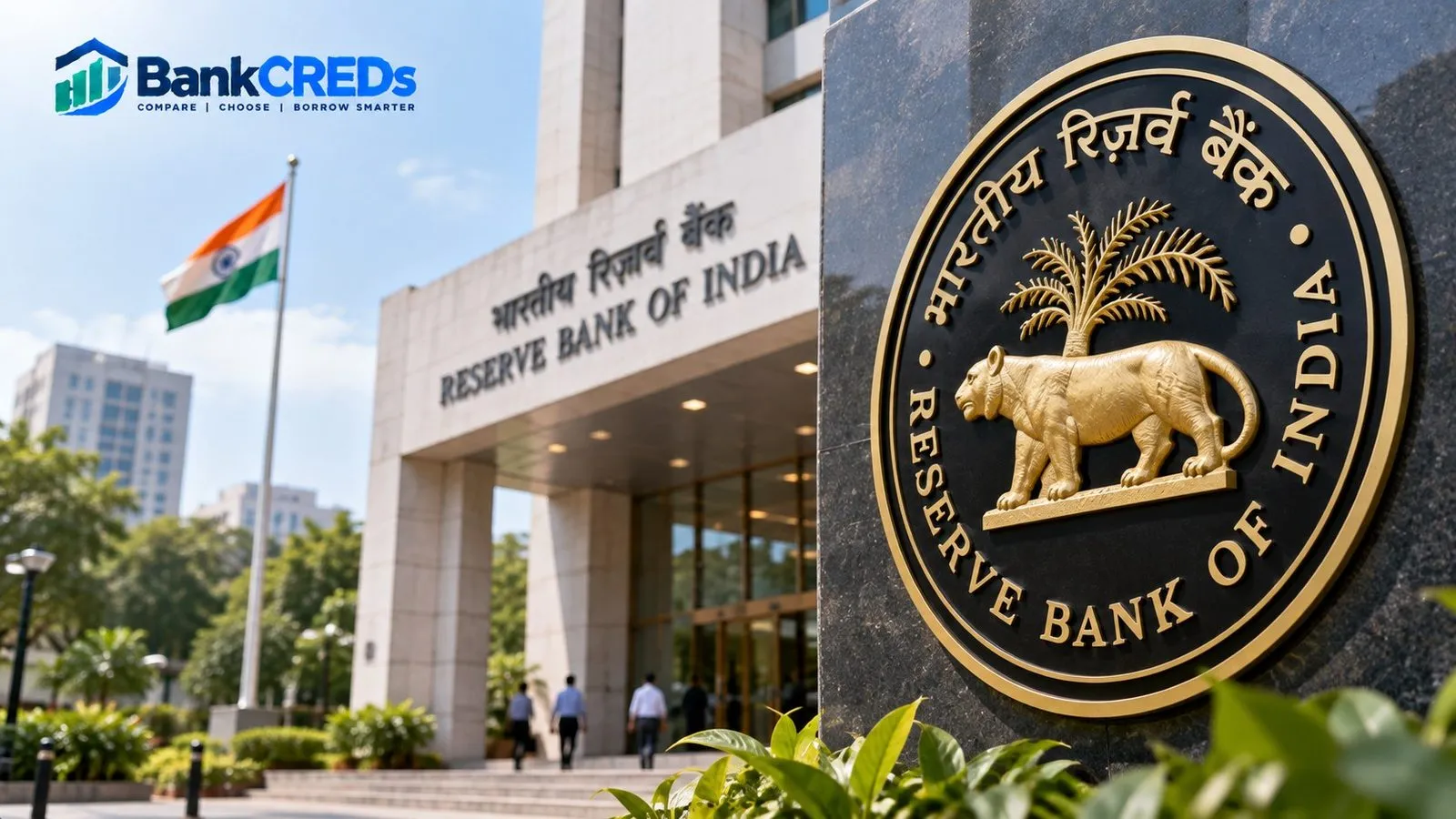
A record $127 billion has been drawn into Indian banks through a scheme run by the Reserve Bank of India, according to reporting by BW Businessworld. For ordinary savers and borrowers, the direct effect is limited: more money in the banking system generally eases funding pressure on banks, but it does not by itself change your fixed deposit rate or your EMI.
What matters to you is how banks respond. Abundant funding can slow the rise in deposit rates and reduce lenders' need to compete for money, while loan pricing still follows RBI's policy rate and each lender's own margins. This article explains what a large inflow usually means, what it does not, and what practical steps make sense now. We only know the headline as reported, so we have avoided guessing at the scheme's terms or timing.
If you hold a floating-rate loan or a deposit maturing soon, the sections below show the rupee arithmetic and a short checklist.
Key takeaways
- BW Businessworld reports that an RBI scheme has drawn a record $127 billion into Indian banks; the full terms were not part of the headline we worked from.
- Large inflows usually ease bank funding, which can soften the pressure to raise deposit rates.
- Your home or personal loan EMI moves with the benchmark your lender uses and RBI's policy rate, not with inflows alone.
- Deposits in a bank remain insured by DICGC up to Rs 5 lakh per depositor per bank, regardless of how much money the system attracts.
- The sensible response is to compare rates before renewing deposits or refinancing, not to rush into decisions.
What the reported record inflow tells us
The headline has two pieces of information: the size of the inflow, $127 billion, and the fact that it is described as a record. The source is BW Businessworld, and we are relying on that reporting for the development itself. We do not have the scheme's name, its duration, who the depositors were, or which banks received the money, so we do not describe them.
What a record figure does suggest, in general terms, is that the scheme was attractive enough to depositors or investors that they moved substantial funds into the Indian banking system. Money coming into banks in foreign currency, or in bulk, is typically a sign of confidence in the returns on offer or in the stability of the system. It can also reflect a limited-time window, in which case the number may not repeat.
It is worth keeping perspective. A big headline figure describes flows into the system as a whole. It says little about your neighbourhood branch, and nothing about whether your own savings account interest or loan rate will change next month.
How bulk inflows reach the banking system
When banks receive large amounts of funding, that money becomes part of their deposit base and liquidity. Banks use those funds in three broad ways: lending to borrowers, investing in government securities, and holding the required reserves with RBI. Under standing rules, banks must maintain a cash reserve ratio and a statutory liquidity ratio, which means a portion of every new rupee of deposits is set aside rather than lent.
The result is that only part of any inflow becomes fresh credit. The rest sits in reserves or securities. Banks also have to match the maturity of what they borrow with what they lend, and if the money is foreign currency, the rupee value depends on how the exchange risk is handled, which varies by scheme design.
RBI, as regulator, can also adjust liquidity through its own tools if inflows are large. So the eventual effect on the economy depends on what RBI does alongside the inflow, which we cannot know from a headline alone.
What it means for fixed deposit and savings rates
Banks price deposits according to how much money they need. When funding is plentiful, they are under less pressure to offer high rates to attract retail savers. When funding is tight, they raise rates. A large inflow therefore leans, all else equal, toward steady or softer deposit rates rather than higher ones.
This is a tendency, not a rule. Rates also depend on RBI's policy rate, competition between banks and the credit demand each bank sees. The table below shows the rupee impact of a change in rate on a Rs 10 lakh deposit held for one year, using simple annual interest for illustration.
| Deposit rate | Interest on Rs 10 lakh for 1 year | Difference vs 7.0% |
|---|---|---|
| 7.0% | Rs 70,000 | Baseline |
| 6.75% | Rs 67,500 | Rs 2,500 less |
| 6.5% | Rs 65,000 | Rs 5,000 less |
| 6.0% | Rs 60,000 | Rs 10,000 less |
The figures are illustrative and not current quotes; for actual bands, check the interest rates tables. The practical point is that even a small shift is noticeable on a large deposit, which is why comparing before you renew matters.
What it means for loan borrowers and your EMI
For borrowers, the link is indirect. Home loans and many personal loans on floating rates are tied to an external benchmark, commonly the RBI repo rate, plus a lender margin. Money arriving at banks does not change the repo rate. What it can do is make banks more comfortable lending, which may sharpen competition on margins for new borrowers.
Here is a worked example with standing arithmetic. Take a Rs 50 lakh home loan over 20 years.
| Interest rate | Approximate EMI | Total interest over 20 years |
|---|---|---|
| 8.5% | Rs 43,400 | about Rs 54.2 lakh |
| 8.25% | Rs 42,600 | about Rs 52.2 lakh |
| 8.0% | Rs 41,800 | about Rs 50.4 lakh |
A quarter-point reduction saves about Rs 800 a month. Over the full tenure that adds up, but the change only arrives if your lender lowers your rate, which depends on the benchmark and reset date in your loan agreement. You can test your own numbers with the EMI calculator, and read the home loan guides for how resets work.
New borrowers may find slightly better offers if competition increases. Existing borrowers on older, higher-margin loans should ask their lender about switching to a lower spread, since lenders do not always pass on improvements automatically.
Who is affected and who is not
The effect differs by household. A broad sorting looks like this:
- Fixed deposit holders with a maturity coming up: most exposed, because fresh deposit rates may be softer than the rate you locked in earlier.
- Senior citizens relying on deposit interest: watch renewals closely, since they depend on interest income more than others.
- Floating-rate home loan borrowers: affected only if the policy rate or your lender's margin changes.
- Fixed-rate loan borrowers: not affected on the existing loan; the rate is locked.
- People with only a salary account and no loans: little direct impact.
- Prospective borrowers: may see marginally better pricing if banks compete more, but approval still depends on income and credit score. You can check where you stand with the eligibility tool.
In short, the group with the most to gain or lose is those with money that is about to be renewed or repriced in the near term.
What to do now: a practical checklist
You do not need to act on the headline itself. A few sensible steps apply in any environment:
- Note your deposit maturity dates for the next three to six months, and compare renewal rates across at least three banks before choosing.
- Check your loan's benchmark and reset date so you know when any rate change would actually reach your EMI.
- Ask your lender for a spread reduction if you have been paying a margin higher than current new-customer offers.
- Stay within the deposit insurance limit where you can. DICGC insures deposits up to Rs 5 lakh per depositor per bank, so large sums may be better spread across banks.
- Keep your emergency fund liquid rather than locking it in long deposits in the hope of rates rising.
For the wider picture, the news hub tracks developments as they are reported.
Common mistakes and the outlook
The most common mistake is over-reading a headline. A record inflow is not a rate cut, and it is not a guarantee of cheaper loans. Another is chasing a slightly higher deposit rate at a lesser-known institution without checking its regulatory standing; RBI publishes lists of registered entities, and unauthorised ones should be avoided.
Borrowers also sometimes prepay or refinance in a hurry, without counting processing fees and any prepayment charges. Switching is worth it only if the interest saved over the remaining tenure exceeds those costs.
As for the outlook, the key things to watch are RBI's next policy decision, how banks adjust deposit rates in the following weeks, and whether further details of the scheme are published. Until those appear, treat the reported record as context, not as a signal to change your finances.
Frequently asked questions
Will the $127 billion inflow lower my home loan EMI?
Not directly. Floating-rate EMIs follow your lender's benchmark, usually linked to RBI's repo rate, plus a margin. An inflow may ease bank funding, but your EMI changes only if that benchmark or your margin changes.
Should I rush to book a fixed deposit now?
There is no need to rush on the basis of this headline. Large inflows can put mild downward pressure on deposit rates, but that is a tendency, not a certainty. If a deposit is maturing, compare offers across banks and choose a tenure that fits your cash needs.
Is my money safer because banks received more funds?
The inflow does not change your protection. Deposits are insured by DICGC up to Rs 5 lakh per depositor per bank, covering principal and interest combined. Spreading larger balances across banks keeps more of it within that cover.
Where does this information come from?
The development is as reported by BW Businessworld. We only had the headline, so this article explains the general mechanics and does not add specific details about the scheme's terms, timing or participants.
BankCreds analysis
The headline number is large, but for most households it is a story about the banking system's plumbing rather than about their own money. Big inflows do not automatically cut your EMI or raise your fixed deposit rate. They only ease funding conditions, and it is the banks' own pricing decisions that decide whether you see any difference.
Consider a salaried borrower with a Rs 50 lakh, 20-year home loan at 8.5%. The EMI is about Rs 43,400. If a floating-rate loan were repriced 0.25 percentage points lower, the EMI would fall to about Rs 42,600, a saving of roughly Rs 800 a month, or about Rs 9,600 a year. That is meaningful but modest, and it only happens if the lender passes on a lower benchmark, which depends on RBI's policy rate rather than on how much money has arrived at banks.
For a saver holding Rs 10 lakh in fixed deposits, the risk points the other way. When banks are flush with funds, they have less need to compete for retail deposits, so fresh deposit rates can soften. A 0.5 percentage point drop on Rs 10 lakh is Rs 5,000 a year in interest. So the saver is more likely to be a marginal loser than a winner, especially if a deposit is about to mature.
What this does not mean
It does not mean loans are about to become cheap, that RBI has signalled a rate cut, or that any particular bank is in trouble or in rude health. The reporting is about a scheme's inflows, and a record can also reflect a one-off window rather than a lasting trend.
What to do differently this week: if a large deposit matures soon, compare offers across banks before renewing, and if you have a floating-rate loan, check your lender's current benchmark and reset date. Otherwise, no action is needed.
This section is BankCreds' own assessment of what the development means for Indian borrowers and savers. It is independent commentary, not part of the source reporting above.
Sources & references
- BW Businessworld — originating report https://www.businessworld.in/article/rbi-scheme-draws-record-127-bn-into-indian-banks-624804
- Reserve Bank of India — Central bank that runs the scheme, sets policy rates and regulates bank deposits and lending https://www.rbi.org.in/
- DICGC deposit insurance — Deposit insurance cover of Rs 5 lakh per depositor per bank https://www.dicgc.org.in/
Source links are shown as plain text, not clickable links. Copy a URL into your browser to read the original report.
Editorial note & disclaimer
How this was reported. The development above is attributed to the source or sources listed. BankCreds does not independently verify a third party's reporting; where a figure or a regulatory position is stated as fact, it is either attributed or drawn from the regulator's own published material. Everything under "BankCreds analysis" is our own assessment.
Rates and figures. Interest rates, per-gram values and premium bands quoted here are indicative, move daily, and differ by borrower profile, city and lender policy. Confirm the final number with the institution before you act on it — the sanction letter or policy schedule governs, not a news report.
Not financial advice. This article is general information for an Indian audience. It is not investment, tax, credit or insurance advice, takes no account of your circumstances, and BankCreds is not a lender, broker, distributor or advisor. Consider speaking to a SEBI-registered investment adviser or a qualified professional before acting.
Editorial policy · Fact-checking policy · Corrections policy · Our authors · About BankCreds · Contact us
Spotted an error? Corrections are published, not quietly edited — write to us via the contact page and see our corrections policy.