
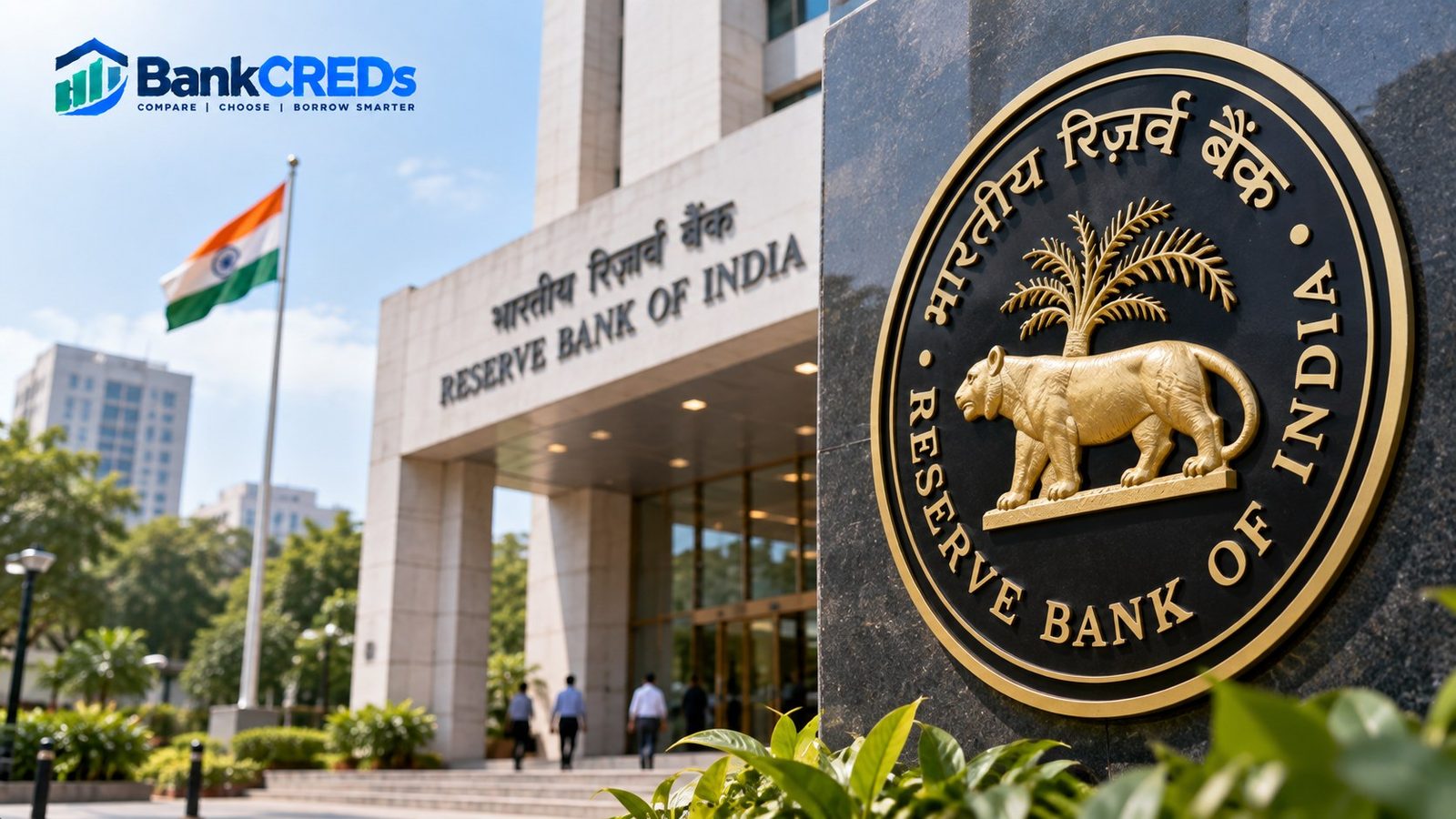
The Centre and the Reserve Bank of India have stepped up coordinated action against unauthorised digital lending apps, according to reporting by DD News. For borrowers, the practical takeaway is simple: only take a loan from an app backed by an RBI-registered bank or NBFC, and treat any app that skips KYC, hides its lender's name, or demands upfront "processing fees" before disbursal as a red flag.
Unauthorised lending apps have been a recurring enforcement target in India for several years, using app-store distribution and aggressive push notifications to reach borrowers who might not qualify for a bank loan quickly. A fresh, publicly flagged push by the Centre and the regulator signals that scrutiny of these apps -- their listing on app stores, their data practices and their recovery methods -- is being tightened again, though the specific mechanics of this round of action have not been detailed in the initial report.
If you currently have an active loan from an app you can't clearly identify as bank- or NBFC-backed, this is a good moment to check its registration status and understand your rights before the next EMI is due.
Key takeaways
- The Centre and RBI have intensified action against unauthorised digital lending apps, as reported by DD News on September 15, 2026.
- Only apps that are owned by, or working as a direct digital front for, an RBI-registered bank or NBFC are lawful lenders in India.
- Common warning signs include no physical address, no RBI registration number shown in-app, upfront fees deducted from the loan amount, and access demanded to your contacts and photos.
- Borrowers already repaying an unauthorised app should keep records, avoid panic, and know that harassment by recovery agents can be reported even while the loan itself remains repayable.
- You can verify a lender's status against RBI's published list of NBFCs before installing any instant loan app.
- This is enforcement pressure, not a new law -- existing digital lending rules already prohibited most of what these apps do.
How RBI's digital lending rules are designed to work
RBI's digital lending framework, built on its Master Directions for regulated entities, requires that any loan disbursed through an app be routed through a bank or NBFC that RBI has actually licensed -- not a shell company or an offshore operator using a lending app as a front. The core protections in this framework include:
- Disclosure of the regulated entity's name -- the app must clearly show which bank or NBFC is actually lending the money, not just a brand name.
- A Key Fact Statement -- standardised, upfront disclosure of the interest rate, all fees, and the annual percentage rate (APR), before you accept the loan.
- Direct bank disbursal and repayment -- money must move directly between your bank account and the regulated lender's account, not through a loan service provider's own wallet.
- Cooling-off period -- a short window to exit the loan by repaying the principal and proportionate interest, without penalty.
- Restrictions on data access -- apps cannot demand blanket access to your contacts, gallery or call logs as a condition for lending.
Unauthorised apps typically violate several of these at once, which is exactly why they can undercut legitimate lenders on speed and paperwork -- they simply skip the checks that cost time and money.
What the tightened crackdown means for borrowers today
An intensified crackdown mainly changes the supply side -- more apps being flagged, delisted from app stores, or referred for investigation -- rather than instantly changing what happens to any single existing loan. For someone shopping for credit right now, though, it raises the practical bar for due diligence. If you're comparing personal loan options or an instant cash need, expect to see more "is this app legitimate" friction as platforms respond to regulatory pressure by tightening onboarding, adding more visible disclosures, or in some cases pulling apps entirely while they sort out compliance.
For existing borrowers on unauthorised apps, enforcement action against the app or its operator does not usually erase a genuine debt, but it can change who is contacting you, how aggressively, and what recourse you have if collection crosses into harassment or threats.
Legitimate app vs unauthorised app: a side-by-side comparison
| Signal | Legitimate RBI-linked app | Unauthorised app |
|---|---|---|
| Lender identity | Names the bank/NBFC clearly, with RBI registration number | Shows only a brand/app name, no registration details |
| Key Fact Statement | Given upfront, before you accept | Missing or buried in fine print |
| Fees | Disclosed rate and charges, shown before disbursal, per interest rate norms | Fee deducted silently from the disbursed amount |
| Disbursal route | Direct bank-to-bank transfer | Third-party wallet or intermediary account |
| Data access | Limited to what's needed for underwriting | Full contacts, gallery and call-log access demanded |
| Recovery practice | Written notices, defined process | Calls/messages to contacts, threats, public shaming |
| Grievance redress | Registered nodal officer, RBI Ombudsman route | No traceable grievance channel |
If an app you're using -- or considering -- fails two or more of these checks, treat that as disqualifying rather than a minor inconvenience.
Worked example: the real cost of borrowing from an unauthorised app
Headline interest rates on unauthorised apps are often quoted low or not quoted at all, with the real cost hidden in upfront deductions and penalty charges. A simplified comparison, using typical structures seen in this segment:
Scenario: you need Rs 20,000 for 30 days.
- Regulated NBFC personal loan app: disburses the full Rs 20,000. Assume an annual rate around 24% -- for 30 days that's roughly 20,000 x 24% x (30/365), or about Rs 395 in interest, plus a disclosed processing fee (commonly 1-2% of the loan, say Rs 300). Total cost: roughly Rs 700, and you know this before accepting.
- Unauthorised app: advertises "quick Rs 20,000," but deducts a 15-25% "processing fee" upfront, so you actually receive Rs 15,000-17,000 while owing the full Rs 20,000 in 30 days. If you're even a day late, penalty charges are frequently compounded daily rather than disclosed as an annualised rate. The effective annualised cost in such cases has been documented, in past enforcement cases, running into several hundred percent APR.
The arithmetic above uses standard NBFC personal-loan pricing bands and known unauthorised-app tactics as a guide, not figures specific to any single app named in this crackdown -- always check the actual Key Fact Statement for the loan in front of you using an EMI calculator before accepting.
Who is affected -- and who isn't
Likely affected:
- Borrowers currently repaying loans from apps with no clear bank/NBFC backing.
- First-time borrowers relying on app-store search rather than checking eligibility with a known bank or NBFC first.
- Anyone who has shared full contact/gallery access with a lending app as a condition of approval.
Not directly affected:
- Borrowers with loans from bank apps, or NBFC apps that clearly disclose the regulated entity, Key Fact Statement, and RBI registration.
- Gold loan or secured loan borrowers, where the lender identity and collateral are already documented at a branch.
- Anyone who has not borrowed from an app and does not plan to -- the crackdown targets a specific distribution channel, not lending in general.
What to do now: a borrower's checklist
- Open every lending app on your phone and check whether it names a specific bank or NBFC as the actual lender -- not just a brand.
- Cross-check that entity's name against RBI's published list of registered NBFCs before you trust it further.
- Review what permissions the app has on your phone (contacts, gallery, SMS) and revoke anything not essential, especially after the loan is repaid.
- If you're actively repaying an unauthorised app, keep every message, call log and payment receipt -- this record matters if you later need to report harassment.
- Route new borrowing needs through your existing bank, or an NBFC app that clearly discloses its Key Fact Statement, rather than the fastest-approving app you can find.
- If you're facing threats or intimidation from recovery calls, know that reporting the conduct is separate from disputing the debt -- you can do both.
Common mistakes and what to expect next
The most common mistake isn't ignorance of the rules -- most borrowers who end up with an unauthorised app know almost nothing about the regulated-entity requirement, because the app is designed to look identical to a legitimate one, right down to a professional interface and fast approval screen. The second most common mistake is assuming that because an app is on a major app store, it has been vetted for lending legitimacy -- app store review checks for basic policy compliance, not RBI registration.
Expect this kind of enforcement push to repeat periodically rather than end unauthorised lending in one round -- app operators who get delisted or blocked frequently resurface under new names. The durable fix on the borrower side is the habit of checking registration before installing, not waiting for the next crackdown headline. Keep an eye on the news section for how enforcement developments here play out over the coming weeks.
Frequently asked questions
Is my existing loan app illegal just because RBI is cracking down on the category?
Not automatically. The crackdown targets apps operating without proper backing from a registered bank or NBFC, or violating digital lending rules on disclosure and data access. If your app clearly names a regulated lender and gave you a Key Fact Statement, it is not the target of this action.
How can I check if a lending app is authorised?
Look inside the app for the name of the bank or NBFC actually disbursing the loan, then verify that name against RBI's published list of registered NBFCs. Genuine apps also display a Key Fact Statement with the interest rate and fees before you accept the loan.
What should I do if I'm being harassed by app-based recovery agents?
Keep records of every call, message and threat, and report the conduct through RBI's Sachet portal or to local police, since harassment and intimidation are separate issues from the underlying debt. You do not need to resolve the debt before reporting abusive recovery practices.
Will this crackdown affect approved personal loan or gold loan apps from banks and NBFCs?
No -- enforcement action is aimed at unauthorised operators, not RBI-regulated lenders. Bank and NBFC-backed personal loan or gold loan apps that follow disclosure norms are not the subject of this kind of action.
What happens to my loan if the app I borrowed from gets banned or delisted?
In past cases, the underlying debt has typically remained repayable to whoever legally holds the loan, even if the app disappears from app stores. Continue paying through official channels only, and be wary of anyone contacting you claiming to be a new collector without documentation.
BankCreds analysis
The headline framing -- "Centre, RBI step up action" -- is enforcement-cycle language, and it's worth being honest about what that phrase usually does and doesn't deliver. It signals more app-store takedowns and more referrals for investigation; it does not, on its own, mean a borrower's specific outstanding loan disappears, gets restructured, or becomes uncollectable. Reading it as debt relief would be the over-reading to avoid.
Where it does matter in rupee terms: a household that took Rs 15,000-25,000 from an unauthorised app in the last few months, and is now a few EMIs in, gains real leverage from a more active enforcement environment -- regulators and platforms are more likely to act quickly on a complaint filed this month than they were a year ago, and app operators under scrutiny are less likely to escalate aggressive recovery given the added visibility. That's a genuine, if modest, shift in bargaining position, not a debt write-off.
Who benefits: borrowers who haven't yet installed a loan app benefit most, because the crackdown raises the cost of operating illegitimately right as they're making the choice of which app to trust. Who is worse off, at least temporarily: borrowers mid-loan on an app that gets abruptly delisted may find it harder to make repayments through the app's usual channel, or harder to reach customer support -- worth planning for by identifying the lender's actual bank account details now, not after the app vanishes.
The longer trend
This fits a pattern that has repeated roughly every 12-18 months since India's digital lending guidelines were first tightened: a burst of app removals and public warnings, followed by a quieter period, followed by new apps re-entering under different names. Nothing in a single-headline report changes that cycle. The one-week action for most readers isn't to react to the news at all -- it's to spend ten minutes checking whether any app already on their phone actually names a regulated lender, which is useful regardless of what this particular crackdown accomplishes.
This section is BankCreds' own assessment of what the development means for Indian borrowers and savers. It is independent commentary, not part of the source reporting above.
Sources & references
- DD News — originating report https://ddnews.gov.in/en/centre-rbi-step-up-action-against-unauthorised-digital-lending-apps/
- RBI Master Directions — Digital lending master direction requirements on regulated-entity disclosure, Key Fact Statement and data access https://www.rbi.org.in/Scripts/BS_ViewMasDirections.aspx
- RBI Sachet — Portal to check unauthorised entities and file complaints against lending apps https://sachet.rbi.org.in/
- RBI list of registered NBFCs — Official list to verify whether the NBFC behind a lending app is RBI-registered https://www.rbi.org.in/Scripts/BS_NBFCList.aspx
Source links are shown as plain text, not clickable links. Copy a URL into your browser to read the original report.
Editorial note & disclaimer
How this was reported. The development above is attributed to the source or sources listed. BankCreds does not independently verify a third party's reporting; where a figure or a regulatory position is stated as fact, it is either attributed or drawn from the regulator's own published material. Everything under "BankCreds analysis" is our own assessment.
Rates and figures. Interest rates, per-gram values and premium bands quoted here are indicative, move daily, and differ by borrower profile, city and lender policy. Confirm the final number with the institution before you act on it — the sanction letter or policy schedule governs, not a news report.
Not financial advice. This article is general information for an Indian audience. It is not investment, tax, credit or insurance advice, takes no account of your circumstances, and BankCreds is not a lender, broker, distributor or advisor. Consider speaking to a SEBI-registered investment adviser or a qualified professional before acting.
Editorial policy · Fact-checking policy · Corrections policy · Our authors · About BankCreds · Contact us
Spotted an error? Corrections are published, not quietly edited — write to us via the contact page and see our corrections policy.