
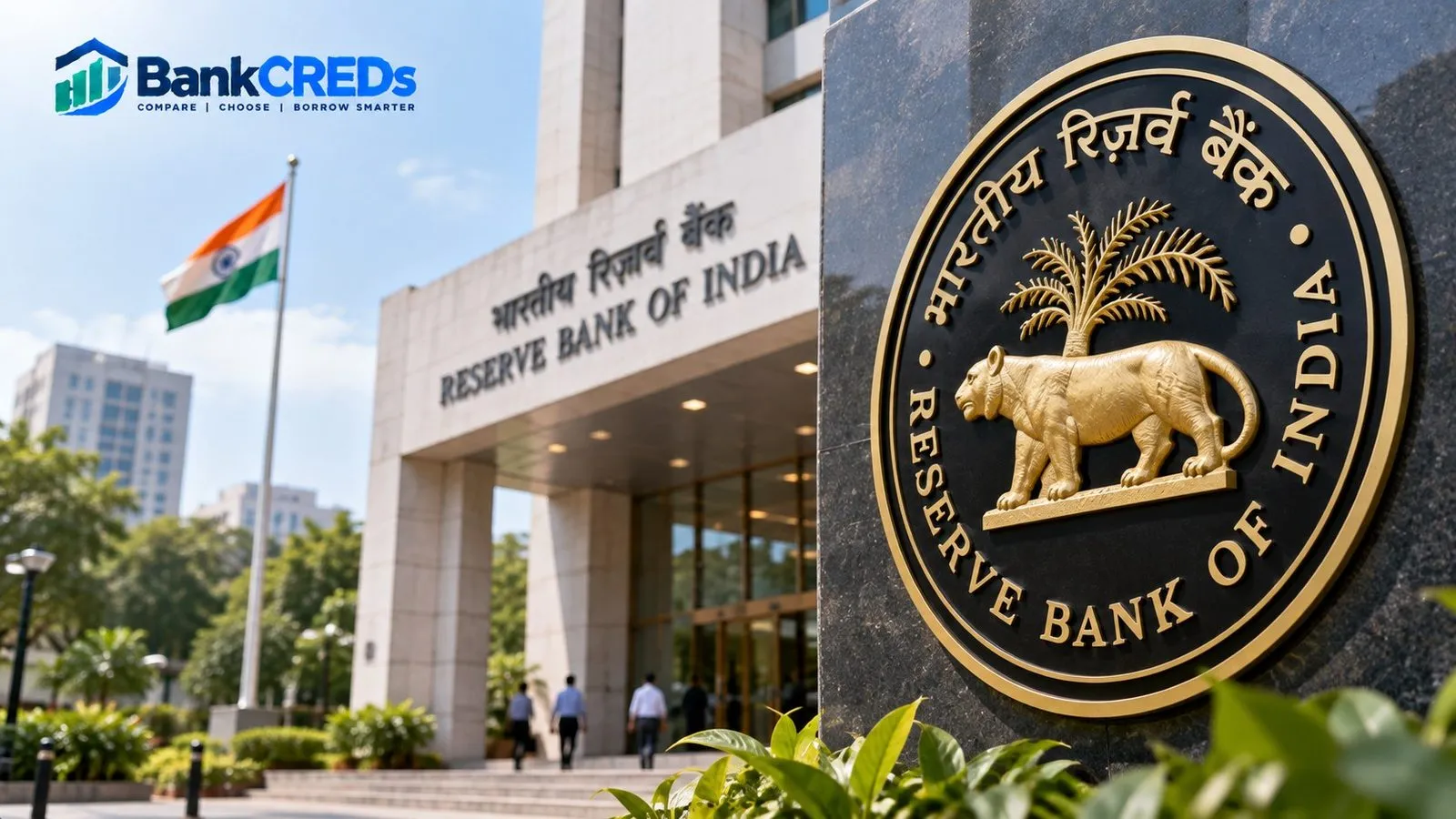
The Reserve Bank of India has cancelled the licences of five non-banking finance companies (NBFCs), while eight others have surrendered their registrations, according to reporting by BW Businessworld. For most borrowers and savers nothing changes immediately, but if you hold a loan or deposit with any affected firm, you should confirm its status and keep every payment record.
The headline gives the numbers but, as far as it goes, not the names or the reasons. This article therefore explains how such actions work in general, what they mean for existing loans and deposits, and the practical checks worth doing this week.
Key takeaways
- According to BW Businessworld, RBI cancelled five NBFC licences and eight NBFCs surrendered their registrations.
- Cancellation is initiated by the regulator; surrender is a voluntary handback by the company. The consequences for the firm's new business are similar, but the stories behind them differ.
- Existing loan contracts generally stay valid, so EMIs remain payable and stopping payment harms only the borrower.
- NBFC deposits are not covered by DICGC insurance, so depositors with any affected firm should act promptly.
- You can check any lender's status on the RBI list of registered NBFCs before you borrow or invest.
Cancellation versus surrender: what is the difference?
An NBFC needs a Certificate of Registration from the RBI to carry on the business of a non-banking financial institution. When the RBI cancels that certificate, the regulator has decided the company should no longer operate as a registered NBFC. Reasons in general can include failing to meet prescribed requirements, not carrying on the business it was registered for, or breaching directions. We do not know which applies to the five firms in this report, and it would be wrong to guess.
A surrender is different. Here the company itself asks to give up its registration, and the RBI accepts. Firms do this for varied reasons in general: they may have wound down lending, changed their business model, merged with another entity, or find that the regulatory burden no longer suits them. Again, the report does not tell us why these eight chose to surrender, so nothing should be read into the word itself.
The practical outcome is that neither category of company may continue to carry on NBFC business as a registered lender. That matters for new borrowing and new deposits far more than for old ones.
How NBFC registration works in India
NBFCs are lenders that are not banks. They lend for vehicles, gold, small business, consumer durables and personal needs, often reaching people that banks do not. Under the RBI Act, a company that wants to do this as its principal business must hold a Certificate of Registration and meet a minimum net owned fund requirement. The RBI also groups NBFCs by size and activity, and the larger and riskier the firm, the tighter the oversight.
Two features matter for ordinary customers:
- Lending: a registered NBFC follows RBI rules on fair practices, disclosure of interest rates and charges, and recovery conduct.
- Deposits: only certain NBFCs are permitted to accept public deposits, and they need specific authorisation. Even then, these deposits are not insured by DICGC, which protects bank deposits up to Rs 5 lakh per depositor per bank.
The RBI publishes the list of registered NBFCs. If a lender is not on it, or is shown as cancelled, you are dealing with a firm that has no permission to run this business as a registered entity. You can find the list through the RBI list of registered NBFCs on the regulator's site, and more on lending rates in our interest rates tables.
What changes for existing borrowers
If you already have a loan from an affected company, the loan agreement is a contract between you and the lender. A cancelled or surrendered registration does not wipe it out. Your outstanding balance and EMI schedule remain, and the lender, or whoever takes over the book, can continue to collect what is due under the agreed terms. Missing payments in the hope that the debt disappears would only add penalties and damage your credit record.
Here is a worked example to see what is at stake. Suppose you borrowed Rs 3 lakh for 24 months from an NBFC at 24% a year, compared with a scheduled bank at 12%:
| Lender type | Interest rate | Monthly EMI (approx.) | Total interest over 24 months (approx.) |
|---|---|---|---|
| NBFC personal loan | 24% | Rs 15,861 | Rs 80,664 |
| Bank personal loan | 12% | Rs 14,122 | Rs 38,928 |
The figures use the standard reducing-balance EMI formula, and you can test your own numbers in our EMI calculators. The point is that the loan's cost is fixed by the contract, not by the lender's licence status. What can change is who services the account, how you pay, and how you get a no-dues certificate at the end.
Watch for these practical risks:
- payment instructions or bank accounts changing without a written notice you can verify;
- delays in issuing a loan closure letter or releasing collateral such as gold or documents;
- calls from unfamiliar collection agents claiming to represent the lender.
What changes for depositors and savers
Savers face the higher stakes, if they hold a fixed deposit with any of the affected firms. Deposits in NBFCs commonly carry a higher rate than banks to compensate for the absence of insurance. That extra return is the price of risk, as the illustration shows:
| Rs 5 lakh deposited for one year | Rate | Interest earned (approx.) | DICGC insured? |
|---|---|---|---|
| Scheduled bank fixed deposit | 7% | Rs 35,000 | Yes, up to Rs 5 lakh per depositor per bank |
| NBFC company deposit | 9% | Rs 45,000 | No |
The extra Rs 10,000 a year looks attractive, but if the issuer's registration is cancelled, recovering the principal may take time and depend on the company's own assets. If you are a depositor, ask the company in writing about its status and the plan for repaying deposits on maturity. You can also check whether an entity is authorised to take deposits, and report suspicious ones, through RBI Sachet.
If you have no deposit with these firms, this development does not touch your savings. Bank deposits are in a separate regime and are not affected by an NBFC licence action.
Who is affected and who is not
Likely to be affected:
- customers with a loan, gold loan or other credit from one of the thirteen companies;
- depositors in any of them that held public deposits;
- agents, dealers and partners who sourced business for these lenders.
Unlikely to be affected:
- customers of banks and of other NBFCs that remain registered;
- anyone comparing new loans, provided they pick a lender whose registration is confirmed;
- people whose only exposure is through mutual funds or listed shares in unrelated companies.
The report does not say how large these firms were, so the number of customers involved is unknown. It would be misleading to assume a large-scale impact from a headline count alone.
What to do now: a practical checklist
- Check the name. See whether your lender or deposit-taker appears in the news report or the RBI's list and whether its status is shown as valid.
- Keep paying on schedule. Continue EMIs through the channel already agreed, unless you receive a written change you have verified independently.
- Collect your papers. Download the loan agreement, repayment schedule, receipts, deposit certificates and any statements now, while the systems are still running.
- Write to the company. Ask for its current status, the name of any successor servicer, and confirmation of where to pay.
- Protect collateral. For gold or vehicle loans, note the collateral details and ask how and when it will be returned after closure.
- Escalate if stuck. Use the company's grievance process first, and then the RBI's complaint channels if the answer is unsatisfactory.
If you are shopping for a new loan, use our eligibility check and compare offers in our personal loan guides, but verify registration first.
Common mistakes and the outlook
The first mistake is panic-stopping EMIs. A cancelled registration is not a loan waiver. Stopping payment triggers late fees, hurts your credit score and can lead to legal recovery.
The second is chasing yield without checking safety. A rate several points above the bank rate is a warning signal. Before depositing, verify that the company is registered, that it is permitted to accept deposits, and that the amount is one you can afford to have locked away.
The third is trusting unverified messages. When news like this circulates, fraudsters sometimes call customers, claim to represent the lender and ask for payments into new accounts. Only accept changes in writing, from a source you can confirm.
Looking ahead, regulators periodically tidy the NBFC register, and such lists change over time. The takeaway for individuals is not to fear the sector but to build a habit: check registration, read the contract, keep records. For more developments, follow our news hub.
Frequently asked questions
Do I still have to repay my loan if the NBFC's licence is cancelled?
Yes. Your loan agreement remains a valid contract, so the outstanding balance and EMIs are still due. Keep paying through the verified channel and obtain written confirmation of any change in who collects the money.
Are my NBFC fixed deposits insured?
No. DICGC deposit insurance covers bank deposits, up to Rs 5 lakh per depositor per bank, but it does not cover deposits with NBFCs. If you hold one with an affected company, ask in writing about the repayment plan and keep your certificates safe.
What is the difference between a cancelled and a surrendered registration?
In a cancellation the RBI withdraws the company's certificate. In a surrender, the company itself asks to give up its registration. In both cases the firm can no longer operate as a registered NBFC, but the reasons behind them can be very different.
How can I check whether an NBFC is registered?
The RBI publishes a list of registered NBFCs on its website. Search for the company's exact name there before taking a loan or placing a deposit, and treat any lender missing from the list with caution.
Should I move my loan to another lender?
Not necessarily. Refinancing makes sense only if the new lender charges a clearly lower rate after processing fees and any prepayment charges. Compare the total cost using an EMI calculator before deciding, rather than acting on the headline alone.
BankCreds analysis
The headline sounds alarming, but for most households it changes very little. Cancelled and surrendered registrations are a housekeeping event in a sector with a large number of registered entities. A five-plus-eight tally is small next to the full NBFC register, and reporting so far, as attributed to BW Businessworld, does not tell us that any of these firms was a large lender. So the honest first reading is: check whether you are one of the few people connected to these names, and if not, carry on.
The rupee impact for a specific household
Take a borrower with a Rs 3 lakh personal loan at 24% over 24 months. The EMI is about Rs 15,861 and the total interest is about Rs 80,664. If the lender's licence is cancelled, that contract does not vanish. The EMI stays due, the outstanding balance stays the same, and stopping payment would only damage the credit score and invite recovery action. The real risk is operational: statements may come from a different servicing entity, and a borrower who ignores letters could miss a change of payment account.
Depositors are in a different position. A saver with Rs 5 lakh in a company fixed deposit earning 9% expects about Rs 45,000 a year. A bank deposit at around 7% would earn about Rs 35,000. The Rs 10,000 gap is compensation for risk, and NBFC deposits are not covered by DICGC insurance the way bank deposits are. That is the one place where a licence action can genuinely cost money.
What this does not mean
It does not mean NBFCs as a category are unsafe, that your registered lender is next, or that loans from these firms are cancelled. It also says nothing about interest rates. If anything, it is a reminder to do a five-minute check of any lender's registration before signing, which is worth more than reacting to this headline.
This section is BankCreds' own assessment of what the development means for Indian borrowers and savers. It is independent commentary, not part of the source reporting above.
Sources & references
- BW Businessworld — originating report https://www.businessworld.in/article/rbi-cancels-licences-of-5-nbfcs-8-surrender-registrations-624389
- RBI list of registered NBFCs — where to verify whether a company holds a valid NBFC registration https://www.rbi.org.in/Scripts/BS_NBFCList.aspx
- DICGC deposit insurance — deposit insurance covers banks, not NBFC deposits https://www.dicgc.org.in/
- RBI Sachet — reporting and checking unauthorised deposit-taking entities https://sachet.rbi.org.in/
Source links are shown as plain text, not clickable links. Copy a URL into your browser to read the original report.
Editorial note & disclaimer
How this was reported. The development above is attributed to the source or sources listed. BankCreds does not independently verify a third party's reporting; where a figure or a regulatory position is stated as fact, it is either attributed or drawn from the regulator's own published material. Everything under "BankCreds analysis" is our own assessment.
Rates and figures. Interest rates, per-gram values and premium bands quoted here are indicative, move daily, and differ by borrower profile, city and lender policy. Confirm the final number with the institution before you act on it — the sanction letter or policy schedule governs, not a news report.
Not financial advice. This article is general information for an Indian audience. It is not investment, tax, credit or insurance advice, takes no account of your circumstances, and BankCreds is not a lender, broker, distributor or advisor. Consider speaking to a SEBI-registered investment adviser or a qualified professional before acting.
Editorial policy · Fact-checking policy · Corrections policy · Our authors · About BankCreds · Contact us
Spotted an error? Corrections are published, not quietly edited — write to us via the contact page and see our corrections policy.