
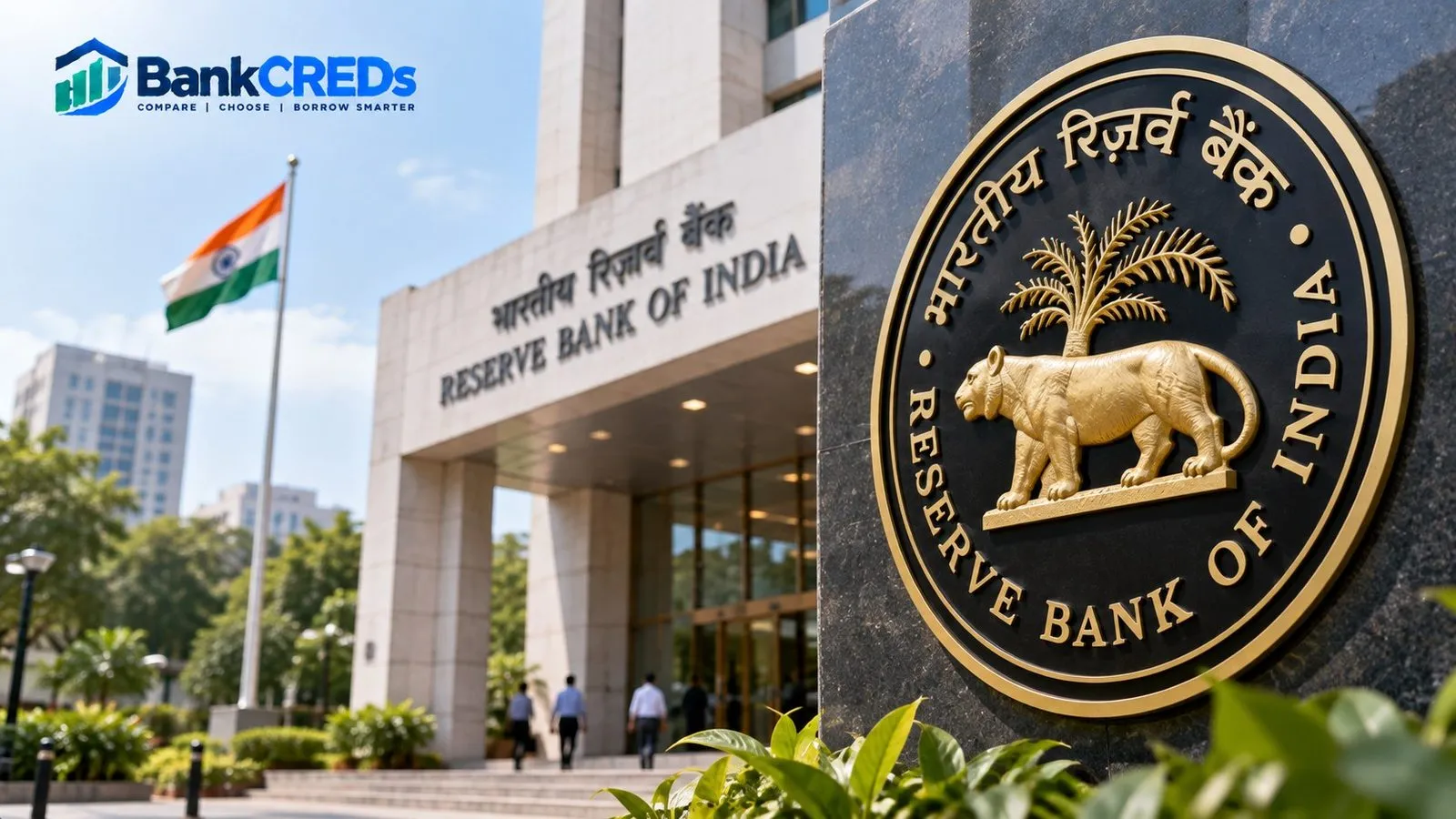
The Reserve Bank of India has extended its KYC certification facility to foreign portfolio investors (FPIs), according to reporting by BW Businessworld. In plain terms, a verification process that already exists for some regulated participants now covers this investor group too. For ordinary Indian borrowers and savers, there is no direct change to loan rates, EMIs or deposit returns.
The practical relevance is indirect. FPIs are large overseas investors who buy Indian shares and bonds, and the ease of onboarding them touches market participation, and through that, the broader financial system. This article explains what KYC certification generally means, who is affected and what you should, and should not, read into the news.
Because the headline does not spell out the mechanics, this piece attributes the development to the reporting and sticks to standing background about how KYC works in India. Check the RBI's own circular once available for the precise scope.
Key takeaways
- RBI has extended a KYC certification facility to foreign portfolio investors, as reported by BW Businessworld.
- It is an administrative and compliance step; it is not a rate decision and does not change EMIs or deposit rates.
- Ordinary borrowers and savers are affected, if at all, only indirectly through market and currency conditions.
- The details (who certifies, what is covered, timelines) were not in the headline, so avoid assuming specifics.
- Your own KYC being up to date remains the thing that actually protects your account access.
What is a KYC certification facility?
KYC stands for Know Your Customer. Under India's anti-money-laundering framework, banks, mutual funds, brokers and other regulated entities must verify who their customers are before providing services. That means identity proof, address proof and, for institutions, details of ownership and control.
A certification facility is generally a mechanism by which verification done once is formally attested and can be relied upon, rather than each institution repeating the whole exercise from scratch. The exact design used in this case has not been described in the headline we have, so it would be wrong to say how it works in detail. What can be said is the purpose such facilities usually serve: fewer duplicate checks, more consistent records and a clearer audit trail.
In India, individuals are familiar with the idea through a single KYC that works across mutual funds and, increasingly, across banks and insurers through central registries. Extending a certification facility to a new class of participant follows the same logic of reducing repeated paperwork.
Who are foreign portfolio investors?
Foreign portfolio investors are overseas entities such as funds, insurers, pension pools and asset managers that invest in Indian listed shares, government securities and corporate bonds without taking control of companies. They register under rules framed by SEBI, and they operate through custodians and designated intermediaries in India.
They matter to the domestic economy because their buying and selling can influence share indices, bond yields and the rupee. When they bring money in, demand for rupees rises; when they pull money out, the opposite pressure appears. That is why any change that affects how smoothly they are onboarded gets noticed, even if the change is procedural.
Because FPIs are institutions, their KYC is heavier than yours. It typically looks through layers of ownership to find who ultimately benefits from the investment. That is precisely where a certification facility can save time.
How this differs from your own KYC
It helps to compare the two, since the news can be confusing for retail readers.
| Aspect | Individual resident (you) | Foreign portfolio investor |
|---|---|---|
| Who verifies | Bank, mutual fund, broker | Custodian or designated intermediary |
| Core documents | Identity and address proof such as passport, driving licence, Aadhaar or voter ID | Constitutional documents, ownership and control details, regulatory registrations |
| Effect if incomplete | Account restrictions or blocked transactions | Delay or limits on investing |
| Does this news change it? | No direct change reported | Yes, this is the group the facility now covers |
The takeaway: this development sits on the institutional side of the table. Your own KYC requirements at your bank or fund house are not altered by the headline.
What changes for borrowers and savers?
In the short term, very little. Home loan, personal loan and instant loan pricing depends on the repo rate, a lender's cost of funds and your credit profile. A compliance facility for FPIs does not enter that calculation. If you are comparing offers, the interest rate tables and EMI calculators remain the right tools.
The medium-term link is through markets. Suppose foreign inflows are somewhat smoother over time. That can support the rupee and keep bond yields calmer, which in turn feeds into how lenders price money. But the chain is long and uncertain, and many other forces dominate it, including global interest rates and domestic growth.
Here is a simple illustration of why currency matters to households. Imagine a family paying a foreign university fee of USD 10,000. At Rs 85 per dollar that is Rs 8,50,000; at Rs 86 it is Rs 8,60,000. A one-rupee difference costs Rs 10,000. These are illustrative figures, not a forecast, and this news does not tell us where the rupee is headed.
Who is affected and who is not
Directly affected:
- Foreign portfolio investors and the custodians and banks that onboard them.
- Compliance teams at institutions that handle FPI accounts.
Indirectly affected:
- Equity and mutual fund investors, through market flows.
- Importers, students abroad and travellers, through currency conditions.
Not meaningfully affected:
- Home loan and personal loan borrowers with existing EMIs.
- Fixed deposit holders and savings account users.
- Gold loan customers, whose loan values follow the metal price; see the gold loan hub for those.
If you are a new borrower wondering whether this changes your chances of approval, it does not. Approval depends on income, credit score and obligations; the eligibility check is a better guide than any regulatory headline.
What should you do now?
There is no action tied to this news, but it is a good prompt for some housekeeping.
- Confirm your KYC status with your bank, mutual fund houses and demat account, and update any expired or changed address proof.
- Make sure your mobile number and email on record are current, since verification prompts go there.
- Keep an identity and address document handy in digital form for quick re-verification.
- Avoid sharing OTPs or documents with anyone claiming to update KYC over a call or message; fraudsters exploit KYC deadlines.
- Read the RBI's official circular, when published, rather than relying on social media summaries.
A common mistake is to treat every regulatory headline as a market signal. Another is to act on forwarded messages about KYC. Regulated entities usually ask through official channels and branch or app workflows, not through links sent by strangers.
Outlook: a small step in a larger direction
India's KYC ecosystem has been moving toward shared records and less repetition for years. Extending a certification facility to a further investor class looks consistent with that direction, though the headline alone does not tell us how far the change goes. Future circulars and clarifications will show whether it becomes a meaningful reduction in onboarding friction or a narrow technical adjustment.
For readers, the sensible stance is calm attention. Keep tracking rate-affecting decisions, which are the ones that change your EMI, and follow the news hub for updates as more detail emerges.
Frequently asked questions
Does this RBI move change my loan EMI or FD rate?
No. Based on the reporting, this is a KYC certification facility for foreign portfolio investors, not a change in policy rates. EMIs and deposit rates continue to depend on the repo rate, your lender's pricing and your profile.
What is a foreign portfolio investor?
An FPI is an overseas investor, such as a fund or pension pool, that buys Indian shares and bonds without controlling the companies. FPIs register under SEBI's framework and invest through Indian custodians.
Do I need to redo my KYC because of this news?
Nothing in the reporting suggests retail investors must redo KYC. It is still wise to keep your own KYC current with your bank and fund houses so accounts are not restricted.
Could this affect the rupee or stock markets?
Potentially, in a small and indirect way, if it eases how foreign investors are onboarded. But flows depend on many larger factors, so it is not a reliable signal for near-term market or currency moves.
Where can I find the official details?
The RBI publishes circulars and directions on its website. Refer to those, and to SEBI for FPI registration rules, for the authoritative wording.
BankCreds analysis
The headline sounds bigger than it is for a household. A KYC certification facility for foreign portfolio investors is plumbing: it changes how paperwork is verified for a class of institutional investors, not what you pay on a loan or earn on a deposit. Nothing in the reporting we have suggests a change in repo rate, lending rates or deposit rates, so nobody should alter an EMI plan or a fixed deposit decision because of it.
Where a household could feel it
The honest link is through markets. Suppose you hold a Rs 5,00,000 equity mutual fund and foreign selling causes a 2% dip; that is a Rs 10,000 paper movement. Smoother onboarding of foreign investors, if it works as intended, marginally lowers friction for money coming in. But onboarding speed is one of many drivers, alongside global rates, earnings and currency views, so the effect on your portfolio cannot be separated out or predicted.
Who benefits most? Custodians, banks handling FPI accounts and the investors themselves. Who is not affected? A salaried borrower with a home loan, a senior citizen with a bank fixed deposit, or anyone taking a personal loan this month.
What to do this week
Nothing different with your money. The useful step is housekeeping: make sure your own KYC is current with your bank and mutual funds, because that is the KYC that can actually freeze your account or block a redemption. Treat this story as a sign of steady regulatory tidying, not a market signal. The specific mechanics have not been detailed in the headline we worked from, so wait for the RBI circular before drawing firmer conclusions.
This section is BankCreds' own assessment of what the development means for Indian borrowers and savers. It is independent commentary, not part of the source reporting above.
Sources & references
- BW Businessworld — originating report https://www.businessworld.in/article/rbi-extends-kyc-certification-facility-to-foreign-portfolio-investors-624537
- RBI Master Directions — RBI's KYC framework for banks and regulated entities sits in its Master Directions https://www.rbi.org.in/Scripts/BS_ViewMasDirections.aspx
- RBI notifications and circulars — Where the official circular on any KYC facility change would be published https://www.rbi.org.in/Scripts/NotificationUser.aspx
- SEBI — SEBI regulates foreign portfolio investor registration in India https://www.sebi.gov.in/
Source links are shown as plain text, not clickable links. Copy a URL into your browser to read the original report.
Editorial note & disclaimer
How this was reported. The development above is attributed to the source or sources listed. BankCreds does not independently verify a third party's reporting; where a figure or a regulatory position is stated as fact, it is either attributed or drawn from the regulator's own published material. Everything under "BankCreds analysis" is our own assessment.
Rates and figures. Interest rates, per-gram values and premium bands quoted here are indicative, move daily, and differ by borrower profile, city and lender policy. Confirm the final number with the institution before you act on it — the sanction letter or policy schedule governs, not a news report.
Not financial advice. This article is general information for an Indian audience. It is not investment, tax, credit or insurance advice, takes no account of your circumstances, and BankCreds is not a lender, broker, distributor or advisor. Consider speaking to a SEBI-registered investment adviser or a qualified professional before acting.
Editorial policy · Fact-checking policy · Corrections policy · Our authors · About BankCreds · Contact us
Spotted an error? Corrections are published, not quietly edited — write to us via the contact page and see our corrections policy.