
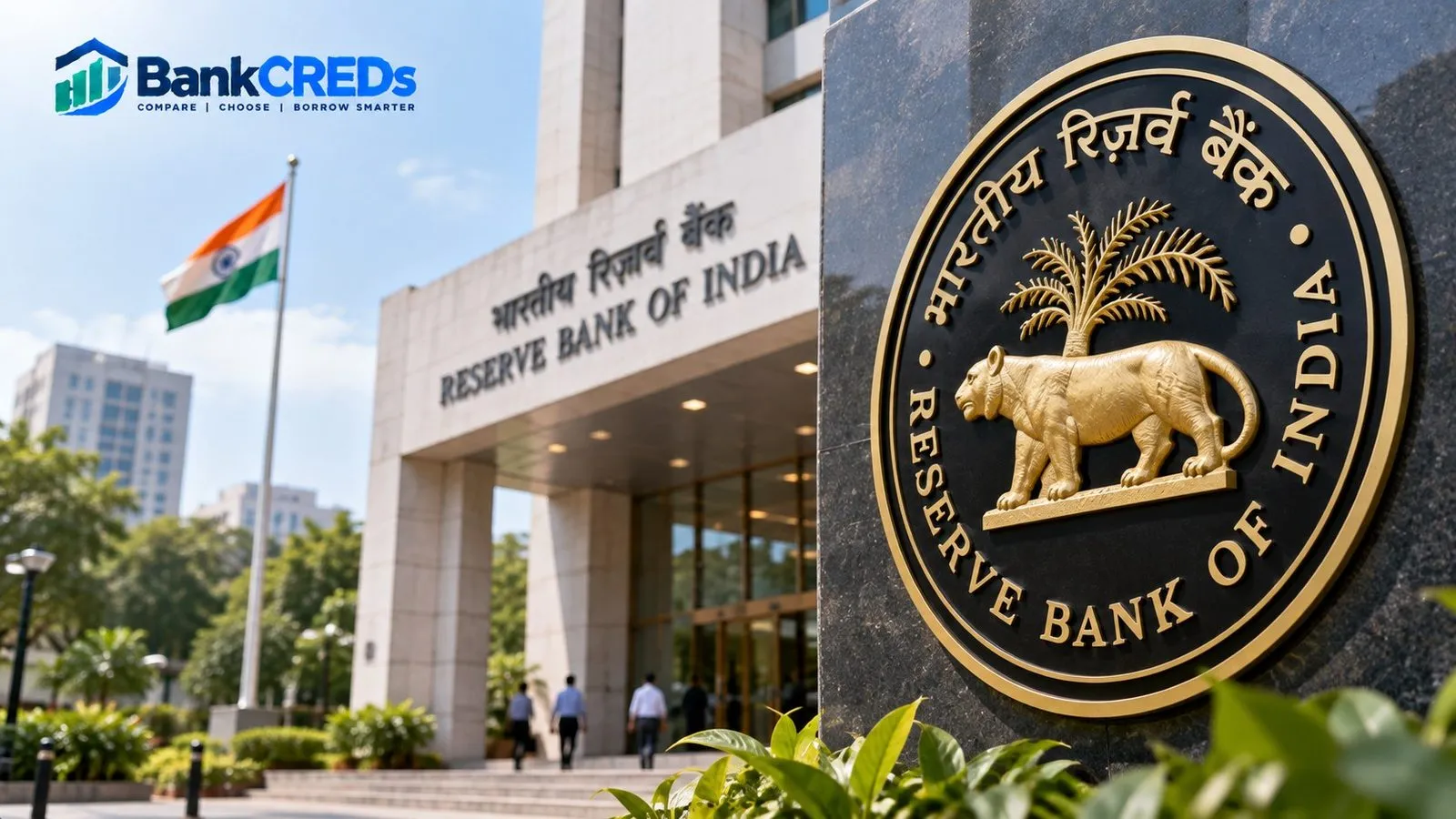
The governor of the Reserve Bank of India has warned against complacency amid external headwinds, according to reporting by Livemint. For ordinary borrowers and savers, the message is one of caution: global uncertainty is being treated as a live risk, so households should not assume that borrowing costs or deposit returns will drift in a comfortable direction on their own.
The warning is not a rate decision, and it does not by itself change your EMI or your fixed deposit rate. What it does is set a tone. A regulator that urges vigilance is less likely to be hurried into easing, which matters if you hold a floating-rate loan or are planning a large borrowing in the coming months.
This article explains what such a warning usually means, how external pressures reach Indian household finances, and what practical steps make sense. We only know the headline as reported by Livemint, so we do not attribute specific figures, dates or quotes beyond it.
Key takeaways
- According to Livemint, the RBI governor has cautioned against complacency in the face of external headwinds; no specific rate action is implied by that headline alone.
- Floating-rate borrowers feel central bank moves through their EMIs, but only when the repo rate actually changes and the lender passes it on.
- On a ₹50 lakh, 20-year loan, each quarter-point change in the rate shifts the EMI by roughly ₹800 a month.
- Savers should keep deposits diversified across tenures and stay within the ₹5 lakh per-depositor, per-bank insurance cover.
- The most useful response is to build an emergency fund, cut costly unsecured debt and avoid stretching your EMI burden.
What the RBI governor's warning means in plain terms
When a central bank head speaks about complacency, the message is that good recent conditions should not lull anyone into assuming they will persist. Policymakers, banks and businesses are being asked to keep buffers, watch risks and avoid taking on exposures that only work if everything goes right.
The phrase external headwinds is broad. It generally refers to pressures that originate outside India: global growth trends, movements in major economies' interest rates, currency swings, commodity and energy prices, and capital flows. Livemint's report, as we understand it from the headline, ties the warning to such pressures. We do not know which of them the governor had in mind, so we will not guess.
The RBI's job spans several goals at once: keeping inflation in check, supporting growth, safeguarding financial stability and managing the rupee's orderly behaviour. A caution against complacency is usually aimed at the stability goal, reminding the system that risks can build quietly.
How external pressures reach your household
Most people never see global developments directly. They see them through a few channels, and it helps to know which ones touch you.
- Interest rates. If global rates stay high, capital can flow out of emerging markets and put pressure on the rupee, which can make the RBI cautious about cutting its own rates.
- Prices. A weaker rupee or costlier imported fuel can push up the cost of everyday goods, which feeds inflation and keeps policy tighter for longer.
- Jobs and incomes. Export-linked sectors such as IT services, textiles and gems can feel global demand shifts, which affects bonuses, hiring and job security.
- Investments. Equity and debt markets react quickly to global news, and so do the values of mutual fund holdings.
None of these is guaranteed to happen. The point is that a cautious regulator is telling the system to prepare for them rather than assume they will pass.
What it means for home loan and personal loan borrowers
If you have a floating-rate loan linked to the repo rate, your EMI or tenure changes when the RBI changes the policy rate and your lender resets. A warning alone triggers nothing, but it does tell you that rate cuts are not something to bank on.
Here is the arithmetic on a ₹50 lakh home loan over 20 years, using standard EMI mathematics:
| Interest rate | Approximate monthly EMI | Difference vs. previous row |
|---|---|---|
| 8.25% | ₹42,600 | - |
| 8.50% | ₹43,400 | about ₹800 more |
| 8.75% | ₹44,200 | about ₹800 more |
| 9.00% | ₹45,000 | about ₹800 more |
These are illustrative figures from the standard EMI formula, not any lender's current offer. Over 240 months, a ₹800 monthly gap adds up to roughly ₹1.9 lakh. You can test your own numbers with our EMI calculator, and compare current offers on our home loan guides.
Personal loans work differently. They are typically fixed-rate or reset less frequently, and they cost much more, often in the low-teens to over 20% depending on your profile. If you already carry one, a stable rate environment does not make it cheaper. Our personal loan guides cover how pricing varies by borrower profile.
What it means for savers and fixed deposit holders
Deposit rates follow the broader rate cycle with a lag. When the central bank signals caution, banks tend to avoid sharp cuts in deposit pricing, though individual banks decide their own rates based on their funding needs.
Consider a ₹10 lakh deposit for one year:
| Deposit rate | Interest earned in one year (before tax) |
|---|---|
| 6.50% | ₹65,000 |
| 7.00% | ₹70,000 |
| 7.50% | ₹75,000 |
The difference between the best and worst rows is ₹10,000 a year. That is useful, but it is smaller than the damage from putting money in a weak or unregulated institution to chase a higher number. Bank deposits are insured by the DICGC up to ₹5 lakh per depositor per bank, covering principal and interest combined. If your balance with one bank exceeds that, consider spreading it. You can check current bands on our interest rates page.
Also remember that interest is taxable and that real returns depend on inflation. A 7% deposit with 5% inflation leaves you around 2% ahead in purchasing power before tax.
Who is affected and who is not
Not every household feels this equally.
- More exposed: floating-rate home loan borrowers with thin monthly margins, people with high-cost unsecured debt, and those whose income depends on export-linked sectors.
- Moderately exposed: savers relying on interest income, such as retirees, who may see deposit rates drift if conditions change.
- Less exposed: borrowers on fixed rates, people with low debt and large cash buffers, and those whose income is domestic and stable.
Gold holders sit in an interesting spot. Gold prices often react to global uncertainty and currency moves, so if you hold jewellery or are considering a loan against it, you can track the daily gold price and the gold loan hub. We make no prediction here; we only note that gold is one of the assets people look at when external risks are in the news.
What to do now: a practical checklist
You do not need to reorganise your finances because of a speech. A short review is enough.
- Check your emergency fund. Aim for about six months of essential expenses in an accessible account or liquid deposit.
- Look at your EMI-to-income ratio. Total EMIs above roughly 40% of take-home pay leave little room for shocks.
- Clear the most expensive debt first. Credit card balances and small personal loans cost far more than a home loan.
- Confirm your loan type. Know whether your rate is floating or fixed, and when it resets.
- Ask about switching or prepaying. If your spread over the benchmark is higher than what new borrowers get, ask your lender about a reduction; the fee is often small.
- Stagger your deposits. Splitting money across tenures avoids locking everything at one rate.
- Check eligibility before applying. Multiple loan enquiries can dent your credit score, so use our eligibility check first.
Common mistakes to avoid
The first mistake is waiting for a rate cut that may not arrive. People delay a loan decision or a prepayment hoping for relief, and end up paying more in the meantime.
The second is over-reacting to the headline. A governor's caution is not a prediction of crisis. Selling investments in a panic, or breaking a deposit early and paying a penalty, usually costs more than the risk being avoided.
Third, chasing yield. When deposit rates look unexciting, some savers move money to unfamiliar schemes promising more. If an entity is not regulated, you may have no recourse. Check that any lender or deposit taker is genuinely registered before handing over money.
Finally, taking on a bigger loan just because you are approved for it. Eligibility is what a lender will allow, not what is comfortable for you.
Outlook: what to watch next
The warning raises the question of what comes next, but we cannot answer it from a headline. The practical things to watch are the RBI's next policy statement and the wording around inflation and growth, and whether your own lender changes its benchmark-linked rates. Our news hub tracks such developments as they are reported.
Until then, treat the caution as a prompt to tidy your finances, not a trigger for dramatic moves. Steady repayment, adequate savings and sensible borrowing remain the best protection against whatever external pressures arrive.
Frequently asked questions
Does the RBI governor's warning mean EMIs will rise?
Not by itself. EMIs on floating-rate loans change only when the repo rate changes and your lender resets its rate. A cautionary statement signals vigilance, not a rate move, so check your lender's notices rather than assuming a change.
Should I prepay my home loan now because of external headwinds?
It depends on your cash buffer and the alternatives. If you have an emergency fund and no costlier debt, part-prepayment reduces interest cost. If your savings are thin, keep liquidity first, because cash on hand matters more than a slightly shorter loan.
Are my bank deposits safe if global conditions worsen?
Deposits in banks are insured by the DICGC up to ₹5 lakh per depositor per bank, including principal and interest. If your balance with one bank is higher, consider spreading it across institutions to stay within the cover.
Should I move to a fixed-rate loan?
A fixed rate gives certainty but is often priced higher than a floating rate, and switching may involve fees. Compare the total cost using an EMI calculator and ask your lender for the exact charges before deciding.
What are external headwinds in simple words?
They are pressures from outside India that can affect the economy, such as global interest rates, currency swings, commodity prices and slower overseas demand. They reach households through prices, loan rates, jobs and investment returns.
BankCreds analysis
The headline sounds like a policy signal, but it is a statement of posture, not a rate decision. Nothing in it, as reported, changes your EMI or your fixed deposit rate today. The over-reading to avoid is treating a cautionary speech as a forecast of a rate hike or cut. Central bankers say this kind of thing in good years and bad, and the practical effect on a household is usually indirect.
What it changes in rupee terms
Take a salaried borrower with a ₹50 lakh home loan over 20 years on a floating rate. A quarter-point move in the rate shifts the EMI by roughly ₹800 a month, or about ₹1.9 lakh over the full tenure. That is meaningful, but it only happens when the repo rate actually moves and the lender passes it on. A warning about external risks does not move that rate by itself. It does tell you the regulator is not in a hurry to relax, so planning on the basis of a sharp fall in EMIs would be optimistic.
Savers sit on the other side. A depositor with ₹10 lakh in a one-year fixed deposit earns about ₹5,000 more for each half-point of rate. A cautious central bank makes a sudden collapse in deposit rates less likely, but it does not justify locking everything for five years either.
Who should do something this week
The one group that should act is anyone running thin on emergency savings or carrying expensive unsecured debt. If a personal loan or card balance costs you 14-24% a year, repaying it saves you far more than any policy shift could. Everyone else can do nothing. Check that your emergency fund covers six months of expenses and that your EMIs stay under roughly 40% of take-home pay. This is a nudge towards household resilience, not a reason to change course.
This section is BankCreds' own assessment of what the development means for Indian borrowers and savers. It is independent commentary, not part of the source reporting above.
Sources & references
- Livemint — originating report https://www.livemint.com/news/india/rbi-governor-warns-against-complacency-amid-external-headwinds-11791020910405.html
- Reserve Bank of India — central bank role in monetary policy and financial stability https://www.rbi.org.in/
- DICGC deposit insurance — standing deposit insurance cover per depositor per bank https://www.dicgc.org.in/
Source links are shown as plain text, not clickable links. Copy a URL into your browser to read the original report.
Editorial note & disclaimer
How this was reported. The development above is attributed to the source or sources listed. BankCreds does not independently verify a third party's reporting; where a figure or a regulatory position is stated as fact, it is either attributed or drawn from the regulator's own published material. Everything under "BankCreds analysis" is our own assessment.
Rates and figures. Interest rates, per-gram values and premium bands quoted here are indicative, move daily, and differ by borrower profile, city and lender policy. Confirm the final number with the institution before you act on it — the sanction letter or policy schedule governs, not a news report.
Not financial advice. This article is general information for an Indian audience. It is not investment, tax, credit or insurance advice, takes no account of your circumstances, and BankCreds is not a lender, broker, distributor or advisor. Consider speaking to a SEBI-registered investment adviser or a qualified professional before acting.
Editorial policy · Fact-checking policy · Corrections policy · Our authors · About BankCreds · Contact us
Spotted an error? Corrections are published, not quietly edited — write to us via the contact page and see our corrections policy.