
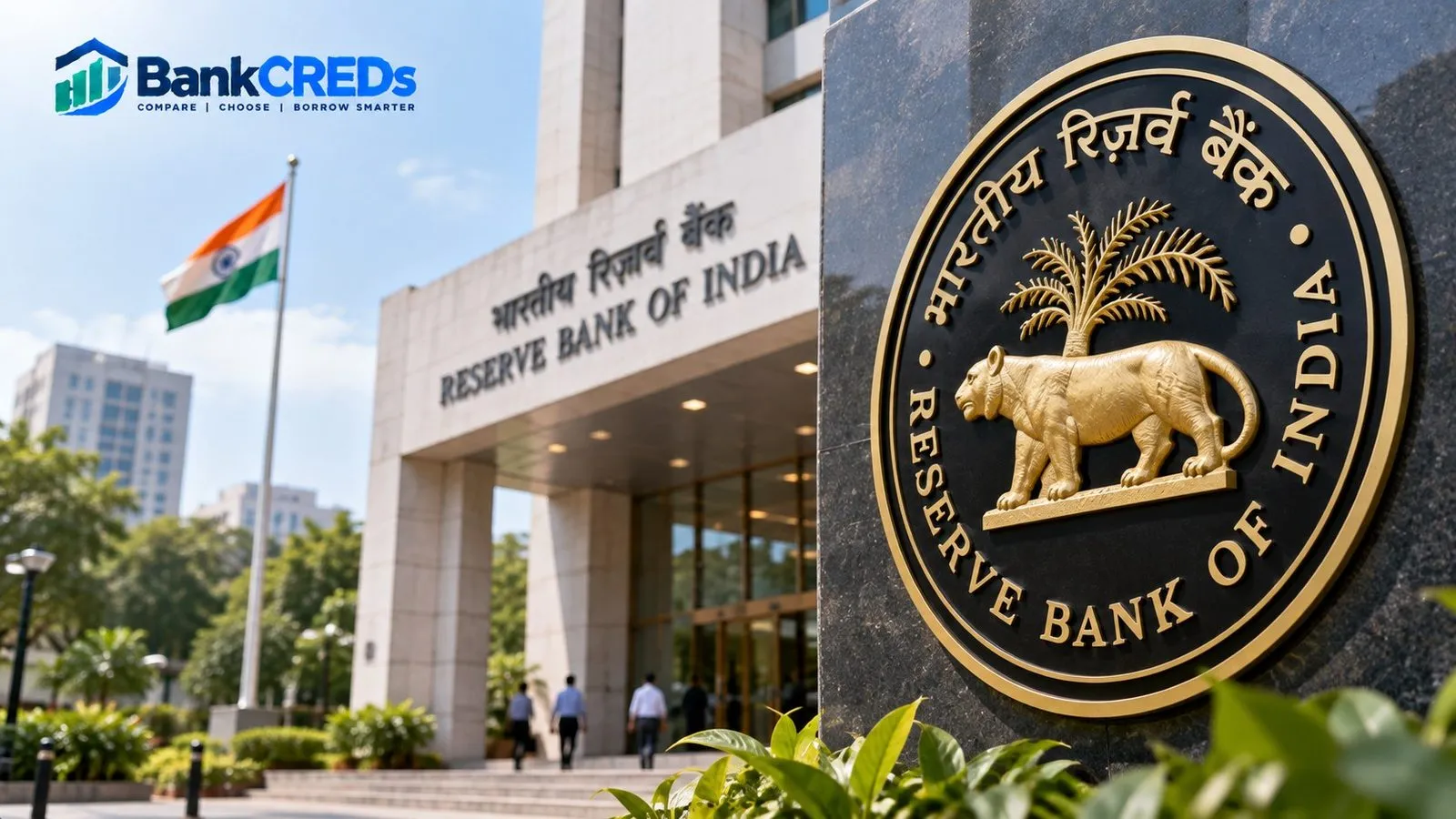
The Reserve Bank of India has eased shareholding norms for mutual funds, insurers and pension funds that hold stakes in banks, according to reporting by CNBC TV18. In plain terms, these large institutional investors are expected to find it easier to own bigger or less restricted stakes in Indian banks.
For an ordinary saver or borrower, the immediate impact is limited. Your deposit rate, loan rate and EMI do not change because of an ownership rule. The change matters more for how banks raise capital over the coming years.
This article explains how bank shareholding rules work, what the reported easing could mean in practice, and what you should and should not do about it. We only know the headline as reported, so we do not state the exact thresholds or effective dates; check the RBI notification for those.
Key takeaways
- As reported by CNBC TV18, RBI has eased shareholding norms for mutual funds, insurers and pension funds in banks.
- Ownership rules govern who can hold how much of a bank. They do not directly set deposit or loan rates.
- The likely long-term effect is easier access to institutional capital for banks, especially those planning equity raises.
- Your deposits remain protected by the ₹5 lakh per depositor per bank insurance cover, regardless of who owns the bank.
- No action is needed this week; keep comparing rates on interest rate tables rather than reacting to ownership news.
- Read the original RBI notification for exact limits, conditions and timelines before drawing firm conclusions.
Why RBI regulates who owns a bank
A bank is not an ordinary company. It holds public deposits, so the regulator cares about who controls it. Under standing Indian banking law and RBI directions, anyone acquiring a significant stake in a private bank generally needs RBI's prior approval; the commonly cited trigger is 5% of paid-up share capital. There are also ceilings on how much voting power a single shareholder can exercise in a private sector bank.
The idea is simple. A bank's owners influence its risk appetite, its lending choices and its willingness to inject capital when it is under stress. RBI wants owners who are fit and proper, financially sound and not using the bank as a captive source of funds for their other businesses.
Institutions such as mutual funds, insurers and pension funds are generally seen as lower-risk owners. They invest on behalf of millions of households, are regulated by SEBI, IRDAI and the pension regulator, and typically do not seek operational control. That is the logic behind treating them differently from promoters or industrial houses.
What the reported easing means in practice
Without the notification in front of us, we cannot tell you which limits were moved or by how much. What can be said from standing knowledge is how such relaxations usually work. They may simplify approval steps, raise the stake an institution can hold before special scrutiny applies, or give regulated institutions more room within existing ceilings.
The practical outcomes banks usually hope for are:
- A wider pool of long-term investors when a bank raises equity.
- Less friction for large domestic funds that want to build positions in banks.
- Reduced dependence on foreign portfolio flows for bank capital.
- Better chances for smaller lenders to attract anchor investors.
None of these is instant. A rule change opens a door; whether a bank walks through it depends on its own capital plans and market conditions.
What changes for savers and fixed deposit holders
For a fixed deposit holder, ownership rules are mostly invisible. Your FD rate is a function of the bank's funding needs and the prevailing rate environment. A ₹5 lakh deposit at 7% for one year earns about ₹35,000 in interest, and that figure depends on the rate on the day you book it, not on who holds the bank's shares.
The safety question deserves a careful answer. More institutional shareholders can mean more scrutiny and stronger governance, which is helpful. But it is not a guarantee. Deposit insurance through DICGC covers up to ₹5 lakh per depositor per bank, covering principal and interest combined, and that is the protection you can count on.
If you hold more than that with one bank, consider spreading it. This advice holds with or without any shareholding change.
What changes for borrowers and EMIs
Borrowers feel rate decisions, not ownership decisions. Floating-rate loans are linked to an external benchmark, usually the RBI repo rate, so your EMI moves when the repo rate and your lender's spread change. A shareholding easing does not alter either.
To see how little ownership matters next to rates, look at a ₹50 lakh home loan over 20 years:
| Interest rate | Approx. monthly EMI | Total interest over 20 years (approx.) |
|---|---|---|
| 8.00% | ₹41,800 | ₹50.3 lakh |
| 8.25% | ₹42,600 | ₹52.3 lakh |
| 8.50% | ₹43,400 | ₹54.2 lakh |
| 9.00% | ₹45,000 | ₹58.0 lakh |
These figures are illustrative arithmetic, not any bank's quote. A quarter-point difference costs roughly ₹800 a month here. That is the lever to watch. You can test your own numbers with the EMI calculator and read more in our home loan guides.
Who is affected and who is not
The table below separates the groups most and least likely to notice this change.
| Group | Likely effect | Why |
|---|---|---|
| Mutual funds, insurers, pension funds | Direct | Their permitted stake in banks is what the rule addresses |
| Banks planning equity raises | Indirect, positive | Larger pool of eligible institutional buyers |
| Existing bank shareholders | Indirect | Possible changes in demand for shares and in ownership mix |
| FD holders and savers | Minimal | Rates are driven by policy rates and funding costs |
| Home, personal and car loan borrowers | Minimal | EMIs follow benchmark rates and lender spreads |
| Customers of smaller banks | Slow, indirect | Better capital access could support lending over time |
If you are an investor in bank stocks or in a mutual fund with large banking holdings, you may care more. For household finance, this is background rather than breaking news.
What to do now: a short checklist
You do not need to change anything because of this development. If you want to use the news as a prompt for a quick financial check-up, this list is a sensible start:
- Check whether your deposits with any single bank exceed ₹5 lakh and consider spreading them.
- Compare your current loan rate with what lenders now advertise on the interest rates page.
- Confirm which benchmark your floating-rate loan is linked to and when it resets.
- If you hold a bank stock or a bank-heavy fund, read the RBI notification and the bank's disclosures before trading.
- Ignore messages claiming this news guarantees lower loan rates or higher FD rates.
Common mistakes to avoid
The first mistake is treating ownership news as a rate signal. Rates follow the central bank's policy stance, inflation and liquidity, not shareholding limits.
The second is assuming that a bank with more institutional shareholders cannot fail. Institutional ownership can improve governance but does not replace sound lending and adequate capital.
The third is acting on partial information. Headlines compress complex notifications. The conditions, caps and transition periods usually sit in the fine print, and they decide who benefits.
The fourth is panic-switching banks. Moving money or refinancing a loan has costs, including prepayment charges, processing fees and lost interest. Do it only when the numbers justify it, for instance after comparing offers for a personal loan or a home loan on total cost, not on news sentiment.
Outlook: a slow-moving reform
Banking reforms of this kind tend to play out over years. Indian banks have been growing credit faster than deposits at various points, and that pushes them to seek capital and funding from more sources. Making it easier for domestic institutions to hold bank equity fits the broader direction of deepening domestic capital for the financial sector.
What to watch next: the exact RBI notification, any conditions on approvals, how banks respond in their capital-raising plans, and whether other regulators issue matching guidance for the funds and insurers involved. For continuing coverage, follow the news hub.
Frequently asked questions
Does this RBI change affect my fixed deposit interest rate?
No, not directly. FD rates depend on the bank's funding needs and the broader interest rate environment. A change in shareholding norms for institutional investors does not set or alter them.
Is my money safer in a bank because mutual funds and insurers can own more of it?
Not automatically. Institutional owners can bring stronger governance, but your formal protection is the DICGC deposit insurance of ₹5 lakh per depositor per bank. Spreading large balances across banks remains sensible.
Will my home loan EMI go down after this announcement?
There is no direct link. EMIs on floating-rate loans change with the repo rate and your lender's spread. Use the EMI calculator to see how a rate change would affect you, and watch policy announcements instead.
Who is the main beneficiary of easier shareholding norms?
Banks that want to raise equity capital and the institutions that want to invest in them are the most direct beneficiaries. For households, any benefit would come indirectly and slowly through stronger bank balance sheets.
Where can I find the exact limits RBI has set?
Check the RBI's notifications and master directions pages for the official text. The headline reported by CNBC TV18 does not give the specific thresholds, so rely on the notification for details.
BankCreds analysis
BankCreds view: important for markets, quiet for households
The first thing to say plainly is that this development is less important to an ordinary saver or borrower than the headline suggests. Shareholding norms decide who may own how much of a bank. They do not set your deposit rate, your loan rate or your repo-linked EMI. Those come from the RBI policy rate, the bank's cost of funds and its credit-risk pricing, none of which this change touches directly.
Consider a salaried borrower with a ₹50 lakh home loan over 20 years. At 8.5% the EMI is roughly ₹43,400; at 8.25% it would be roughly ₹42,600, a gap of about ₹800 a month. A shareholding rule will not produce that gap. A repo rate cut passed through by your lender will. If someone tells you to refinance or to rush into a fixed deposit because of this news, they are over-reading it.
Who actually gains
The clearest beneficiaries are banks that need fresh equity. More room for domestic institutional investors can deepen the pool of long-term capital, which in turn supports balance sheets and, over years, lending capacity. Smaller private banks and those planning capital raises are the most likely to feel it. Public sector banks and the largest private lenders are less likely to see a day-to-day difference.
Who should be cautious
Depositors in smaller lenders should not read this as a safety upgrade. Institutional ownership is not a guarantee of soundness. The practical protections for your money remain the deposit insurance cover of ₹5 lakh per depositor per bank, and your own habit of spreading large balances across institutions.
What to do this week
Nothing urgent. If you are comparing deposits or loans, compare the published rate tables rather than ownership news. Revisit the story only when your bank announces a capital raise, since that is when the relaxed norms could become visible, and even then the effect on you is indirect. Treat this as a structural, slow-moving reform that shapes bank capital over years, not a rate event.
This section is BankCreds' own assessment of what the development means for Indian borrowers and savers. It is independent commentary, not part of the source reporting above.
Sources & references
- CNBC TV18 — originating report https://www.cnbctv18.com/business/companies/rbi-eases-shareholding-norms-for-mutual-funds-insurers-and-pension-funds-in-banks-20003678.htm
- Reserve Bank of India — Regulator that sets bank ownership and acquisition norms https://www.rbi.org.in/
- RBI Master Directions — Directions on acquisition of shares and voting rights in banks https://www.rbi.org.in/Scripts/BS_ViewMasDirections.aspx
- SEBI — Regulator of mutual funds https://www.sebi.gov.in/
- IRDAI — Regulator of insurers https://irdai.gov.in/
- DICGC deposit insurance — Deposit insurance cover of ₹5 lakh per depositor per bank https://www.dicgc.org.in/
Source links are shown as plain text, not clickable links. Copy a URL into your browser to read the original report.
Editorial note & disclaimer
How this was reported. The development above is attributed to the source or sources listed. BankCreds does not independently verify a third party's reporting; where a figure or a regulatory position is stated as fact, it is either attributed or drawn from the regulator's own published material. Everything under "BankCreds analysis" is our own assessment.
Rates and figures. Interest rates, per-gram values and premium bands quoted here are indicative, move daily, and differ by borrower profile, city and lender policy. Confirm the final number with the institution before you act on it — the sanction letter or policy schedule governs, not a news report.
Not financial advice. This article is general information for an Indian audience. It is not investment, tax, credit or insurance advice, takes no account of your circumstances, and BankCreds is not a lender, broker, distributor or advisor. Consider speaking to a SEBI-registered investment adviser or a qualified professional before acting.
Editorial policy · Fact-checking policy · Corrections policy · Our authors · About BankCreds · Contact us
Spotted an error? Corrections are published, not quietly edited — write to us via the contact page and see our corrections policy.