
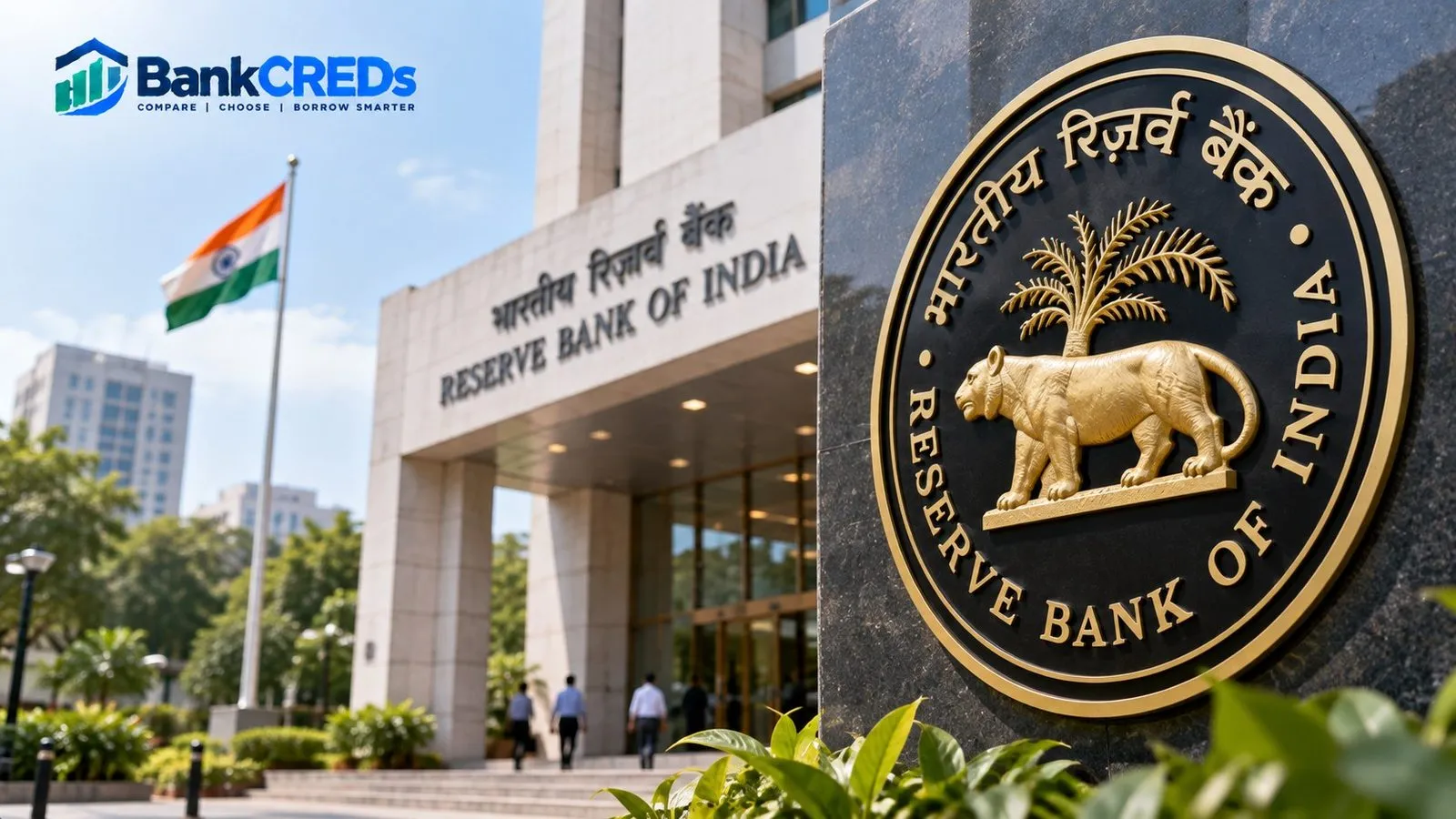
The Reserve Bank of India has directed the removal of Maharashtra minister Babasaheb Patil and seven others from the board of the Latur District Central Cooperative (DCC) Bank, according to reporting by ABP Live English. For ordinary depositors and borrowers, the immediate message is that a regulatory action targets the bank's directors, not its customers' accounts.
Based on the headline alone, nothing suggests that deposits, loan accounts or branch services have been frozen. Customers should keep normal banking routines, avoid panic withdrawals, and check that any deposit above ₹5 lakh in one bank is understood in terms of deposit insurance.
This article explains what a DCC bank is, why the RBI can act on a cooperative bank's board, what the development does and does not mean, and what practical steps make sense. We only know the headline as reported, so we avoid guessing at reasons, timelines or outcomes.
Key takeaways
- As reported by ABP Live English, the RBI has directed the removal of eight board members of the Latur DCC Bank, including a Maharashtra minister.
- The action concerns governance of the bank. It does not, on its own, change loan interest rates, EMIs or deposit balances.
- Deposits in insured banks are covered up to ₹5 lakh per depositor per bank, principal and interest combined.
- Borrowers must continue paying EMIs on time; a board change does not waive or pause a loan.
- Watch for official statements from the bank and the RBI instead of relying on forwarded messages.
What has been reported about the Latur DCC Bank board
The only facts we can attribute are those in the headline reported by ABP Live English: the RBI has directed that Babasaheb Patil, described as a Maharashtra minister, and seven other people be removed from the board of the Latur DCC Bank. We have not seen the text of the direction, and we do not know the grounds, the effective date, whether the bank will be run by an administrator, or whether the affected persons can challenge the order.
That gap matters. Readers sometimes assume that any regulatory action against a bank's directors means the bank is about to fail. That is not a safe assumption. Boards of cooperative banks are removed or superseded for a range of governance reasons, and the consequences for customers are usually far narrower than the headline implies. Until the bank or the RBI publishes details, the responsible approach is to treat the report as a governance development and to follow the official record.
If you are a customer of this bank, the most useful step is to read notices displayed at your branch and on the bank's official channels. Ignore screenshots and voice notes that claim the bank is closing or that withdrawals are capped. Such claims travel faster than facts in these situations.
How a DCC bank works and why the RBI can act
A District Central Cooperative Bank sits in the middle tier of the short-term cooperative credit structure in many states. Primary agricultural credit societies at village level are its members, and the state cooperative bank sits above it. DCC banks lend to farmers, small traders and rural households, and they also accept savings, current and fixed deposits from the public.
Because they accept public deposits, these banks come under banking regulation. The RBI supervises cooperative banks for banking functions, while state cooperative departments look after aspects of registration and administration. Under the banking laws that apply to cooperative banks, the RBI has powers to issue directions on matters such as management, and in defined circumstances to require the removal of directors or officials from a bank's management. The RBI also publishes its directions and circulars on its website, which is the right place to look for authoritative text.
The practical point is that the board of a cooperative bank is elected by members, so it can include politicians and local leaders. The RBI's interest is in whether the bank is being run in a sound and prudent way that protects depositors. A board removal is therefore a supervisory tool aimed at the governing body, not at the customers.
What this means for depositors
Your savings account, recurring deposit or fixed deposit continues to be a contract between you and the bank. A change of directors does not alter the interest rate you were promised or the maturity date. Branches normally continue to operate, and interest continues to accrue.
What depositors should understand is deposit insurance. The DICGC insures deposits up to ₹5 lakh per depositor per bank, and this covers principal and interest together across all your accounts in the same capacity at that bank. Amounts above the limit are not covered. The table below shows how this works.
| Your deposits at one bank | Insured amount | Amount above the ₹5 lakh limit |
|---|---|---|
| ₹3 lakh in one FD | ₹3 lakh | ₹0 |
| ₹5 lakh across savings and FD | ₹5 lakh | ₹0 |
| ₹8 lakh across savings and FD | ₹5 lakh | ₹3 lakh |
| ₹8 lakh split ₹4 lakh each in two banks | ₹8 lakh | ₹0 |
Notice that splitting a large sum across two separately insured banks brings the whole amount within cover. This is a routine risk-management habit and not a reaction to this news alone. Do it in an orderly way: let a deposit mature before moving it, so you do not lose interest through premature withdrawal penalties.
A simple checklist for depositors
- Add up everything you hold at the bank, including savings, FDs, RDs and interest accrued.
- Compare the total with the ₹5 lakh insured limit.
- If you are over the limit, plan to move the excess at maturity to another bank.
- Keep FD receipts and passbook entries up to date.
- Check current deposit rate bands on our interest rates page before reinvesting.
What this means for borrowers
A loan from the Latur DCC Bank remains a legal obligation. The rate, tenure and repayment schedule in your sanction letter do not change because directors have been removed. If you skip EMIs expecting relief, you risk penal charges and a damaged credit record.
Loan disbursals could conceivably be slower while new management settles in, but we have no reporting that says so, and it would be wrong to predict it. If you have a sanctioned but undisbursed loan, ask your branch manager directly and get the answer in writing.
To see what a typical loan costs, take a ₹5 lakh loan at 11% a year over five years. The EMI works out to roughly ₹10,870, so you would pay about ₹6.52 lakh in total, of which about ₹1.52 lakh is interest. You can test your own numbers with the EMI calculator.
| Loan example | Rate | Tenure | Approx. EMI | Approx. total interest |
|---|---|---|---|---|
| ₹5 lakh | 10% | 5 years | ₹10,624 | ₹1.37 lakh |
| ₹5 lakh | 11% | 5 years | ₹10,870 | ₹1.52 lakh |
| ₹5 lakh | 12% | 5 years | ₹11,122 | ₹1.67 lakh |
The table also shows why rate differences matter more to your wallet than board changes do. A one-point difference in rate on this loan shifts the EMI by about ₹250 a month. If you are considering switching lenders, compare offers in our personal loan guides and check your eligibility before applying.
Who is affected and who is not
The people directly affected are the eight individuals named in the direction, who are reported to be removed from the board. The bank's governance and decision-making will also be affected, because a board sets policy, approves larger loans and oversees management.
Customers are only indirectly affected. Ordinary savers, farmers with crop loans and small business borrowers should see no change to their existing accounts as a direct result of the order. People whose situation deserves extra attention include:
- Depositors with more than ₹5 lakh in the bank, who hold uninsured balances.
- Borrowers waiting on a fresh sanction, who may want to confirm the timeline.
- Members of primary societies linked to the bank, who may hear more through their society.
People who are not affected include customers of other banks, including other DCC banks, unless the RBI issues separate directions for them. One bank's board action does not imply that neighbouring banks are in difficulty.
What to do now: a practical plan
The best response is calm and documented. Here is a sensible sequence:
- Continue normal banking and pay all EMIs on their due dates.
- Ask your branch for an updated statement and keep a copy.
- Read official notices from the bank and the RBI rather than social media forwards.
- If your balance exceeds ₹5 lakh, plan to diversify at maturity across insured banks.
- Do not sign up for schemes from anyone claiming to help you recover or protect money because of this news.
- Follow our news hub for updates as more verified detail emerges.
If you need urgent liquidity, be aware that pre-mature FD withdrawal is usually possible, but it can cost you part of the interest. Compare that with other options before acting. For small short-term needs, guides on instant loans explain costs, though borrowing should never be the first response to a headline.
Common mistakes and the outlook
The most frequent mistake in situations like this is a panic withdrawal based on a rumour. It can cost interest, and if many people do it at once, it can create a liquidity strain that did not exist before. The second mistake is assuming that everything is fine forever without checking the ₹5 lakh insurance limit. The third is stopping EMI payments in the belief that management change gives a grace period. It does not.
Looking ahead, the key things to watch are official statements on who will supervise the bank's management, whether any further directions follow, and whether the bank issues notices to customers. Until those emerge, this remains a governance story with limited direct impact on customers. Readers should stay informed, stay within insurance limits, and keep repayments regular.
Frequently asked questions
Is my money safe in the Latur DCC Bank after the RBI order?
The report we have concerns the removal of board members, and it does not say deposits are frozen or at risk. Deposits are insured up to ₹5 lakh per depositor per bank by the DICGC, principal and interest combined. Check official notices for anything further.
Do I still have to pay my EMI on time?
Yes. A change in the board does not alter your loan agreement, rate or due dates. Missing EMIs can lead to penal charges and a lower credit score, so continue paying as scheduled.
Can I withdraw my fixed deposit early?
Most banks allow premature withdrawal, but usually with a penalty on the interest rate. Unless you need the money, letting the deposit mature and then moving any excess above ₹5 lakh is normally cheaper than withdrawing in a hurry.
Does this affect other cooperative banks in Maharashtra?
Not on the basis of this report. The direction concerns the Latur DCC Bank's board, and there is no indication in the headline that other banks are covered. Customers of other banks should follow their own bank's notices.
Where can I find official information?
The RBI publishes its directions and press releases on its website, and the bank should display notices at its branches. Rely on those over forwarded messages, and follow our news hub for verified updates.
BankCreds analysis
What this changes in rupees, and what it does not
For most households, the direct rupee impact of a board change is zero. Take a farmer-borrower with a ₹5 lakh loan at about 11% over five years: the EMI is roughly ₹10,870 and it stays the same whether the board has 17 directors or 9. The contract with the bank, not the composition of its board, sets that number. A depositor's balance is likewise unchanged by who sits on the board.
The headline is easy to over-read. Removing directors is a governance action against individuals. It is not the same as saying the bank has lost money, and it is not a licence cancellation. The reporting we have does not say the bank is unable to pay depositors, so readers should not treat it as a run signal. Withdrawing money in panic is the one action that can hurt the bank and the withdrawing depositor alike, because it can turn a governance problem into a liquidity one.
The household that has the most to think about is the one holding more than ₹5 lakh in a single cooperative bank, for instance a retired couple with ₹9 lakh in one fixed deposit. Only ₹5 lakh of that is covered by deposit insurance per depositor per bank. That gap existed yesterday and it exists today. This news is simply a useful prompt to fix it, by spreading large deposits across banks or across ownership categories, and not by pulling everything out overnight.
Borrowers should do something even simpler this week: keep paying EMIs on schedule and keep receipts. Missed instalments during a period of administrative change create problems that no board decision can undo. Beyond that, this is a story to monitor and not to act dramatically on. Longer term, regulators have been tightening oversight of cooperative banks for years, so this fits an existing trend and is not an isolated shock.
This section is BankCreds' own assessment of what the development means for Indian borrowers and savers. It is independent commentary, not part of the source reporting above.
Sources & references
- ABP Live English — originating report https://news.abplive.com/business/rbi-directs-removal-of-babasaheb-patil-7-others-from-latur-dcc-bank-board-1867466/amp
- Reserve Bank of India — RBI is the regulator that supervises cooperative banks and issues directions to them https://www.rbi.org.in/
- DICGC deposit insurance — Deposit insurance cover of up to ₹5 lakh per depositor per bank https://www.dicgc.org.in/
Source links are shown as plain text, not clickable links. Copy a URL into your browser to read the original report.
Editorial note & disclaimer
How this was reported. The development above is attributed to the source or sources listed. BankCreds does not independently verify a third party's reporting; where a figure or a regulatory position is stated as fact, it is either attributed or drawn from the regulator's own published material. Everything under "BankCreds analysis" is our own assessment.
Rates and figures. Interest rates, per-gram values and premium bands quoted here are indicative, move daily, and differ by borrower profile, city and lender policy. Confirm the final number with the institution before you act on it — the sanction letter or policy schedule governs, not a news report.
Not financial advice. This article is general information for an Indian audience. It is not investment, tax, credit or insurance advice, takes no account of your circumstances, and BankCreds is not a lender, broker, distributor or advisor. Consider speaking to a SEBI-registered investment adviser or a qualified professional before acting.
Editorial policy · Fact-checking policy · Corrections policy · Our authors · About BankCreds · Contact us
Spotted an error? Corrections are published, not quietly edited — write to us via the contact page and see our corrections policy.