
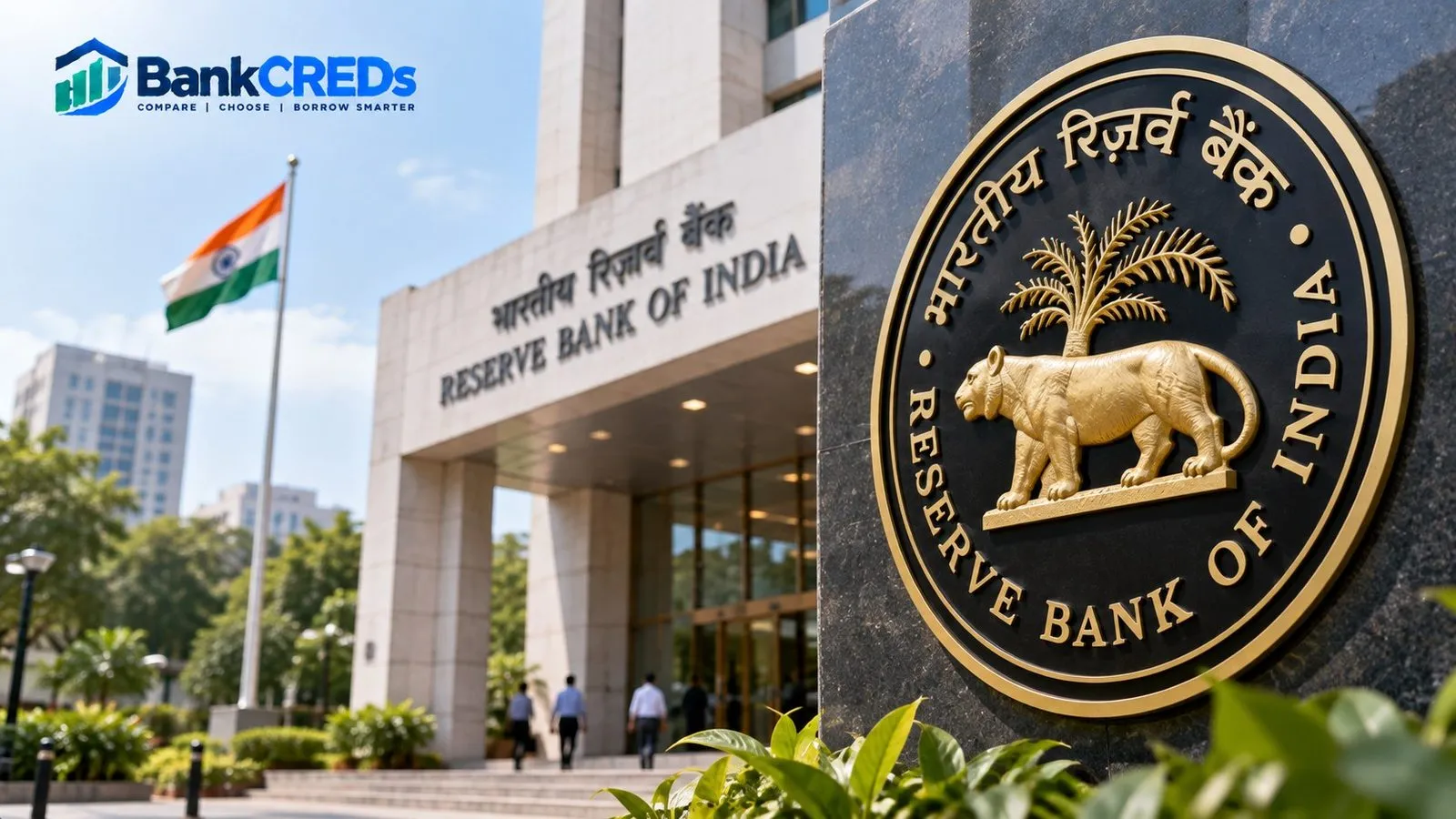
An RBI Deputy Governor, Shirish Chandra Murmu, has said that introducing a merchant discount rate (MDR) on UPI is unlikely to trigger a surge in cash transactions, according to reporting by Fortune India. In plain terms, the central bank's view, as reported, is that people are not likely to rush back to cash even if merchants face a fee on UPI payments.
For an ordinary customer, the immediate takeaway is simple: nothing changes at the checkout today because of this remark. MDR is a fee that merchants pay, not something a customer is charged when scanning a QR code, and the reported comment is a view on behaviour rather than a new rule.
This article explains what MDR is, why the comment matters, what could and could not change for shoppers, small businesses and savers, and how to keep your own payment habits sensible while the debate continues. We only know the headline as reported, so we avoid guessing at details of any proposal.
Key takeaways
- According to Fortune India, RBI Deputy Governor Shirish Chandra Murmu believes a UPI MDR is unlikely to cause a surge in cash use.
- MDR is a charge on the merchant side of a payment; a customer scanning a QR code does not pay it directly.
- The remark is an opinion about behaviour. It is not a notification, a circular or a confirmed fee schedule.
- Any effect on consumers would be indirect, such as pricing or cash-discount offers at small shops.
- Households should keep using UPI as usual, hold a small cash cushion, and watch official RBI communication for actual rule changes.
What is MDR and why does it matter for UPI
Merchant discount rate is the fee a business pays for accepting a digital payment. It is usually a percentage of the transaction value and is shared among the parties that make the payment work, such as the merchant's bank, the customer's bank and the network. Card payments have long carried MDR, which is why some shops used to add a surcharge or refuse cards for small bills.
UPI has been different. Since the start of 2020, the government's policy has been zero MDR on UPI and RuPay debit card transactions, which is one reason UPI spread so quickly to street vendors, kirana stores and auto-rickshaw drivers. When a payment costs the merchant nothing, accepting it is an easy decision.
That is also why the topic keeps coming back. Running a payment system involves real costs for banks and app providers, and the question of who should bear them, and whether merchants should pay a small fee, has been discussed for years. The reported comment enters that debate from the angle of consumer behaviour.
What the Deputy Governor's reported view signals
The headline reports a judgement, not a decision. Saying a cash surge is unlikely suggests the RBI sees UPI as a habit that is hard to reverse. Once people carry payment apps, get instant confirmations and keep a digital record of spending, going back to notes and coins is inconvenient.
It is worth being careful about what this does not say. It does not confirm that an MDR will be introduced. It does not say what rate, which merchants or which transaction sizes would be covered. We have not seen those details and will not speculate on them. Anyone claiming to know the exact terms from this headline alone is guessing.
For reference, RBI's regulatory position on payment systems and its circulars are published on the RBI website and its notifications page. Those, not commentary, are what actually change the rules. For more coverage of policy developments, see our news hub.
Why a rush back to cash may not happen
There are practical reasons that support the view reported by Fortune India, even without knowing the specifics of any proposal:
- Convenience is sticky. Paying by scanning a code takes seconds, needs no change and works at the smallest stalls.
- Customers do not bear the fee directly. If the charge falls on the merchant, a customer's checkout experience stays the same unless the merchant reacts.
- Cash has its own costs. Merchants have to count it, store it, deposit it and guard against theft or counterfeit notes.
- Digital records help businesses. UPI history makes it easier to track daily sales, reconcile accounts and show income when applying for a business or working capital loan.
- Cash access is thinner than it used to be. Many people no longer carry much cash, and ATM trips are a chore compared with a tap on the phone.
None of this means behaviour cannot shift at the margin. A shopkeeper who faces a new fee might nudge customers toward cash on very small purchases. The claim is about a broad surge, and the reported view is that such a surge is unlikely.
What changes for shoppers, borrowers and savers
The table below compares what is true today with what could change if an MDR were ever applied. The right-hand column is illustrative reasoning, not a confirmed outcome.
| Person | Today | If a merchant fee applied (illustrative) |
|---|---|---|
| Everyday shopper | Pays nothing extra to use UPI | Most likely no direct charge; small chance of cash discounts or minimum-bill rules at some shops |
| Small shopkeeper | Accepts UPI at zero cost | Takes on a new cost and must decide whether to absorb it or pass it on |
| Salaried borrower paying EMIs | EMI is set by loan rate and tenure | No change; EMI auto-debit is separate from merchant payments |
| Saver holding cash reserves | Bank balance earns interest; cash earns nothing | No change to deposit rates from this remark |
| Gig worker or freelancer | Receives payments through UPI at no cost | Person-to-person transfers are not the same as merchant payments |
If you are planning a loan, the number that matters is your interest rate and EMI, not the payment rail you use at the grocer. You can test scenarios with our EMI calculators and compare current lender pricing in the interest rate tables.
A worked example: what an MDR could mean for a small shop
The following is a hypothetical calculation to show scale. It does not reflect any announced rate.
Suppose a neighbourhood grocery store takes Rs 2,00,000 a month in UPI payments. If a hypothetical fee of 0.3% applied, the cost would be Rs 2,00,000 x 0.003 = Rs 600 a month, or Rs 7,200 a year. If the same store sold Rs 5,00,000 a month through UPI, the same fee would be Rs 1,500 a month.
Now compare that with a typical cash-handling burden. If the owner spends even 20 minutes a day counting and depositing cash, that is about 10 hours a month. At a modest valuation of Rs 200 an hour, the time is worth Rs 2,000 a month, before counting the risk of theft or fake notes. Cash is not free, and that is one reason the reported view of a limited swing back to cash is plausible.
Where a fee really bites is on thin-margin, high-volume businesses, such as small fuel-adjacent shops, milk booths and street food, where a fraction of a percent is a large share of profit. Those are the merchants most likely to react, for example by offering a small discount on cash.
Who is affected and who is not
Likely to be affected, if a fee ever applies:
- Small and mid-sized merchants with high UPI volumes and thin margins.
- Payment apps and banks, whose revenue models depend on how costs are shared.
- Customers of shops that decide to pass on the cost with surcharges or minimum bill values.
Unlikely to be affected by this remark:
- Individuals sending money to family and friends through UPI.
- Borrowers with running EMIs and standing instructions.
- Depositors, whose returns depend on bank rates and not on payment policy.
- Anyone using a personal loan or other credit product, where interest rate and tenure drive the cost.
What to do now: a simple checklist
You do not need to change anything today. A few sensible habits still help:
- Keep using UPI as normal, and set a daily transaction limit that suits your spending.
- Carry a small amount of cash, for example enough for a day or two of essentials, in case of network downtime.
- Check the price on the bill against the price at the QR code, and ask politely if a shop adds a surcharge you did not expect.
- Read official RBI and government notices for any actual change rather than relying on social media forwards.
- Keep your loan repayments on auto-debit or reminders so a payment slip is never caused by a payment-app hiccup.
Common mistakes to avoid
- Treating a comment as a rule. A view expressed by an official is not the same as a notified regulation.
- Panic-withdrawing cash. Pulling money out of your account to avoid a fee that does not apply to you costs time and can be a security risk.
- Confusing MDR with a customer charge. MDR is charged to the merchant. Customers should not accept a fee described as MDR without an explanation.
- Falling for fraud messages. Whenever payment fee changes are in the news, scammers circulate fake alerts. Never share your UPI PIN or click unknown links.
- Ignoring the credit side. If you are borrowing, check your eligibility and compare offers on total cost, not on how easy the payment is.
Frequently asked questions
Will I have to pay extra to use UPI because of this?
Not based on what has been reported. MDR is a merchant-side fee, and the reported remark is an opinion that a cash surge is unlikely, not a notification of a new charge on customers. Watch for official RBI or government notices for any actual change.
What is MDR in simple words?
Merchant discount rate is the small percentage a business pays when it accepts a digital payment. It is normally split among the banks and networks that process the transaction. UPI payments have carried zero MDR under government policy since 2020.
Could shops start offering cash discounts?
It is possible in principle if merchants face a fee and want to avoid it, particularly on small tickets. However, the reported view is that a broad move back to cash is unlikely. If a shop does offer a discount, it is the merchant's choice and not an RBI rule.
Does this affect my EMI or loan interest rate?
No. Your EMI depends on the loan amount, interest rate and tenure. Merchant payment costs are a separate matter and do not change a loan's terms.
Where can I check official information?
The RBI publishes circulars, notifications and payment-system guidance on its website. Reliable summaries are also released through the Press Information Bureau. Treat unverified messages about fees with caution.
BankCreds analysis
The headline sounds like a big shift for household money, but for most salaried borrowers and savers it is a low-impact story. MDR is a cost between the merchant, the acquiring bank and the payment system. It is not a charge on you when you scan a QR code, and nothing reported so far changes that.
Where it could matter is indirectly. Suppose a neighbourhood grocer does Rs 3,00,000 of UPI sales a month. Purely as an illustration, a 0.3% fee would cost Rs 900 a month, or Rs 10,800 a year. Against a typical grocer margin, that is small, but it is not zero. A merchant can absorb it, raise prices by a hair, or offer a small cash discount. The last of these is the one to watch, because it is the only route by which a consumer would feel a nudge toward cash.
The over-reading to avoid
The official view, as reported, is that a cash surge is unlikely. That is a forecast about behaviour, not a decision on fees, and it does not tell you whether, when or for whom any MDR would apply. Do not change how you pay, or how you keep money in your account, on the strength of this headline.
The better use of this week is the boring one. Keep your UPI limits and bank alerts in order, keep a modest cash reserve for outages, and check the price on the shelf and the price at the QR code match. If you are a borrower, your EMI is set by your loan's interest rate, and payments mandates like auto-debit and NACH are separate rails from merchant UPI. Nothing about this story touches them. The development is less important for your wallet than the headline suggests, and much more important for small merchants, banks and payment apps, whose economics are what the debate is really about.
This section is BankCreds' own assessment of what the development means for Indian borrowers and savers. It is independent commentary, not part of the source reporting above.
Sources & references
- Fortune India — originating report https://www.fortuneindia.com/personal-finance/banking/mdr-apprehension-unlikely-to-spur-higher-cash-usage-rbi-dg/160014
- Reserve Bank of India — RBI is the regulator of payment systems in India https://www.rbi.org.in/
- Press Information Bureau — Official government announcements on digital payment policy https://www.pib.gov.in/
Source links are shown as plain text, not clickable links. Copy a URL into your browser to read the original report.
Editorial note & disclaimer
How this was reported. The development above is attributed to the source or sources listed. BankCreds does not independently verify a third party's reporting; where a figure or a regulatory position is stated as fact, it is either attributed or drawn from the regulator's own published material. Everything under "BankCreds analysis" is our own assessment.
Rates and figures. Interest rates, per-gram values and premium bands quoted here are indicative, move daily, and differ by borrower profile, city and lender policy. Confirm the final number with the institution before you act on it — the sanction letter or policy schedule governs, not a news report.
Not financial advice. This article is general information for an Indian audience. It is not investment, tax, credit or insurance advice, takes no account of your circumstances, and BankCreds is not a lender, broker, distributor or advisor. Consider speaking to a SEBI-registered investment adviser or a qualified professional before acting.
Editorial policy · Fact-checking policy · Corrections policy · Our authors · About BankCreds · Contact us
Spotted an error? Corrections are published, not quietly edited — write to us via the contact page and see our corrections policy.