
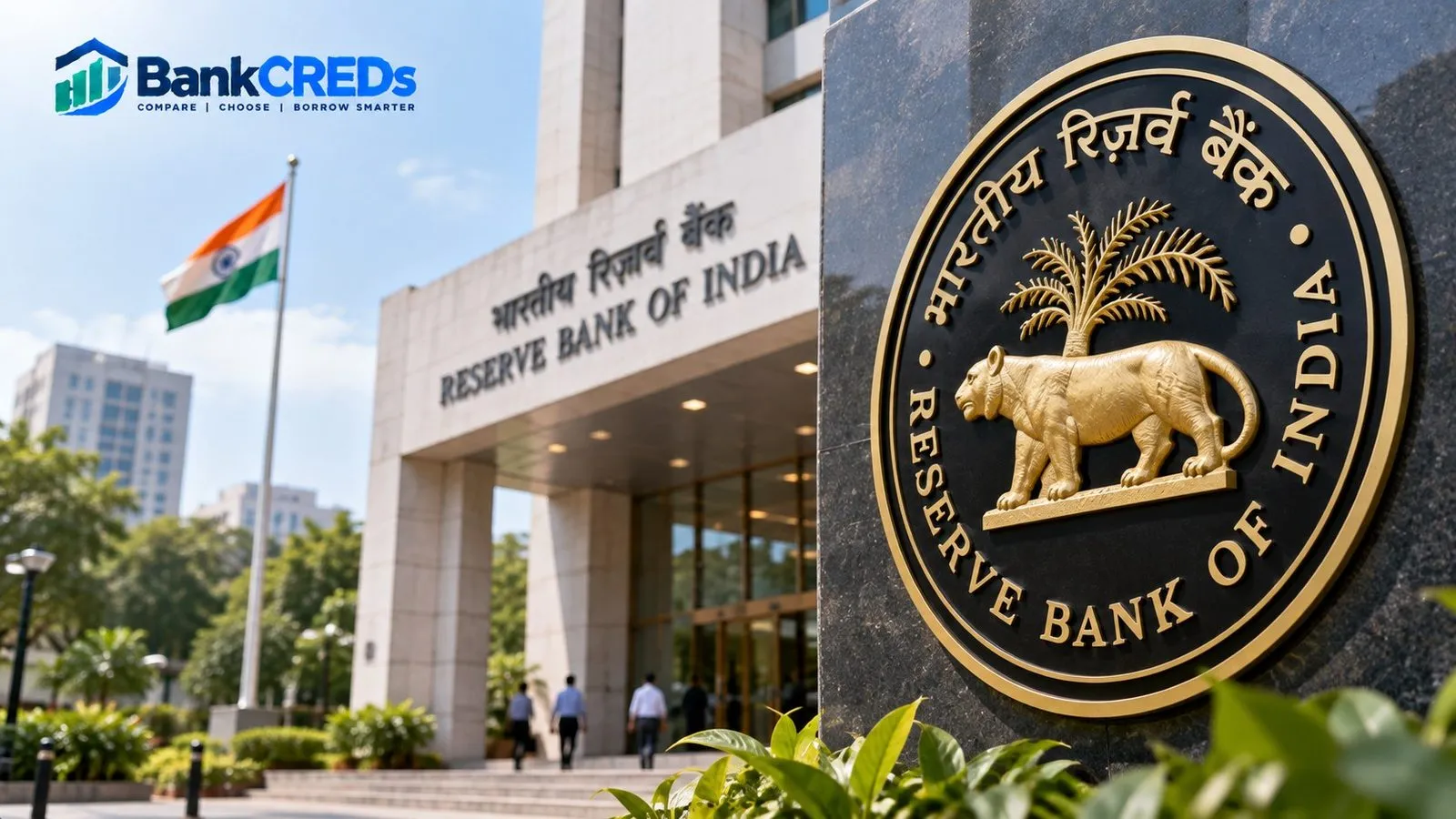
Some large NBFCs and the holding companies that sit above them are restructuring how they hold assets and book income, according to reporting by The Economic Times -- a move the report frames as an attempt to stay outside the Reserve Bank of India's toughest supervisory net. For most borrowers this is a corporate-structure story, not a rate or product announcement: it does not touch your existing EMI, but it matters for anyone borrowing from an NBFC-backed group over the next few years.
The RBI does not regulate every NBFC the same way. Since 2021 it has used a four-layer "scale-based" framework where the amount of capital, governance and disclosure a company must maintain rises sharply once it crosses certain size and systemic-importance thresholds. If a group can keep individual entities under those thresholds -- by moving loan books, investments or income between a holding company, an NBFC arm, a housing-finance arm and other group companies -- the group can keep doing much the same lending business while facing a lighter compliance load than its overall scale would otherwise attract.
That gap between economic size and regulatory size is exactly what the reported rejig is about. It doesn't automatically mean any specific lender is unsafe, but it is a reminder to check who you're actually borrowing from before you sign.
Key takeaways
- The Economic Times reports that holding companies and NBFCs are restructuring assets and income, reportedly to remain below the thresholds that trigger RBI's strictest oversight layer.
- RBI classifies NBFCs into four layers -- Base, Middle, Upper and Top -- under its scale-based regulation (SBR) framework; the layer decides capital, governance and disclosure requirements.
- This is a structural/compliance story, not an interest-rate or loan-scheme change -- no sanctioned loan or running EMI is affected by it directly.
- The real risk for borrowers is longer-term: a lender regulated more lightly than its actual size and risk profile can see policy, pricing or continuity problems surface later rather than sooner.
- Before taking a fresh loan from any NBFC, verify its RBI registration and its position in the group structure, and compare it against a bank quote using an /emi-calculator/.
- Deposit insurance limits, RBI's grievance redressal channel, and your right to loan statements and closure documents are unaffected by how a lending group organises its internal entities.
How RBI decides how closely to watch an NBFC
Under the RBI's scale-based regulatory (SBR) framework, every non-banking finance company sits in one of four layers, and the layer -- not the company's marketing size or brand recognition -- determines how strict the rulebook is.
| Layer | Typical NBFC profile | What triggers placement | Regulatory intensity |
|---|---|---|---|
| Base Layer (BL) | Small, non-deposit-taking NBFCs, NBFC-P2P, NBFC-Account Aggregators | Asset size broadly below ₹1,000 crore | Lightest -- basic prudential and conduct norms |
| Middle Layer (ML) | Deposit-taking NBFCs and larger non-deposit NBFCs | Asset size at or above the Base Layer threshold | Moderate -- stronger capital adequacy and governance norms |
| Upper Layer (UL) | RBI-identified systemically important NBFCs (a specific list RBI publishes and reviews) | Size, interconnectedness, complexity and substitutability, as assessed by RBI | Bank-like -- higher capital buffers, differentiated supervision |
| Top Layer (TL) | Reserved layer, currently unpopulated | An Upper Layer NBFC whose risk profile escalates further | Highest possible -- reserved for outsized systemic risk |
The intent of this structure is straightforward: the bigger and more interconnected an NBFC is, the more its failure could ripple through the financial system, so it should hold more capital and disclose more. A group that can keep its individual lending entities in the Base or Middle Layer -- even while the group's combined lending book is large -- avoids the Upper Layer's tougher requirements.
Why a holding company might rejig assets and income
Many Indian NBFC-led financial groups are not single companies; they are a holding company sitting above several regulated and unregulated entities -- an NBFC for personal or gold loans, a separate housing finance company, sometimes an insurance broking arm, an asset management arm, and fintech-partnership vehicles. Assets, receivables and income can, in principle, sit in any of these entities depending on how a transaction is structured.
Reworking which entity holds which asset or books which income is not inherently improper -- group restructuring happens for tax, capital-raising and operational reasons too. But when reporting frames it as being done "to escape RBI scrutiny," the implication is that entities are being kept individually smaller so the group collectively avoids Upper Layer-style obligations, even though the underlying lending exposure to the public is effectively similar.
What this does -- and doesn't -- change for borrowers and savers
For a borrower with an existing loan, nothing changes today. Your EMI schedule, your rate of interest (whether fixed or linked to a benchmark), your loan tenure and your right to a No Objection Certificate on closure are governed by your loan agreement, not by how the lender's parent group organises its balance sheet.
Where it can matter is in three places:
- Fresh underwriting standards. A group under less intense RBI scrutiny may have more discretion in how conservatively it prices and underwrites new loans, which can show up as either more aggressive approvals or, if regulators later tighten the rules, a sudden pullback.
- Continuity of service. If a restructuring is later unwound because RBI classifies the group differently, borrowers can face servicing transfers -- your loan account moving to a different NBFC entity within the same group, with fresh KYC or communication.
- Depositor and investor exposure. If the NBFC in question takes public deposits or has listed debt, its risk profile -- not just its published capital ratio -- is what ultimately matters for repayment safety.
A worked illustration: regulatory layer and what it can mean for loan pricing
The following is an illustrative comparison based on typical market patterns for how conservatively capitalised, closely supervised lenders price risk versus lighter-touch ones -- it is not a claim about any specific lender in the reported story.
| Factor (illustrative, ₹5 lakh personal loan, 24 months) | Lender in a lighter-touch layer | Lender in Upper Layer / bank-like oversight |
|---|---|---|
| Typical documentation and approval time | Faster, fewer disclosures | Slower, more income and credit checks |
| Minimum capital buffer the lender must hold | Lower | Higher |
| Illustrative market rate band seen for such loans | Roughly 14%-24% p.a. | Roughly 11%-18% p.a. for well-capitalised large lenders |
| Resilience if the lender hits stress | Higher chance of sudden portfolio sale or loan transfer | Lower, due to closer ongoing RBI monitoring |
The takeaway is not that lightly regulated NBFCs are automatically worse -- many serve borrowers banks won't, especially in gold loans and small-ticket personal credit. It's that the layer a lender sits in is a reasonable proxy for how much of a safety margin sits behind your loan, and it's worth checking before you borrow, using /interest-rates/ to compare what different categories of lenders are quoting.
Who is affected, and who isn't
- Borrowers of large, listed NBFCs and bank-promoted NBFCs are least affected -- these are typically already in the Upper Layer and subject to close supervision regardless of group structure.
- Borrowers of smaller, group-structured NBFCs -- including many gold loan and personal loan providers that operate under a holding-company umbrella -- are the segment this story is really about, since these are the entities that have room to sit just under a size threshold.
- Existing borrowers with running loans are not affected in the short term; your contract terms don't change because of a group's internal restructuring.
- Depositors in deposit-taking NBFCs should pay closer attention, since deposit safety depends on the lender's actual financial strength, not just its stated regulatory category.
- Fintech-partnered lending apps that route loans through an NBFC partner are indirectly affected -- the NBFC's regulatory layer shapes what the app can offer and how quickly it can scale.
What to do now if you borrow from an NBFC-backed group
- Check that the NBFC extending you a loan is genuinely RBI-registered using the RBI's published NBFC list before signing anything.
- Ask which specific legal entity within the group is the actual lender on your agreement -- not just the consumer-facing brand name.
- Compare at least one bank offer and one NBFC offer for the same loan amount and tenure using an /emi-calculator/ before committing.
- For a large-ticket loan such as a /home-loan/, prefer lenders in the Upper Layer or bank-promoted NBFCs where possible, given the multi-year exposure involved.
- Keep copies of your loan agreement, sanction letter and repayment schedule regardless of which entity in a group services your account, so a later transfer doesn't complicate your records.
- If you already hold a /personal-loan/ or /gold-loan/ with an NBFC and are unsure of its regulatory standing, you can check RBI's Sachet portal for any flags against unauthorised or non-compliant entities.
Common mistakes to avoid, and the likely direction of travel
The most common borrower mistake here is assuming a large, familiar brand name automatically means the strictest regulatory oversight -- brand size and RBI's layer classification are related but not identical, especially where a holding company structure spreads exposure across several legal entities.
The second mistake is ignoring the fine print on who the actual lender is. Many consumer-facing apps and storefronts are distribution channels for an NBFC that isn't named prominently; the entity on your loan agreement is the one whose regulatory layer actually matters to you.
On outlook: RBI has steadily tightened NBFC oversight since introducing the scale-based framework in 2021 -- through revised norms on loan classification, stricter co-lending rules, and periodic review of the Upper Layer list. Reported attempts by groups to structure around these thresholds tend to invite closer, not looser, RBI attention over time, including through group-wide "consolidated supervision" style reviews. Borrowers shouldn't expect this specific story to change loan terms overnight, but it's a reasonable cue to be more deliberate about which entity within a lending group you're actually dealing with. For the latest on how such regulatory developments play out, keep an eye on /news/.
Frequently asked questions
Does this affect my existing NBFC loan's EMI or interest rate?
No. Your EMI, interest rate and tenure are fixed by your loan agreement and are not changed by a lender group's internal restructuring of assets or income. Any future rate change would follow the normal reset process specified in your agreement, not this reported development.
How do I check which RBI regulatory layer an NBFC belongs to?
RBI publishes lists of NBFCs and periodically identifies Upper Layer entities; the general registration list is available on the RBI's NBFC list page. For layer-specific classification and the underlying rules, RBI's Master Directions set out the scale-based regulation framework in detail.
Is it illegal for a holding company to restructure its NBFC's assets?
Corporate restructuring itself is a normal and legal business activity, done for tax, capital and operational reasons as well as regulatory ones. What draws scrutiny is restructuring specifically intended to avoid a regulator's size-based thresholds while continuing the same underlying lending activity -- RBI has supervisory tools, including consolidated group-level review, to look through such arrangements.
Should I avoid NBFCs entirely after reading this?
No. NBFCs, including smaller Base and Middle Layer ones, serve borrowers -- particularly for gold loans and small personal loans -- that banks often don't reach. The practical response is due diligence (confirm registration, know the lending entity, compare rates), not avoidance.
Where can I report a lender I suspect is not RBI-registered or is behaving improperly?
RBI's Sachet portal is built for reporting unauthorised or suspicious financial entities, and RBI's notifications page carries official circulars if you want to verify a specific rule being cited by a lender.
BankCreds analysis
The headline reads like a governance scandal, but the more useful way to read it is as a reminder that regulatory categories and economic size don't always move together -- and that gap is precisely where a Base or Middle Layer NBFC borrower needs to pay attention, not necessarily an Upper Layer one.
Take a concrete illustration: a household taking a ₹3 lakh gold loan from a smaller NBFC under a holding-company umbrella isn't exposed to this story through pricing -- gold loan rates are driven by collateral value and competition, not by which RBI layer the lender sits in. The exposure is continuity risk: if that NBFC's entity is later reclassified, merged into a sister company, or has its lending paused pending an RBI review, the borrower's account, KYC and servicing relationship can all shift with little warning. That's a paperwork and service-continuity cost, not usually a financial-loss one, since gold loans are fully collateralised and RBI-mandated auction processes protect both sides.
What this doesn't mean
This is not evidence that any named group is insolvent, nor that RBI has taken enforcement action -- the headline describes restructuring reportedly done to stay under scrutiny thresholds, which is a step short of a violation being established. Reading it as "an NBFC crisis is coming" over-reads a structural/compliance story. RBI's scale-based framework was designed precisely to catch this kind of threshold-management over time through periodic Upper Layer list reviews and consolidated supervision -- the system has a built-in corrective mechanism, even if it works with a lag.
Who actually benefits, and who doesn't, this week
Nobody's loan terms change this week. The borrowers who should act are those about to take a new loan from a group-structured NBFC: for them, the marginal cost of checking which specific entity is the lender, and whether it appears on RBI's registered list, is a five-minute check against a multi-year liability. Existing borrowers gain nothing from acting now beyond keeping their own paperwork organized in case of a future servicing transfer. If anything, the borrowers most likely to be affected eventually are those with large-ticket, long-tenure loans -- home loans in particular -- where a servicing change years into the loan is more disruptive than for a short personal loan. That argues for a mild bias toward bank-promoted or Upper Layer NBFC lenders on big-ticket, long-duration borrowing, and less concern for it on small, short-tenure credit.
This section is BankCreds' own assessment of what the development means for Indian borrowers and savers. It is independent commentary, not part of the source reporting above.
Sources & references
- The Economic Times — originating report https://economictimes.indiatimes.com/industry/banking/finance/banking/holding-companies-nbfcs-rejig-assets-income-to-escape-rbi-scrutiny/articleshow/134525412.cms
- RBI Master Directions — Scale-based regulation framework and NBFC layer classification rules https://www.rbi.org.in/Scripts/BS_ViewMasDirections.aspx
- RBI list of registered NBFCs — How to verify whether an NBFC is genuinely RBI-registered https://www.rbi.org.in/Scripts/BS_NBFCList.aspx
- RBI Sachet — Reporting unauthorised or non-compliant lending entities https://sachet.rbi.org.in/
- RBI notifications and circulars — Official source for verifying specific RBI rules or circulars a lender cites https://www.rbi.org.in/Scripts/NotificationUser.aspx
Source links are shown as plain text, not clickable links. Copy a URL into your browser to read the original report.
Editorial note & disclaimer
How this was reported. The development above is attributed to the source or sources listed. BankCreds does not independently verify a third party's reporting; where a figure or a regulatory position is stated as fact, it is either attributed or drawn from the regulator's own published material. Everything under "BankCreds analysis" is our own assessment.
Rates and figures. Interest rates, per-gram values and premium bands quoted here are indicative, move daily, and differ by borrower profile, city and lender policy. Confirm the final number with the institution before you act on it — the sanction letter or policy schedule governs, not a news report.
Not financial advice. This article is general information for an Indian audience. It is not investment, tax, credit or insurance advice, takes no account of your circumstances, and BankCreds is not a lender, broker, distributor or advisor. Consider speaking to a SEBI-registered investment adviser or a qualified professional before acting.
Editorial policy · Fact-checking policy · Corrections policy · Our authors · About BankCreds · Contact us
Spotted an error? Corrections are published, not quietly edited — write to us via the contact page and see our corrections policy.