
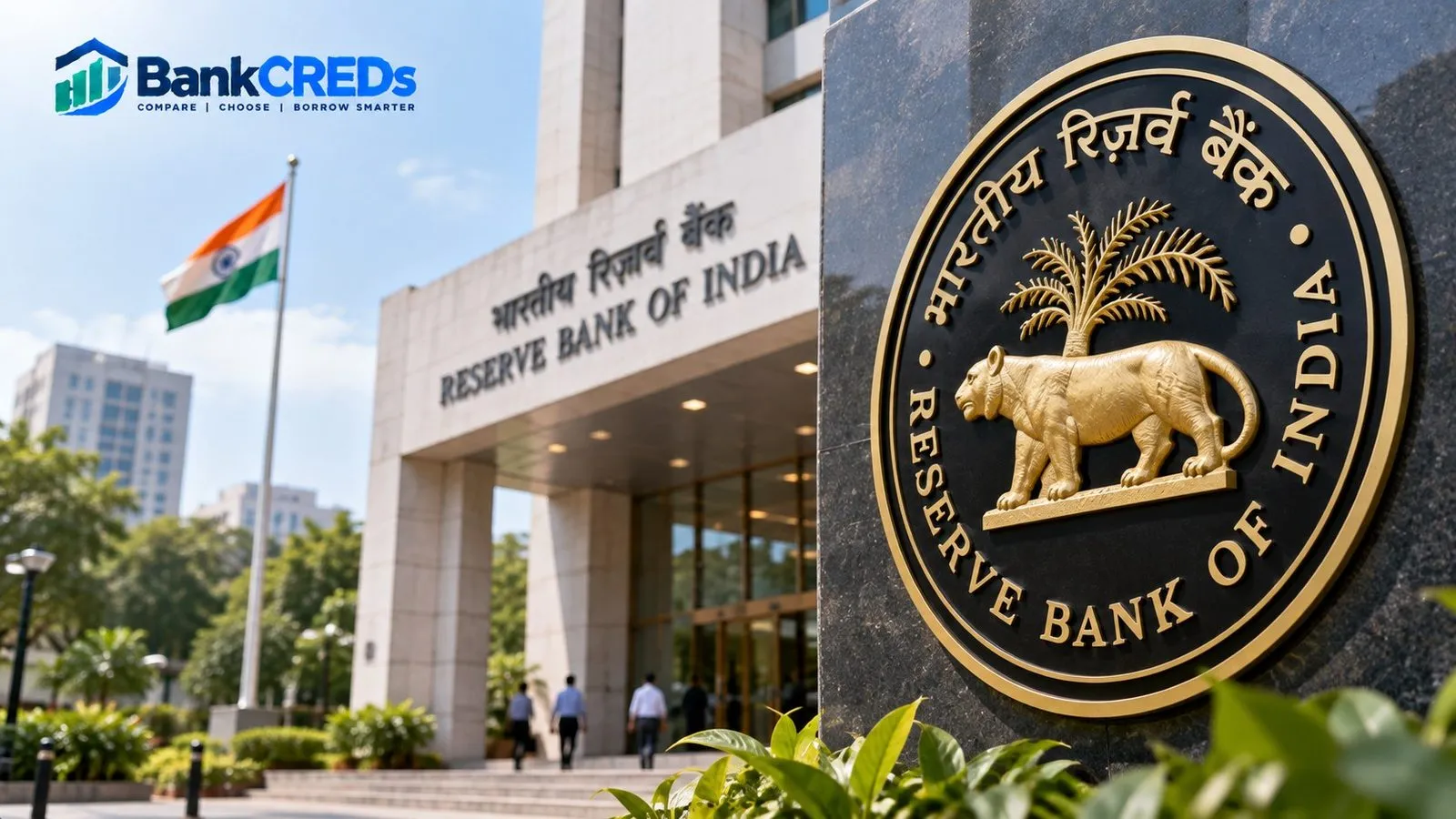
Multiple money rules are converging on Indian households and small businesses this October, according to reporting by Moneycontrol.com — the Reserve Bank of India's periodic policy review, a revision to SBI's ATM transaction charges, a renewed debate over UPI merchant fees, a KYC requirement for subsidised LPG cylinder holders, and the income tax return filing deadline. None of these lands on every reader the same way, but together they touch how you borrow, withdraw cash, pay for groceries, cook at home, and file your taxes.
If you're repaying a home loan or personal loan, the RBI's policy stance is the one to watch over the coming weeks, since it eventually feeds into your EMI. If you routinely withdraw cash at ATMs, the revised charge structure hits your wallet directly and immediately. If you hold a subsidised LPG connection, the KYC requirement is the one with a genuine "miss it and lose your subsidy" downside. And if you haven't filed your income tax return yet, that's the one hard, non-negotiable date on this list.
Key takeaways
- The RBI's Monetary Policy Committee held its scheduled October review, an event that indirectly shapes home loan and personal loan pricing over the following weeks, as reported by Moneycontrol.com.
- SBI has revised ATM transaction charges within the RBI's mandated free-transaction framework — the free-limit concept hasn't disappeared, but the cost of exceeding it has moved.
- UPI's zero-MDR (merchant discount rate) status is under discussion again — this affects merchants who accept UPI far more directly than shoppers who use it.
- LPG subsidy beneficiaries need to complete e-KYC this month at their distributor, or risk a pause in subsidy credit to their bank account.
- The income tax return filing deadline is the one genuinely hard date in this roundup — missing it means late fees and interest, not just inconvenience.
- Treat these as five separate decisions, not one combined event: check which ones actually apply to your accounts before reacting.
How the RBI's October policy review feeds into your loan EMI
The Monetary Policy Committee meets on a published bi-monthly calendar, so an October review is a routine, scheduled event rather than a one-off. What the MPC decides on the repo rate — hold, cut, or hike — doesn't change your EMI the day it's announced. It changes the rate at which banks borrow from the RBI, and from there it flows into your loan's benchmark, whether that's the repo-linked lending rate (RLLR) on most new floating-rate loans or the older MCLR system still used on some legacy loans.
For repo-linked loans, banks are required to reset the applicable rate at least once every three months, so a policy move shows up in your EMI within one quarter. For MCLR-linked loans, the lag can be longer and depends on your loan's individual reset date. Either way, the sequence is: policy review → change in repo rate (if any) → bank's benchmark reset → your EMI or tenure adjustment. If you want to see how a change to your effective rate would play out on your own loan amount and tenure, running the numbers through an EMI calculator is more useful than reacting to the headline alone. Comparing your bank's current rate against prevailing interest rates is also worth doing before assuming your own rate will move in lockstep with any policy decision.
SBI's ATM charges: what changes beyond the free limit
Indian banks operate within an RBI-mandated framework for ATM transaction charges, and this is the structure that any bank-specific revision — including SBI's — sits inside rather than replaces. The rules set a minimum number of free transactions a customer is entitled to each month, and cap what a bank can charge beyond that limit.
| ATM transaction type | Typical free transactions per month | RBI-permitted charge beyond free limit |
|---|---|---|
| Own bank ATM (any location) | 5 | Up to ₹23 per transaction |
| Other bank ATM, six metro cities | 3 | Up to ₹23 per transaction |
| Other bank ATM, non-metro locations | 5 | Up to ₹23 per transaction |
| Balance enquiry / non-cash transactions | Usually unlimited at own bank | Lower charge at other-bank ATMs |
A revision by a bank the size of SBI, India's largest lender by customer base, typically means either the free-transaction count or the per-transaction charge beyond it moves within this ceiling — it's rarely a change to the underlying RBI rule itself. Practically, that means:
- Check your own bank's app or passbook for a monthly transaction count before you assume you're still within your free limit.
- Metro-city customers using other banks' ATMs have a tighter free limit (3) than non-metro customers (5) — worth knowing if you've recently moved cities.
- Frequent small cash withdrawals cost more in aggregate charges than fewer, larger ones, purely from a free-limit-management perspective.
UPI MDR: why a "zero cost" payment rail keeps coming up for debate
UPI person-to-merchant (P2M) transactions have carried zero merchant discount rate since 2020, a deliberate government policy choice to keep digital payments free for both shoppers and small merchants. That zero-MDR status is also the reason banks and payment companies have periodically pushed to introduce a fee on at least the larger merchant transactions, arguing that payment infrastructure isn't cost-free to run even when it's free to use.
For an ordinary UPI user, this debate has, so far, stayed on the merchant side of the transaction — you have not paid, and are not currently expected to pay, a fee for sending money via UPI to another person or scanning a merchant QR code. The practical read-through, if MDR is ever introduced on high-value merchant transactions, is more likely to show up as a small merchant-side cost that could theoretically be passed on in pricing, rather than a line-item charge on your banking app.
LPG cylinder KYC: what subsidy beneficiaries need to do this month
E-KYC for subsidised LPG connections links your Aadhaar and bank account details to your gas connection so that subsidy transfers under the Direct Benefit Transfer (DBT) system reach the right account without duplication or diversion. This isn't a new concept — periodic KYC refreshes for LPG connections have rolled out over several years — but distributors do enforce cut-off windows, after which pending subsidy credit for a connection can be held back until the KYC is completed.
If you hold a subsidised domestic LPG connection:
- Visit your gas agency or distributor outlet, or check your provider's app/website for an online e-KYC option.
- Carry your Aadhaar card and the passbook or cheque leaf of the bank account linked to your LPG subsidy.
- Complete biometric or OTP-based verification as offered at the distributor point.
- Confirm with the distributor that your KYC status shows as updated, rather than assuming it's done once you've submitted documents.
Missing this isn't a fine or penalty the way a tax deadline is — it's simply a pause in subsidy transfer until the KYC is completed, which for many households is the more immediate, tangible cost.
ITR deadline: the one date on this list you genuinely cannot miss
Unlike a policy review that plays out gradually or a distributor-level KYC window, the income tax return deadline is a statutory cut-off. Filing after the due date attracts a late fee under Section 234F of the Income Tax Act — up to ₹5,000 for most taxpayers, reduced to ₹1,000 if total income is below ₹5 lakh — plus interest on any tax that remains unpaid past the original due date. A late return also forfeits the right to carry forward certain losses (other than house property loss) to future years for set-off.
If you haven't filed yet:
- Confirm which due date applies to you — the standard due date for individuals not requiring an audit differs from the extended date for taxpayers whose accounts require a tax audit.
- Reconcile your Form 26AS/AIS with the income and TDS you're declaring before you file, rather than after — mismatches are the single biggest reason for return revisions.
- If you genuinely cannot file by the deadline, a belated return is still possible under the law, but it comes with the late fee and interest noted above, and a longer wait for any refund.
Worked example: what a small rate move actually does to your EMI
To put the RBI policy angle in perspective, consider a ₹30 lakh home loan on a 20-year tenure.
| Effective annual rate | Approx. EMI | Approx. total interest over tenure |
|---|---|---|
| 8.50% | ₹26,035 | ₹32.5 lakh |
| 8.75% | ₹26,650 | ₹33.9 lakh |
| 9.00% | ₹27,270 | ₹35.4 lakh |
A 25 basis point move either way changes your EMI by roughly ₹600-₹650 a month on a loan this size — real money over two decades, but not something that should trigger a panic response to a single month's policy headline. It's why comparing your own loan's rate against current market interest rates, and re-running your numbers on an EMI calculator whenever your bank actually reprices your loan, is more useful than reacting to the announcement itself.
Who this roundup actually affects — and who it doesn't
- Borrowers with floating-rate home or personal loans: affected gradually, through your bank's next rate reset, not immediately.
- Frequent ATM cash users, especially those banking with SBI or withdrawing from other-bank ATMs in metro cities: affected directly and immediately once you exceed your free monthly limit.
- Small merchants accepting UPI payments: watch the MDR discussion, but nothing has changed for consumer-side UPI use yet.
- Subsidised LPG connection holders who haven't completed KYC: affected in the next subsidy cycle if the window lapses.
- Anyone who has already filed their ITR, or isn't liable to file one: this deadline doesn't apply to you at all.
What to do this week
- Check your bank statement for your ATM transaction count this month before you withdraw cash again.
- Confirm your LPG connection's KYC status directly with your distributor, not just by submitting documents.
- If you haven't filed your ITR, gather your Form 16, Form 26AS/AIS, and interest certificates now rather than closer to the deadline.
- Hold off on any loan prepayment or refinancing decision until your bank actually communicates a rate reset, rather than acting on the policy headline alone.
Common mistakes to avoid
- Assuming an RBI policy review changes your EMI the same week — it doesn't, until your bank resets your specific loan's rate.
- Confusing UPI MDR discussions (a merchant-side cost) with a fee on your own person-to-person or person-to-merchant payments, which hasn't happened.
- Treating LPG KYC as optional paperwork rather than a condition for continued subsidy credit.
- Waiting until the last date to file your ITR, which leaves no room to fix a mismatch discovered at the final hour.
For more coverage of how monetary policy and regulatory changes affect Indian borrowers, see BankCreds' news section.
Frequently asked questions
Does the RBI's October policy review change my home loan EMI immediately?
No. A policy review affects the repo rate, which then feeds into your bank's lending benchmark. For repo-linked loans, banks reset rates at least once a quarter, so any EMI impact shows up with a lag, not on the day of the announcement.
Do I have to pay extra for UPI payments now?
Not for ordinary person-to-person or person-to-merchant UPI payments. The current discussion around merchant discount rate (MDR) concerns a possible fee on the merchant side of larger transactions, not a charge on your own UPI app usage.
What happens if I don't complete my LPG KYC?
Your gas connection itself isn't cancelled, but subsidy credit under the Direct Benefit Transfer system can be held back until your distributor confirms your KYC is complete. Visit your distributor with your Aadhaar and linked bank account details to resolve this.
What if I miss the ITR filing deadline?
You can still file a belated return, but you'll owe a late fee under Section 234F — up to ₹5,000, or ₹1,000 if your total income is below ₹5 lakh — plus interest on any unpaid tax, and you'll lose the ability to carry forward most losses to future years.
Are SBI's ATM charges different from other banks'?
Banks operate within the same RBI-set ceiling for free transaction limits and maximum charges beyond them, so any individual bank's revision — SBI included — typically adjusts within that framework rather than departing from it. Check your specific bank's current charge sheet for the exact figure that applies to your account.
BankCreds analysis
Reading the roundup correctly
Bundled "what changes this month" stories flatten five unrelated developments into one urgency signal, but they don't deserve equal attention from every reader. A salaried professional with a floating-rate home loan should care far more about the RBI's policy tone than about ATM fees — EMI arithmetic dwarfs a few hundred rupees a month in card charges. A gig worker who mostly transacts in cash, on the other hand, will feel the ATM fee revision more directly than any rate move, because they're the one paying it at the counter.
Take an illustrative example: on a ₹30 lakh home loan over a 20-year tenure, a 25 basis point difference in your effective lending rate changes the EMI by roughly ₹600-₹650 a month — noticeable, but not dramatic, and it only shows up once your bank actually reprices your loan, which for repo-linked loans can lag a policy decision by weeks and for MCLR-linked loans even longer. Don't assume an RBI review this month changes your EMI this month.
The LPG KYC requirement is actually the item with the most asymmetric downside here: miss it, and subsidy credit can simply stop landing in your bank account with no dramatic notice — just a gap in your DBT transfers you might not spot for a cycle or two. That makes it worth ten minutes at your gas agency even though it's the least "financial-markets" sounding item on the list.
What this roundup does not mean: it is not a single coordinated tightening of household finances, and there's no reason to rush a loan prepayment or refinance purely because four unrelated deadlines happen to land in the same month. Treat each item on its own merits, act first on the ones with a hard deadline — ITR filing and LPG KYC — and let the rate-related news settle before making any borrowing decision.
This section is BankCreds' own assessment of what the development means for Indian borrowers and savers. It is independent commentary, not part of the source reporting above.
Sources & references
- Moneycontrol.com — originating report https://www.moneycontrol.com/news/business/personal-finance/october-2026-finacial-changes-rbi-policy-sbi-atm-charges-upi-mdr-lpg-kyc-itr-deadline-and-more-14040336.html/amp
- Reserve Bank of India — Supports background on RBI's monetary policy role and consumer charge norms for banks https://www.rbi.org.in/
- RBI Notifications and Circulars — Source of RBI circulars governing ATM transaction charge ceilings and UPI payment system rules https://www.rbi.org.in/Scripts/NotificationUser.aspx
- Press Information Bureau — Government announcements on income tax filing deadlines and extensions https://www.pib.gov.in/
Source links are shown as plain text, not clickable links. Copy a URL into your browser to read the original report.
Editorial note & disclaimer
How this was reported. The development above is attributed to the source or sources listed. BankCreds does not independently verify a third party's reporting; where a figure or a regulatory position is stated as fact, it is either attributed or drawn from the regulator's own published material. Everything under "BankCreds analysis" is our own assessment.
Rates and figures. Interest rates, per-gram values and premium bands quoted here are indicative, move daily, and differ by borrower profile, city and lender policy. Confirm the final number with the institution before you act on it — the sanction letter or policy schedule governs, not a news report.
Not financial advice. This article is general information for an Indian audience. It is not investment, tax, credit or insurance advice, takes no account of your circumstances, and BankCreds is not a lender, broker, distributor or advisor. Consider speaking to a SEBI-registered investment adviser or a qualified professional before acting.
Editorial policy · Fact-checking policy · Corrections policy · Our authors · About BankCreds · Contact us
Spotted an error? Corrections are published, not quietly edited — write to us via the contact page and see our corrections policy.