
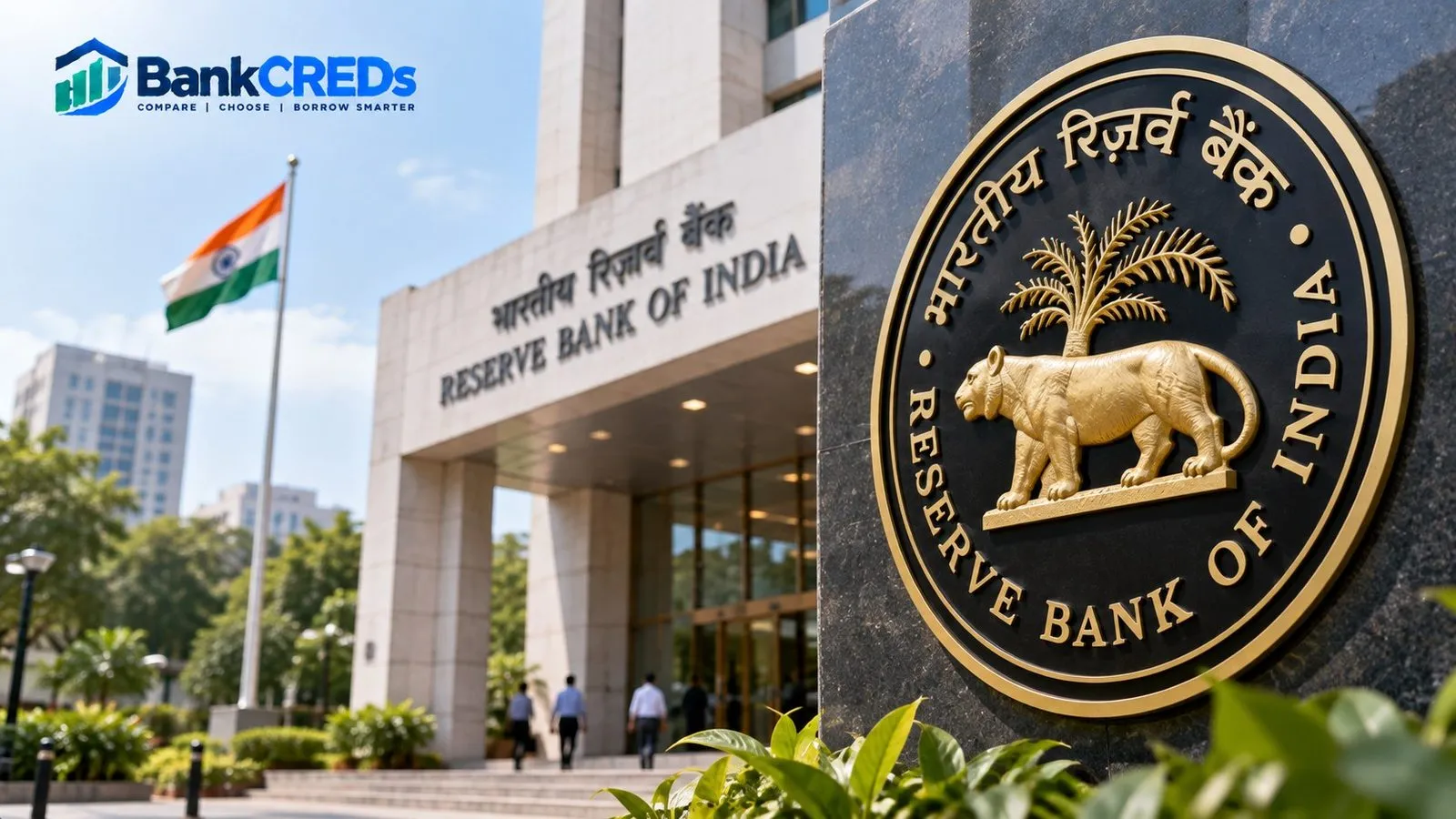
Global brokerages now expect the Reserve Bank of India to raise interest rates earlier than had been assumed, according to reporting by Moneycontrol.com. If that view proves right, floating-rate loan EMIs would rise sooner, and fixed deposit rates would start moving up.
Nothing has changed today. The repo rate stays where it is until the RBI's Monetary Policy Committee decides otherwise, and a brokerage forecast is an opinion, not a decision. But the call is a useful prompt for borrowers and savers to check where they stand before any move happens.
This article explains how a rate hike travels from the RBI to your EMI, works through realistic arithmetic, and lists what to do now and what to avoid. We know only the headline of the original report, so we do not repeat any specific forecast figures or timelines from it.
Key takeaways
- Global brokerages, as reported by Moneycontrol.com, see the RBI raising rates sooner rather than later. This is an expectation, not an RBI announcement.
- Floating-rate loans linked to the repo rate are the first to feel a hike; fixed-rate loans are unaffected until refinanced.
- On a ₹50 lakh, 20-year loan at 8.5%, a 0.25 percentage point rise adds roughly ₹800 to the monthly EMI (illustrative, not a forecast).
- Savers benefit with a lag: new and renewed deposits get better rates, existing fixed deposits do not change.
- The practical step now is to check your reset date and whether your lender raises the EMI or the tenure.
What the brokerages' rate-hike call actually means
The headline says global brokerages see the RBI hiking rates sooner than later. The plain reading is that these firms have brought forward the date at which they expect the central bank to start raising its policy rate. It does not say a hike is certain, and it does not say how large one would be.
The RBI's Monetary Policy Committee sets the policy repo rate at its scheduled meetings, after weighing inflation, growth and global conditions. Brokerage economists build models and make forecasts, and they revise them as data arrives. Those forecasts move bond yields and market expectations, which is why they are worth noticing, but they do not bind the central bank.
For an ordinary household, the useful question is not whether the brokerages are right. It is how exposed your own finances are if they are. That depends on the type of loan you hold, how your lender passes on rate changes, and how much of your savings sits in deposits that are about to mature.
How an RBI rate hike reaches your loan EMI
Most new floating-rate retail loans, including home loans and many personal loans, are linked to an external benchmark such as the repo rate, under RBI rules for banks. Your rate is the benchmark plus a lender-set spread. When the repo rate rises, the benchmark part rises, and your rate is adjusted at the next reset date written in your loan agreement.
That reset is why a hike does not hit everyone on the same day. Some loans reset quarterly, others at other intervals, and older loans linked to a lender's own internal benchmark may respond differently. Check your sanction letter or loan statement for the benchmark, the spread and the reset frequency.
When the rate rises, your lender can respond in two ways:
- Keep the EMI the same and lengthen the tenure. Your monthly outgo does not change, but you pay interest for longer.
- Raise the EMI and keep the tenure. Your monthly cash flow tightens, but the loan ends on schedule.
Many borrowers never check which one applies. It is worth asking your lender, because the choice changes what a hike costs you over the loan's life. You can model both with an EMI calculator.
Worked example: what a 0.25 percentage point rise does to a home loan EMI
The numbers below are illustrative. They assume a 20-year loan and a hypothetical 0.25 percentage point increase in your lending rate, and are not a prediction of what the RBI will do. EMIs are rounded.
| Loan amount | EMI at 8.50% | EMI at 8.75% | Extra per month | Extra per year |
|---|---|---|---|---|
| ₹25 lakh | ₹21,700 | ₹22,100 | about ₹400 | about ₹4,800 |
| ₹50 lakh | ₹43,400 | ₹44,200 | about ₹800 | about ₹9,600 |
| ₹75 lakh | ₹65,100 | ₹66,300 | about ₹1,200 | about ₹14,400 |
| ₹1 crore | ₹86,800 | ₹88,400 | about ₹1,600 | about ₹19,200 |
Now consider the tenure route. If the ₹50 lakh borrower's EMI stays at about ₹43,400 while the rate rises to 8.75%, the loan takes roughly 252 to 253 months instead of 240, so about a year longer. Total interest at 8.5% on that loan is roughly ₹54 lakh over 20 years, and the extra year of payments adds noticeably to it.
The lesson is that small rate moves compound over long tenures. For a shorter loan the effect is smaller. For a large home loan it is worth planning for. Our home loan guides explain how to read your amortisation schedule.
What changes for savers and fixed deposit holders
A rate hike is generally good news for savers, but slowly. Banks raise deposit rates after their funding costs rise, and they raise them on new deposits, not existing ones. A fixed deposit you have already booked keeps its rate until maturity.
On ₹5 lakh, an extra 0.25 percentage point earns roughly ₹1,250 more a year on a simple-interest basis. That is helpful but modest, and it does not justify locking money away for many years just to catch a rate you expect to rise further.
For savers, sensible thinking looks like this:
- Deposits maturing in the next few months can be renewed at whatever the new rate is, so there is no rush to lock in today.
- A ladder of deposits with staggered maturities lets you reinvest a portion at higher rates if a hike happens.
- Deposits in banks are insured by the DICGC up to ₹5 lakh per depositor per bank, so do not chase a slightly higher rate at the cost of concentrating money in one institution.
Current rate tables are on our interest rates page.
Who is affected by an earlier hike, and who is not
The impact is uneven. Here is a plain sorting:
- Floating-rate home loan borrowers: most affected, because tenure is long and the balance is large.
- Floating-rate personal loan and business loan borrowers: affected at the next reset, though shorter tenures limit the total cost.
- Fixed-rate loan borrowers: not affected until they refinance or take a new loan. Most personal loans and vehicle loans from banks and NBFCs are fixed-rate, so their EMIs stay the same.
- Credit card users: not directly linked to the repo rate, since card interest is set by the issuer and is already high.
- Savers with maturing deposits: likely to benefit if rates do go up.
- People about to take a new loan: may see higher quoted rates if lenders price in the expectation before the RBI acts.
If you are considering a fresh borrowing, use the eligibility check to see where you stand and compare offers in our personal loan guides before you commit.
What to do now: a practical checklist
You do not need to make any big move because of a forecast. A short checklist is enough:
- Find your loan's benchmark, spread and reset date in the sanction letter or the lender's app.
- Ask the lender whether a rate increase raises your EMI or your tenure, and change the setting if you prefer the other.
- Work out how much room your budget has if the EMI rises by ₹800 to ₹1,600 a month.
- If you have spare cash, consider a small part-prepayment on the highest-rate loan, after protecting three to six months of expenses.
- For deposits, list maturity dates over the next year and avoid locking everything into one long tenure.
- Check the RBI's actual policy announcement when it comes, rather than acting on forecasts alone.
Common mistakes to avoid
The biggest mistake is treating a forecast as a decision. Brokerage views change, and central banks respond to fresh data. Borrowers who rush to switch lenders or pay large switching fees on the basis of an expected hike can lose more than they save.
The second is ignoring the tenure effect. Many borrowers look at the EMI and assume nothing has changed, when their loan has quietly grown by months or years.
The third is draining an emergency fund to prepay a loan. A cash cushion is worth more than a fraction of a percentage point on the interest rate.
The fourth is assuming a hike helps every saver. Savers in existing fixed deposits do not benefit until maturity, and inflation matters more than the nominal rate. Stay with regulated banks and avoid unregulated entities promising unusually high returns.
Frequently asked questions
Has the RBI actually raised interest rates?
No. According to reporting by Moneycontrol.com, global brokerages expect the RBI to hike sooner rather than later, but that is a forecast. The RBI's Monetary Policy Committee announces its decisions after its scheduled meetings, and you should rely on those announcements.
Will my home loan EMI go up immediately if rates rise?
Not necessarily immediately. Floating-rate loans change at the reset date in your loan agreement. The lender may then raise your EMI or extend your tenure, so ask which one applies to you.
Should I switch to a fixed-rate loan now?
Not on the strength of a forecast alone. Fixed rates are usually priced higher than floating rates, and switching can involve fees. Compare the total cost using an EMI calculator before deciding.
Should I book a long fixed deposit before rates rise?
There is no need to rush. A staggered set of deposits lets you capture higher rates over time without locking all your money at today's levels, and it keeps some cash accessible.
BankCreds analysis
The headline is about expectations, not action, and that distinction matters more than the direction of the forecast. Brokerage calls have a mixed record, and the RBI's Monetary Policy Committee decides on its own reading of inflation and growth. Treat this as a reason to look at your loan, not a reason to act in a hurry.
The rupee arithmetic for a typical household
Take a salaried household with a ₹50 lakh floating-rate home loan and 20 years left, at 8.5%. The EMI is roughly ₹43,400. A 0.25 percentage point rise takes it to about ₹44,200, an extra ₹800 a month or ₹9,600 a year. That is real, but it is about 1.8% of the EMI. The bigger effect comes if the bank keeps your EMI fixed and stretches the tenure: you would end up paying for about a year longer, which adds several lakh in total interest over the loan's life. A household that has never checked which of the two its lender applied is the one most likely to be surprised.
Who gains and who loses
Floating-rate borrowers lose first, because repo-linked loans reset at set intervals. Fixed-rate borrowers are untouched until they refinance. Savers with money in short-tenure deposits gain, since they can reinvest at higher rates when the deposit matures. Someone planning to take a loan in the next six months has the most to decide: waiting may not help if the market is already pricing in a hike.
The over-reading to avoid
Do not rush into a long fixed-rate deposit because you assume rates will keep climbing, and do not prepay a low-cost loan by draining your emergency fund. One or two hikes would change monthly outgo by hundreds, not thousands, for most retail borrowers. The sensible move this week is small: find your loan's reset date, confirm whether EMI or tenure absorbs a change, and keep three to six months of expenses liquid. Anything more dramatic should wait for the RBI's actual decision.
This section is BankCreds' own assessment of what the development means for Indian borrowers and savers. It is independent commentary, not part of the source reporting above.
Sources & references
- Moneycontrol.com — originating report https://www.moneycontrol.com/news/business/markets/why-global-brokerages-see-rbi-hiking-rates-sooner-than-later-14041918.html/amp
- Reserve Bank of India — RBI's Monetary Policy Committee sets the policy repo rate https://www.rbi.org.in/
- RBI Master Directions — rules on external benchmark-linked floating rate loans and their reset https://www.rbi.org.in/Scripts/BS_ViewMasDirections.aspx
- DICGC deposit insurance — bank deposits insured up to ₹5 lakh per depositor per bank https://www.dicgc.org.in/
Source links are shown as plain text, not clickable links. Copy a URL into your browser to read the original report.
Editorial note & disclaimer
How this was reported. The development above is attributed to the source or sources listed. BankCreds does not independently verify a third party's reporting; where a figure or a regulatory position is stated as fact, it is either attributed or drawn from the regulator's own published material. Everything under "BankCreds analysis" is our own assessment.
Rates and figures. Interest rates, per-gram values and premium bands quoted here are indicative, move daily, and differ by borrower profile, city and lender policy. Confirm the final number with the institution before you act on it — the sanction letter or policy schedule governs, not a news report.
Not financial advice. This article is general information for an Indian audience. It is not investment, tax, credit or insurance advice, takes no account of your circumstances, and BankCreds is not a lender, broker, distributor or advisor. Consider speaking to a SEBI-registered investment adviser or a qualified professional before acting.
Editorial policy · Fact-checking policy · Corrections policy · Our authors · About BankCreds · Contact us
Spotted an error? Corrections are published, not quietly edited — write to us via the contact page and see our corrections policy.