


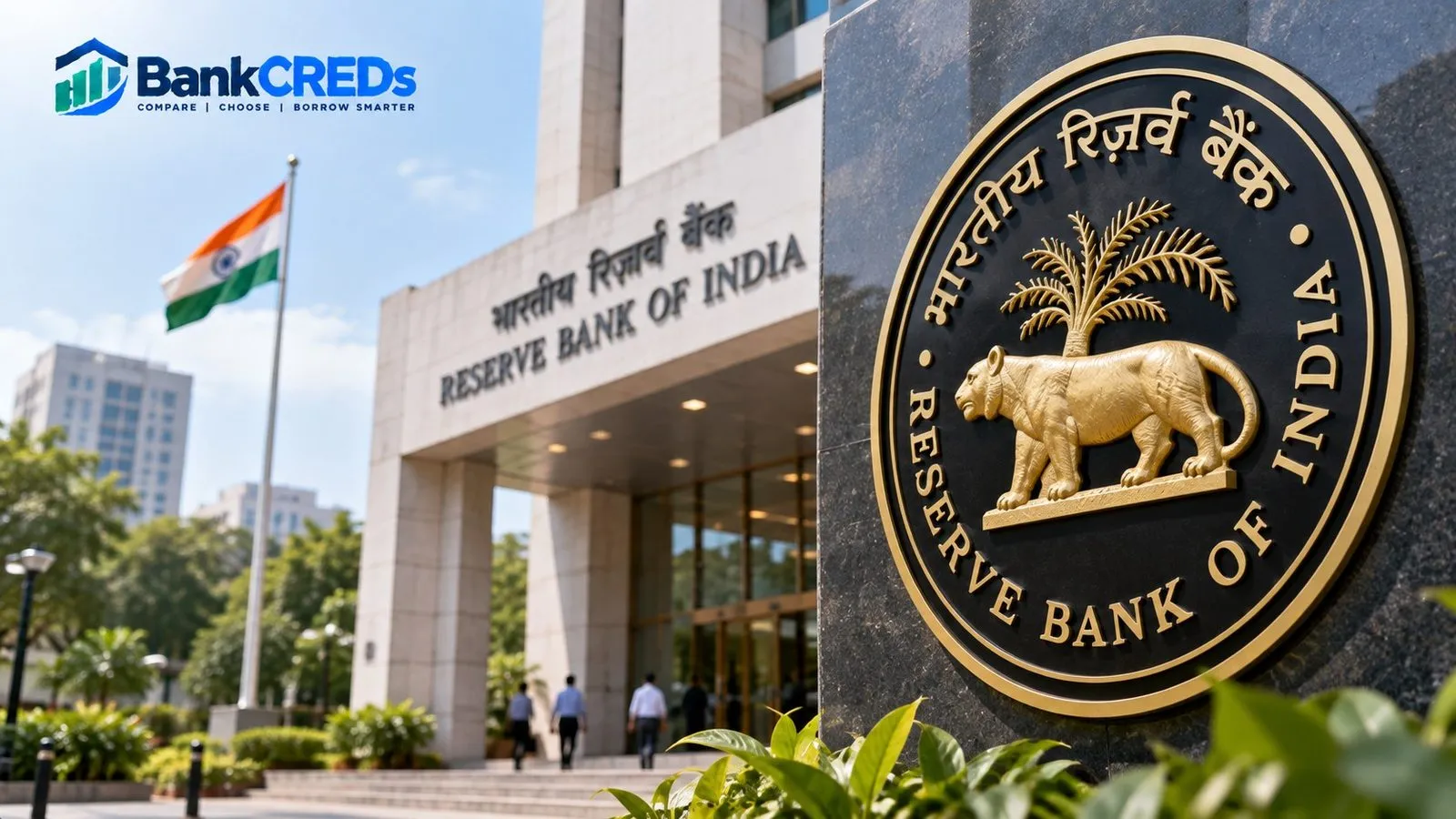
The Reserve Bank of India (RBI) will soon issue an FAQ on expected credit loss (ECL) rules for lenders. That's according to reporting by bfsi.economictimes.indiatimes.com. The report also says some provisioning issues are still under review.
For you, nothing changes today. Your EMI stays the same, and your savings stay safe. But over time, the way banks plan for bad loans may affect how they price some loans.
Key takeaways
- RBI is expected to publish an FAQ that explains how lenders should apply ECL rules.
- Some provisioning questions are still being reviewed, as reported.
- Your current EMI and deposit don't change because of this news.
- Risky borrowers may see tighter pricing or checks over time.
- Good repayment habits and a healthy credit score are your best protection.
How expected credit loss works in simple terms
Provisioning means money a bank sets aside to cover loans that may not be repaid. Think of it as a rainy-day fund for bad loans.
Under the older approach, banks mostly waited until a loan went bad. Then they set money aside. Under ECL, they look ahead. They estimate likely losses early, even while you're paying on time.
An FAQ is a list of common questions with official answers. It helps banks apply a rule the same way. According to the report, RBI wants to clear doubts on how ECL should be put into practice. We don't know the exact questions it will cover.
What changes for borrowers and savers
The rule is aimed at lenders, not at you. But what banks must set aside can shape what they charge.
Here's a simple example. These numbers are only for illustration. They aren't RBI figures.
| Loan stage | What it means | Example set-aside on a ₹10 lakh loan |
|---|---|---|
| Regular | Paying on time | 0.5% = ₹5,000 |
| Stressed | Often late | 5% = ₹50,000 |
| Defaulted | Not paying | 30% = ₹3 lakh |
See the pattern? The riskier the loan looks, the more money the bank locks away. That money can't be lent out again. So banks may charge a little more for riskier loans.
Now a rough example of the effect. Say you take a ₹5 lakh personal loan for 5 years at 12%. Your EMI is about ₹11,122. If a bank adds 0.10% to the rate, the EMI rises by about ₹25 a month. That's an example, not a forecast.
Who is affected
Banks and NBFCs (non-bank lenders) feel this first. They have to change how they measure risk and report it.
Borrowers with weak or short credit histories may feel it next. Lenders could ask for more checks or charge more.
Savers are mostly unaffected. Bank deposits are insured by DICGC up to ₹5 lakh per depositor, per bank. Stronger loss planning is meant to make lenders safer over time.
What to do now
You don't need to act in a hurry. A few simple habits will help.
- Pay every EMI and card bill on time.
- Check your credit score once or twice a year.
- Compare offers before you borrow, using our interest rate tables.
- Read our personal loan guides before you apply.
- Follow the news hub for RBI's FAQ once it's out.
Frequently asked questions
What is expected credit loss in banking?
It's a method where banks estimate likely loan losses early and set money aside. They don't wait for a loan to turn bad.
Will my EMI go up because of the RBI FAQ?
Not directly. An FAQ only explains the rules. Any rate change would depend on each lender's own pricing choices.
Are my bank deposits safe?
Deposits are insured up to ₹5 lakh per depositor, per bank, through DICGC. ECL rules are meant to make lenders more careful with loans.
BankCreds analysis
The headline matters more to banks than to you
An FAQ is a clarification note. It doesn't create new rules. So this news is mostly about banks and NBFCs getting clear answers, not about your wallet.
Take a salaried borrower with a ₹5 lakh personal loan and a steady repayment record. Say a bank passes on some extra cost. The rise would still be small. It's about ₹25 a month per 0.10% of rate. Many borrowers won't see any change.
The people who may feel it most are those with thin or weak credit records. Banks may price risk more carefully for them. Don't over-read this as a rate hike. Don't rush to prepay or switch loans because of it. Watch your credit score and keep EMIs on time.
This section is BankCreds' own assessment of what the development means for Indian borrowers and savers. It is independent commentary, not part of the source reporting above.
Sources & references
- bfsi.economictimes.indiatimes.com — originating report https://bfsi.economictimes.indiatimes.com/articles/rbi-to-issue-faq-soon-to-clarify-ecl-implementation-some-provisioning-issues-remain-under-review/135808487
- RBI notifications and circulars — where RBI publishes circulars and clarifications for lenders https://www.rbi.org.in/Scripts/NotificationUser.aspx
- DICGC deposit insurance — deposit insurance cover per depositor per bank https://www.dicgc.org.in/
Source links are shown as plain text, not clickable links. Copy a URL into your browser to read the original report.
Editorial note & disclaimer
How this was reported. The development above is attributed to the source or sources listed. BankCreds does not independently verify a third party's reporting; where a figure or a regulatory position is stated as fact, it is either attributed or drawn from the regulator's own published material. Everything under "BankCreds analysis" is our own assessment.
Rates and figures. Interest rates, per-gram values and premium bands quoted here are indicative, move daily, and differ by borrower profile, city and lender policy. Confirm the final number with the institution before you act on it — the sanction letter or policy schedule governs, not a news report.
Not financial advice. This article is general information for an Indian audience. It is not investment, tax, credit or insurance advice, takes no account of your circumstances, and BankCreds is not a lender, broker, distributor or advisor. Consider speaking to a SEBI-registered investment adviser or a qualified professional before acting.
Editorial policy · Fact-checking policy · Corrections policy · Our authors · About BankCreds · Contact us
Spotted an error? Corrections are published, not quietly edited — write to us via the contact page and see our corrections policy.