


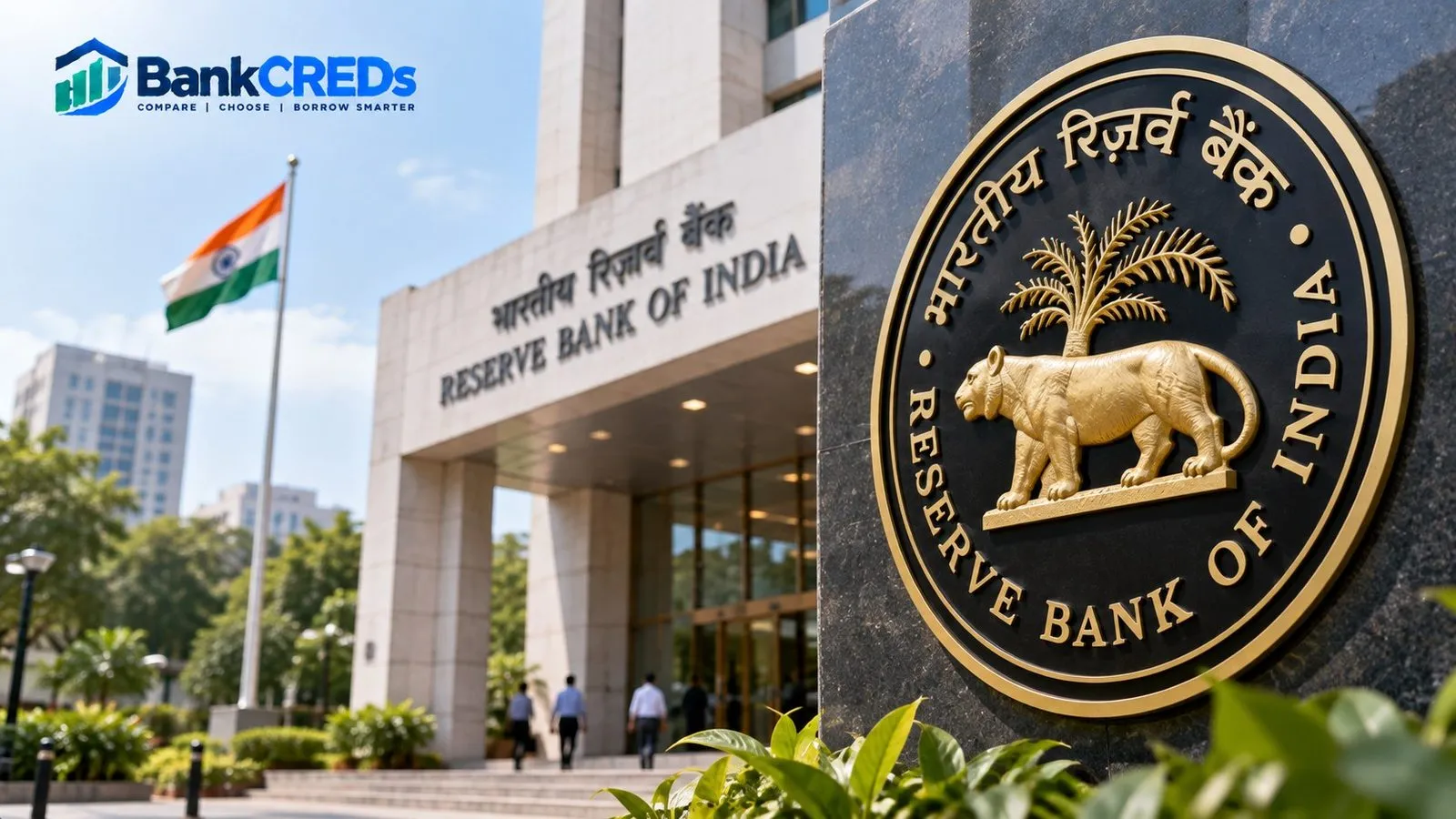
According to reporting by Outlook Money, three events are on the market watchlist this week. They are the RBI's Monetary Policy Committee meeting, the Jio IPO, and weekly US jobless claims data.
For most households, the RBI meeting matters most. It can affect your loan EMI and your fixed deposit returns. The other two mainly matter if you invest in shares.
Key takeaways
- The RBI's rate committee meeting is the main event for borrowers and savers.
- A rate cut can lower EMIs on loans linked to the repo rate.
- A rate cut can also lower new fixed deposit rates.
- The Jio IPO and US jobless data mostly affect share investors.
- Don't make big money moves on a watchlist. Wait for the actual decision.
What is the RBI MPC, and why does it matter?
The MPC is the Monetary Policy Committee. It's a group at the Reserve Bank of India that decides the repo rate. The repo rate is the rate at which the RBI lends money to banks.
When the repo rate changes, bank lending rates usually follow. Loans linked to it, like many home loans, get costlier or cheaper. Deposit rates tend to move in the same direction, though often more slowly.
The headline only says the meeting is a cue to watch. It doesn't say what the committee will decide. So treat any guess about the outcome as just that, a guess.
What the Jio IPO and US jobless claims mean
An IPO is when a company sells its shares to the public for the first time. Outlook Money lists the Jio IPO as a cue for the market this week. Big IPOs can pull a lot of investor money and attention.
US jobless claims show how many people in America applied for unemployment help. Global investors read this to guess where US interest rates are going. That can nudge Indian share markets for a day or two.
If you don't own shares, these two events will barely touch your daily life. If you do, expect some ups and downs in prices.
What changes for your EMI and savings
Here's a simple example. Say you have a ₹50 lakh home loan for 20 years. The table shows how the EMI shifts with the interest rate.
| Loan rate | Approx. monthly EMI | Change from 8.50% |
|---|---|---|
| 8.75% | ₹44,190 | +₹800 |
| 8.50% | ₹43,390 | No change |
| 8.25% | ₹42,600 | -₹790 |
| 8.00% | ₹41,820 | -₹1,570 |
These numbers are only an illustration. Your own rate depends on your bank and your credit score. You can try your own numbers with the EMI calculator.
For savers, the effect runs the other way. Lower rates mean slightly lower returns on new deposits. Your existing fixed deposit keeps its old rate until it matures.
Who is affected
Home loan borrowers with floating rates are the most exposed. Their EMI or loan tenure can change after a rate move. You can read more in our home loan guides.
Personal loan borrowers are affected too, mostly on new loans. Fixed-rate loans don't change after you sign. See our personal loan guides for the basics.
Senior citizens who live on deposit interest are also watching closely. Even a small fall in rates changes their monthly income. Share investors will follow the IPO and US data more closely.
What to do now
You don't need to rush anything this week. A few calm checks are enough.
- Find out if your loan is linked to the repo rate or a bank's own rate.
- Note your current EMI and the interest rate you pay.
- If you plan a new loan, wait for the official RBI announcement first.
- If you plan a fixed deposit, compare offers after the decision.
- Check the latest interest rates before you sign anything.
For news on the decision, follow our news hub. We'll cover what it means for your money in plain words.
Frequently asked questions
Will my EMI change after the RBI MPC meeting?
Only if the committee changes the repo rate and your loan is linked to it. Even then, your bank must pass the change on to you.
Does the Jio IPO affect my savings or loans?
Not directly. It may matter if you invest in shares or mutual funds. Your bank deposits and loan rates aren't tied to it.
Should I book a fixed deposit before the RBI decision?
There's no sure answer, because the decision isn't known yet. If you need the money to be safe, compare bank rates and choose a tenure that suits your goals.
BankCreds analysis
Don't let the noise move your money
This is a watchlist, not a verdict. A cue is only a reason to pay attention. The real impact depends on what the RBI actually decides.
Take a home loan of ₹50 lakh over 20 years. A 0.25 point rate cut trims the EMI by about ₹790 a month. That's roughly ₹9,500 a year. Useful, but it won't change your life.
Savers face the mirror image. On a ₹1 lakh fixed deposit, a 0.25 point drop costs about ₹250 a year. Nobody should panic over that.
The IPO and US data matter far less to most households. They can swing share prices for a few days. They rarely change your loan or deposit rate. If you aren't investing in shares, you can mostly skip them.
The one thing to do this week is check whether your loan rate is linked to the repo rate. That tells you how fast a change reaches you.
This section is BankCreds' own assessment of what the development means for Indian borrowers and savers. It is independent commentary, not part of the source reporting above.
Sources & references
- Outlook Money — originating report https://www.outlookmoney.com/invest/stock-market-this-week-jio-ipo-rbi-mpc-minutes-q2-results
- Reserve Bank of India — RBI's Monetary Policy Committee sets the repo rate https://www.rbi.org.in/
- SEBI — Market regulator for public share issues and IPOs https://www.sebi.gov.in/
Source links are shown as plain text, not clickable links. Copy a URL into your browser to read the original report.
Editorial note & disclaimer
How this was reported. The development above is attributed to the source or sources listed. BankCreds does not independently verify a third party's reporting; where a figure or a regulatory position is stated as fact, it is either attributed or drawn from the regulator's own published material. Everything under "BankCreds analysis" is our own assessment.
Rates and figures. Interest rates, per-gram values and premium bands quoted here are indicative, move daily, and differ by borrower profile, city and lender policy. Confirm the final number with the institution before you act on it — the sanction letter or policy schedule governs, not a news report.
Not financial advice. This article is general information for an Indian audience. It is not investment, tax, credit or insurance advice, takes no account of your circumstances, and BankCreds is not a lender, broker, distributor or advisor. Consider speaking to a SEBI-registered investment adviser or a qualified professional before acting.
Editorial policy · Fact-checking policy · Corrections policy · Our authors · About BankCreds · Contact us
Spotted an error? Corrections are published, not quietly edited — write to us via the contact page and see our corrections policy.