
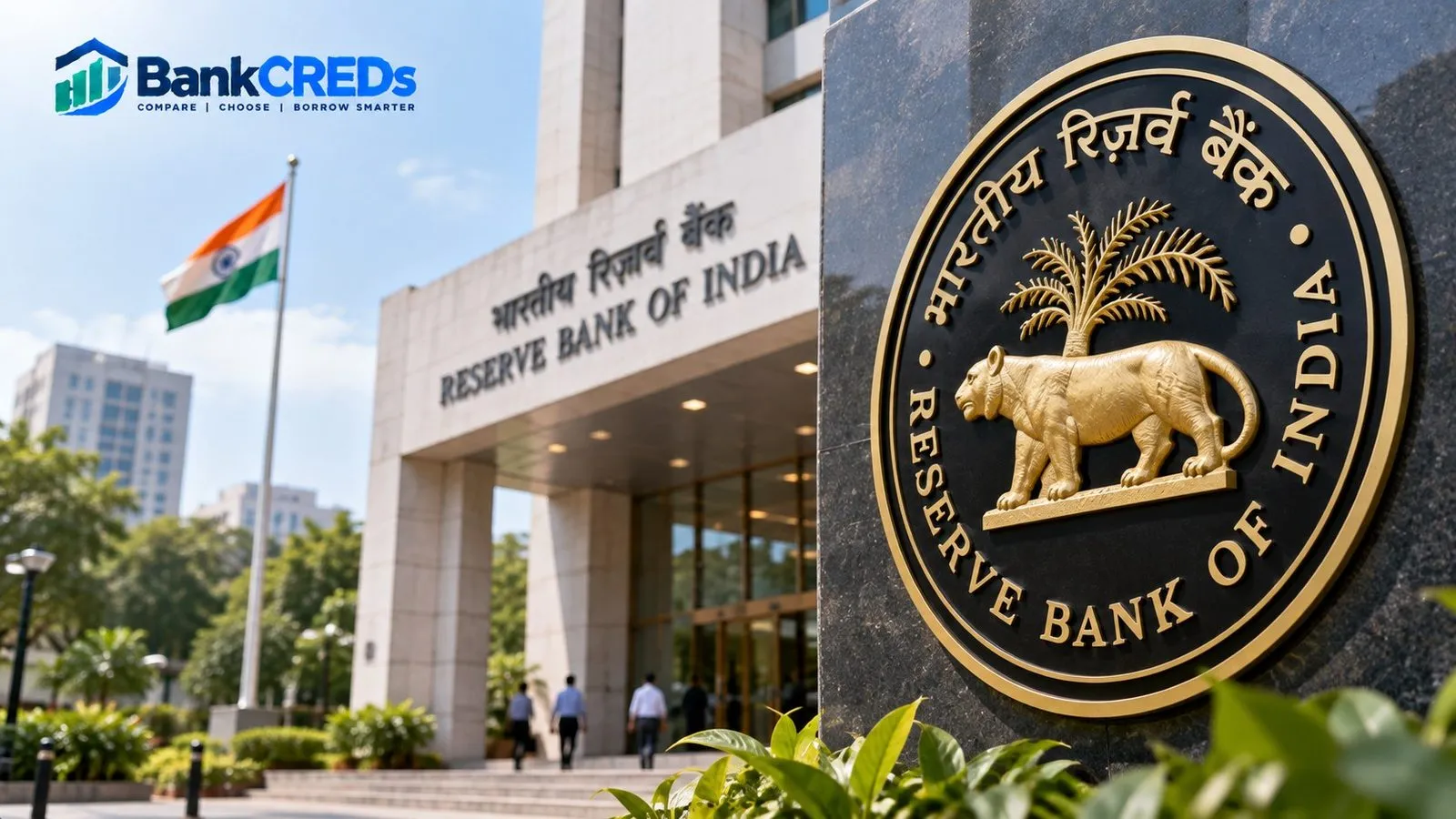
The State Bank of India's economists expect the Reserve Bank of India to raise the repo rate by 25 basis points (0.25 percentage point) at its October policy review, according to reporting by BW Businessworld. If that happens, borrowers on floating-rate loans would see higher EMIs or longer tenures, and fixed-deposit rates could drift up.
This is a forecast, not a decision. The RBI's monetary policy committee decides the rate, and a forecast can be wrong. Still, it is a useful prompt to check how exposed your loans are and how your savings are placed.
The sections below explain how the repo rate reaches your loan, what 25 basis points costs in rupees, and what is worth doing now.
Key takeaways
- SBI economists reportedly expect a 25 bps repo rate increase in October, as reported by BW Businessworld. It is a projection, not an announced decision.
- Floating-rate home, personal and vehicle loans linked to an external benchmark usually reprice at the next reset date.
- A 25 bps rise adds roughly ₹800 a month to the EMI on a ₹50 lakh, 20-year home loan at about 8.5%.
- Fixed-rate loans do not change. Deposit rates may rise, but banks pass changes on at different speeds.
- The sensible response is to review your reset terms and spread, not to panic-prepay or break deposits.
What the repo rate is and why it matters to you
The repo rate is the rate at which the RBI lends short-term money to commercial banks. When it goes up, the banks' cost of funds rises, and over time that shows up in what they charge borrowers and pay depositors. The RBI explains the framework on its official website.
A basis point is one-hundredth of a percentage point. So 25 bps is 0.25%. It is the usual step size for policy changes in India, which is why economists often forecast moves in multiples of 25.
The rate affects ordinary households through three channels:
- Loan interest. Floating-rate retail loans are linked to an external benchmark, commonly the repo rate. A change in the benchmark flows through to the borrower's rate.
- Deposit interest. Banks tend to revise fixed-deposit and savings rates after a policy move, though not always by the same amount.
- Overall liquidity and prices. A hike is usually aimed at cooling inflation, which can eventually support household budgets.
How a repo rate hike reaches your loan
Since RBI's external benchmark rules for floating-rate retail loans, most new home, personal and vehicle loans carry a rate made of two parts: the benchmark and a spread the lender sets. When the benchmark rises, the loan rate rises by the same amount. The spread stays the same unless the lender revises it.
The change does not hit on the policy date. Each loan has a reset schedule, and the new rate applies from the next reset. Check your sanction letter or loan statement for the reset frequency. Some lenders reset quarterly, others on a different cycle.
Older loans that are still linked to a bank's internal benchmark, such as the MCLR or the old base rate, move more slowly and in a less transparent way. If you are on such a loan, ask your lender about switching to the external benchmark. Check any switching fee first.
When the rate rises, the lender usually keeps your EMI constant and extends the tenure. You can also ask to keep the tenure and raise the EMI. Either way, the extra cost is the same in broad terms. It is paid sooner as a higher EMI or later as more instalments.
What 25 bps costs: worked examples
These figures are illustrative arithmetic, not forecasts of any particular lender's rates. You can run your own numbers in the EMI calculator.
| Loan | Amount and tenure | Rate before | Rate after +0.25% | EMI before | EMI after | Extra per month |
|---|---|---|---|---|---|---|
| Home loan | ₹50 lakh, 20 years | 8.50% | 8.75% | about ₹43,400 | about ₹44,200 | about ₹800 |
| Personal loan | ₹5 lakh, 3 years | 12.00% | 12.25% | about ₹16,600 | about ₹16,700 | about ₹60 |
The lesson is that the effect scales with the loan size and tenure. A home loan feels the move much more than a short personal loan, because the extra interest is charged on a large balance for many years. On the home loan above, the extra EMI adds up to roughly ₹9,600 a year.
For home loan borrowers, the home loan guides explain how tenure and EMI interact. For shorter unsecured credit, see the personal loan guides. Note that most personal loans are taken at fixed rates, so many borrowers will not feel the move at all.
Who is affected and who is not
Not every household is hit equally. Here is a quick way to sort yourself:
| Borrower or saver | Likely effect of a 25 bps hike |
|---|---|
| Floating-rate home loan, external benchmark | Rate rises at the next reset |
| Floating-rate loan on MCLR or old base rate | Rises more slowly, after the lender revises its internal rate |
| Fixed-rate personal, car or consumer loan | No change to the EMI |
| Credit card revolving balance | No direct change, as card rates are already high and set by the issuer |
| Fixed-deposit saver | New deposits may get slightly better rates, subject to the bank |
| Savings account holder | Little or no change |
People planning a new loan should note the effect on offers. A lender may raise its quoted rate soon after the policy change. If you are close to closing a purchase and your eligibility is tight, check it again with the eligibility check, because a higher rate lowers the loan amount a given income can support.
What savers should expect
A hike is generally good news for people who hold deposits, but the benefit is not automatic. Banks decide their own deposit rates, and they often raise them in some tenures and leave others alone. Smaller banks and some non-banks may react faster than large lenders.
A simple illustration: on ₹10 lakh held for a year, an extra 0.25% means about ₹2,500 more interest before tax. That is worth having but not worth chasing across banks with large transfers. Interest on deposits is taxable under your slab, so compare the post-tax return.
If you want to compare current offers, the interest rates tables are a good starting point. Also check that your deposits are within the insurance cover provided by the Deposit Insurance and Credit Guarantee Corporation, as described on DICGC's site.
What to do now: a practical checklist
You do not need to act dramatically. Work through these steps this week:
- Find your loan's benchmark and reset date. Your lender's statement or sanction letter will show both.
- Calculate the cost of 0.25% on your outstanding balance. Use the calculator and see if the extra EMI fits your budget.
- Compare your spread with current market offers. If it is clearly higher than a new borrower would get, ask for a reduction or a transfer.
- Keep an emergency fund before prepaying. Loan prepayment is worth it only if you still have at least a few months of expenses in cash.
- Avoid locking a long deposit on one forecast. Spread deposits across tenures if you want some flexibility.
- Wait for the actual announcement. Make decisions after the policy decision, not after a projection.
Common mistakes and the outlook
The first mistake is treating a forecast as a certainty. Economists' calls can differ from what the committee decides, and the committee can also keep rates unchanged. The second is panicking and prepaying using money you may need. The third is ignoring your lender's spread, which is often a bigger lever than the policy rate itself.
Another error is assuming a hike means the whole interest cycle has turned. One move says little about the next. Watch the committee's statement for guidance on its stance, since that tells you more about the direction than the single number.
For continuing coverage of rate decisions and their effect on household finances, follow the news hub. As reported, the story rests on SBI economists' expectations. We will update our guidance if the RBI announces its decision.
Frequently asked questions
Will my home loan EMI go up if the RBI raises the repo rate by 25 bps?
If your loan is floating-rate and linked to the repo rate, your interest rate will rise at the next reset date. Whether your EMI rises or your tenure lengthens depends on your lender's policy, and you can usually ask for either. Fixed-rate loans are not affected until the fixed period ends.
Is the 25 bps rate hike confirmed?
No. According to reporting by BW Businessworld, SBI economists expect it, but the decision rests with the RBI's monetary policy committee. Until the committee announces it, the hike remains a forecast.
Should I prepay my loan before the hike?
Not just because of a forecast. Prepaying makes sense if you have surplus cash after setting aside an emergency fund, and the saving in interest is higher than what that money could earn elsewhere. A single 0.25% change is rarely a reason to drain your savings.
Will fixed deposit rates rise after a repo rate hike?
They often do, but banks decide how much and how fast. Some raise rates within days, others take weeks, and some tenures see no change. Compare offers across banks before you commit.
Does a repo rate hike affect gold loans?
Gold loans are usually priced by individual lenders, and many carry fixed rates for the loan term. A policy hike can push up the rates lenders quote for new loans over time. You can check current gold loan options in the gold loan hub.
BankCreds analysis
The headline sounds dramatic, but 25 basis points is a small move in rupee terms, and it is only a forecast. Take a salaried household with a ₹50 lakh floating-rate home loan over 20 years at 8.5%. The EMI is about ₹43,400. If the rate goes to 8.75%, it rises to about ₹44,200, roughly ₹800 a month or ₹9,600 a year. That is real money, but it is smaller than the gap between lenders' spreads, and it is smaller than what many borrowers lose by never negotiating their rate.
The borrowers who feel it least are those on fixed-rate loans, who see no change at all. The ones who feel it most are people with long tenures and floating loans whose lenders reset quickly. In a typical external-benchmark loan, the new rate reaches the borrower at the next reset date, not the day after the policy announcement. Most borrowers therefore have some weeks of notice.
Savers are the quiet winners. Banks usually raise deposit rates with a lag and by varying amounts. A hike does not oblige them to pass anything on, and the best rates are often at smaller banks. A depositor should not lock in a long tenure on the strength of one forecast.
What not to over-read
An economist's call is not a decision. The central bank's monetary policy committee decides on the day, and it has surprised forecasters in both directions before. One hike also does not mean a cycle of hikes. Do not prepay a loan from your emergency fund, and do not break a deposit, because of a prediction.
The useful action this week is cheap. Check your loan's reset clause, run your own numbers in the EMI calculator, and if your spread over the benchmark is high, ask your lender for a lower one. That is worth more than guessing the next policy move. If the hike does come, it adds to your cost slowly. It is not a shock to your budget.
This section is BankCreds' own assessment of what the development means for Indian borrowers and savers. It is independent commentary, not part of the source reporting above.
Sources & references
- BW Businessworld — originating report https://www.businessworld.in/article/rbi-may-raise-repo-rate-by-25-bps-in-october-sbi-economists-626700
- Reserve Bank of India — repo rate is set by RBI's monetary policy committee https://www.rbi.org.in/
- RBI Master Directions — rules on external-benchmark linked floating-rate loans and reset https://www.rbi.org.in/Scripts/BS_ViewMasDirections.aspx
Source links are shown as plain text, not clickable links. Copy a URL into your browser to read the original report.
Editorial note & disclaimer
How this was reported. The development above is attributed to the source or sources listed. BankCreds does not independently verify a third party's reporting; where a figure or a regulatory position is stated as fact, it is either attributed or drawn from the regulator's own published material. Everything under "BankCreds analysis" is our own assessment.
Rates and figures. Interest rates, per-gram values and premium bands quoted here are indicative, move daily, and differ by borrower profile, city and lender policy. Confirm the final number with the institution before you act on it — the sanction letter or policy schedule governs, not a news report.
Not financial advice. This article is general information for an Indian audience. It is not investment, tax, credit or insurance advice, takes no account of your circumstances, and BankCreds is not a lender, broker, distributor or advisor. Consider speaking to a SEBI-registered investment adviser or a qualified professional before acting.
Editorial policy · Fact-checking policy · Corrections policy · Our authors · About BankCreds · Contact us
Spotted an error? Corrections are published, not quietly edited — write to us via the contact page and see our corrections policy.