


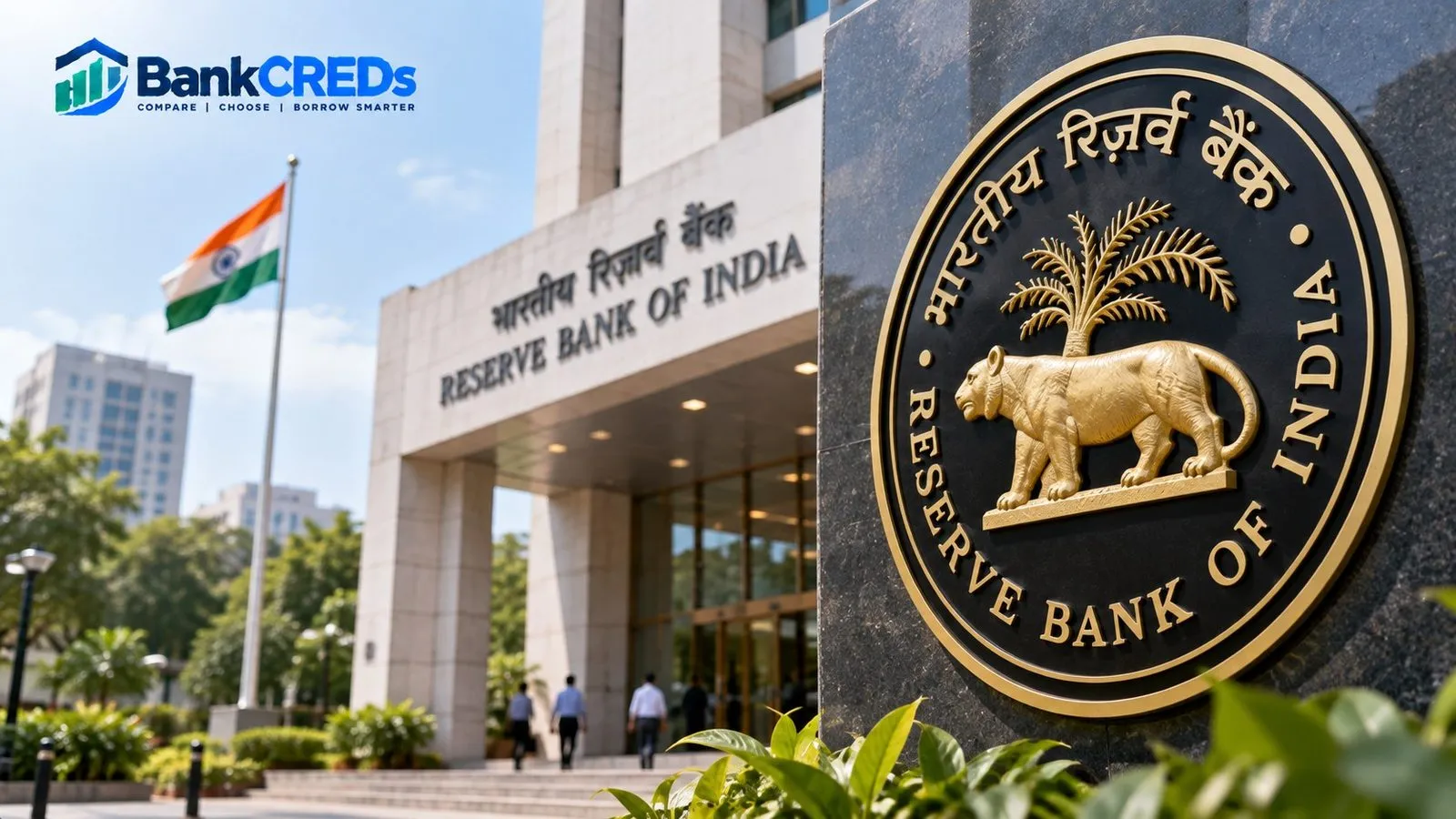
The Reserve Bank of India plans to meet bank CEOs. It wants to check their readiness for expected credit loss rules, according to reporting by Business Standard. The headline names C S Setty in connection with the story.
For you, nothing changes today. Your EMI, your deposits and your loan terms stay the same. Over time, though, these rules can shape how banks price loans and manage risk.
Key takeaways
- The RBI is reviewing whether banks are ready for expected credit loss, or ECL, rules.
- ECL makes banks set aside money for likely bad loans earlier than they do today.
- The report doesn't give a start date or any rate impact, so avoid guessing.
- A readiness meeting doesn't change your current EMI or your deposits.
- Any pricing effect would be small and slow, if it comes at all.
How expected credit loss works in simple terms
When you borrow, the bank knows that a few borrowers in every group will not repay. Banks keep money aside to cover those losses. That money is called a provision.
Under the older approach, banks mostly set money aside after a loan has already turned bad. ECL asks them to look ahead. They estimate how likely loans are to go bad and keep a cushion from the start.
Think of a shop owner who knows some customers pay late. A careful owner keeps a small reserve every month, instead of waiting for the trouble. ECL works in a similar way.
The RBI has been moving banks toward this forward-looking method. You can read RBI's directions on its official site. The headline doesn't say which version of the rules is being discussed.
Why the RBI is meeting bank CEOs
As reported, the meeting is about preparedness. That means the RBI wants to know if banks can actually do the work.
ECL is not a simple switch. Banks need good data on past loans. They need models that predict losses. They also need trained staff and updated computer systems.
Some banks are further along than others. A meeting with the top bosses lets the RBI hear where the gaps are. We don't know what was discussed or what dates were set.
What it could mean for borrowers and savers
When banks set aside more money, their profit falls a little. Banks may respond in a few ways. They could be stricter about whom they lend to. They could charge slightly more for riskier loans. Or they could absorb the cost.
Here's a simple example for a ₹10 lakh home loan over 20 years. These numbers are only an illustration, not a forecast.
| Interest rate | Monthly EMI | Extra per month vs 9.00% |
|---|---|---|
| 9.00% | ₹8,997 | ₹0 |
| 9.25% | ₹9,159 | ₹162 |
| 9.50% | ₹9,321 | ₹324 |
You can test your own numbers with the EMI calculator. For current rates, check the interest rate tables.
Savers have little to worry about. Bank deposits are insured by DICGC up to ₹5 lakh per depositor per bank. Stronger provisioning also tends to make banks sturdier.
Who is affected
- Banks: They must upgrade systems and may need to set aside more money.
- New borrowers: Lending rules and pricing could shift at the edges, mainly for riskier profiles.
- Existing borrowers: Floating-rate loans follow the benchmark rate, so a provisioning rule alone doesn't change your EMI.
- Depositors: Your insured deposits stay protected.
Borrowers with a strong repayment record are the least likely to feel any change. Those with thin credit history may find lenders a bit choosier.
What to do now
You don't need to act in a hurry. A few calm habits will serve you well whatever the rules turn out to be.
- Pay every EMI and card bill on time. A good record helps under any lending rules.
- Check your credit score once or twice a year and fix errors.
- Compare offers before you take a loan. Our home loan guides can help.
- Keep your total deposits per bank within the insured limit if you can.
- Wait for official RBI circulars before you believe any claim about higher rates.
For more updates like this, visit our news hub.
Frequently asked questions
What is expected credit loss in banking?
It's a method where banks set money aside for loans that may go bad in future. They don't wait for the loan to turn bad first.
Will my home loan EMI go up because of ECL?
Not because of this meeting. Any pricing effect would depend on final rules and each bank's choices, and it would likely be small.
Are my bank deposits safe?
Deposits are insured by DICGC up to ₹5 lakh per depositor per bank. Rules like ECL aim to make banks stronger, not weaker.
BankCreds analysis
Less dramatic than it sounds
A meeting to check readiness is a preparation step. It isn't a rate change, and it isn't a new rule for you. Most borrowers will notice nothing this month.
The real effect is slow. Take a ₹10 lakh home loan over 20 years. At 9.00% the EMI is about ₹8,997. If a bank ever added 0.25% to cover higher provisions, the EMI would be about ₹9,159. That's roughly ₹162 more a month, and it's only an example.
Banks with clean loan books may feel little pressure. Banks with riskier loans may feel more. So borrowers with strong credit scores are least likely to see any pricing effect. Savers gain a little, because banks that set aside more money early tend to be steadier. Don't move your money or rush a loan because of this news.
This section is BankCreds' own assessment of what the development means for Indian borrowers and savers. It is independent commentary, not part of the source reporting above.
Sources & references
- Business Standard — originating report https://www.business-standard.com/finance/news/rbi-likely-to-meet-bank-ceos-to-review-their-preparedness-for-ecl-rollout-126110301751_1.html
- RBI Master Directions — RBI sets the rules banks follow for classifying loans and making provisions https://www.rbi.org.in/Scripts/BS_ViewMasDirections.aspx
- DICGC deposit insurance — Bank deposits are insured up to ₹5 lakh per depositor per bank https://www.dicgc.org.in/
Source links are shown as plain text, not clickable links. Copy a URL into your browser to read the original report.
Editorial note & disclaimer
How this was reported. The development above is attributed to the source or sources listed. BankCreds does not independently verify a third party's reporting; where a figure or a regulatory position is stated as fact, it is either attributed or drawn from the regulator's own published material. Everything under "BankCreds analysis" is our own assessment.
Rates and figures. Interest rates, per-gram values and premium bands quoted here are indicative, move daily, and differ by borrower profile, city and lender policy. Confirm the final number with the institution before you act on it — the sanction letter or policy schedule governs, not a news report.
Not financial advice. This article is general information for an Indian audience. It is not investment, tax, credit or insurance advice, takes no account of your circumstances, and BankCreds is not a lender, broker, distributor or advisor. Consider speaking to a SEBI-registered investment adviser or a qualified professional before acting.
Editorial policy · Fact-checking policy · Corrections policy · Our authors · About BankCreds · Contact us
Spotted an error? Corrections are published, not quietly edited — write to us via the contact page and see our corrections policy.