
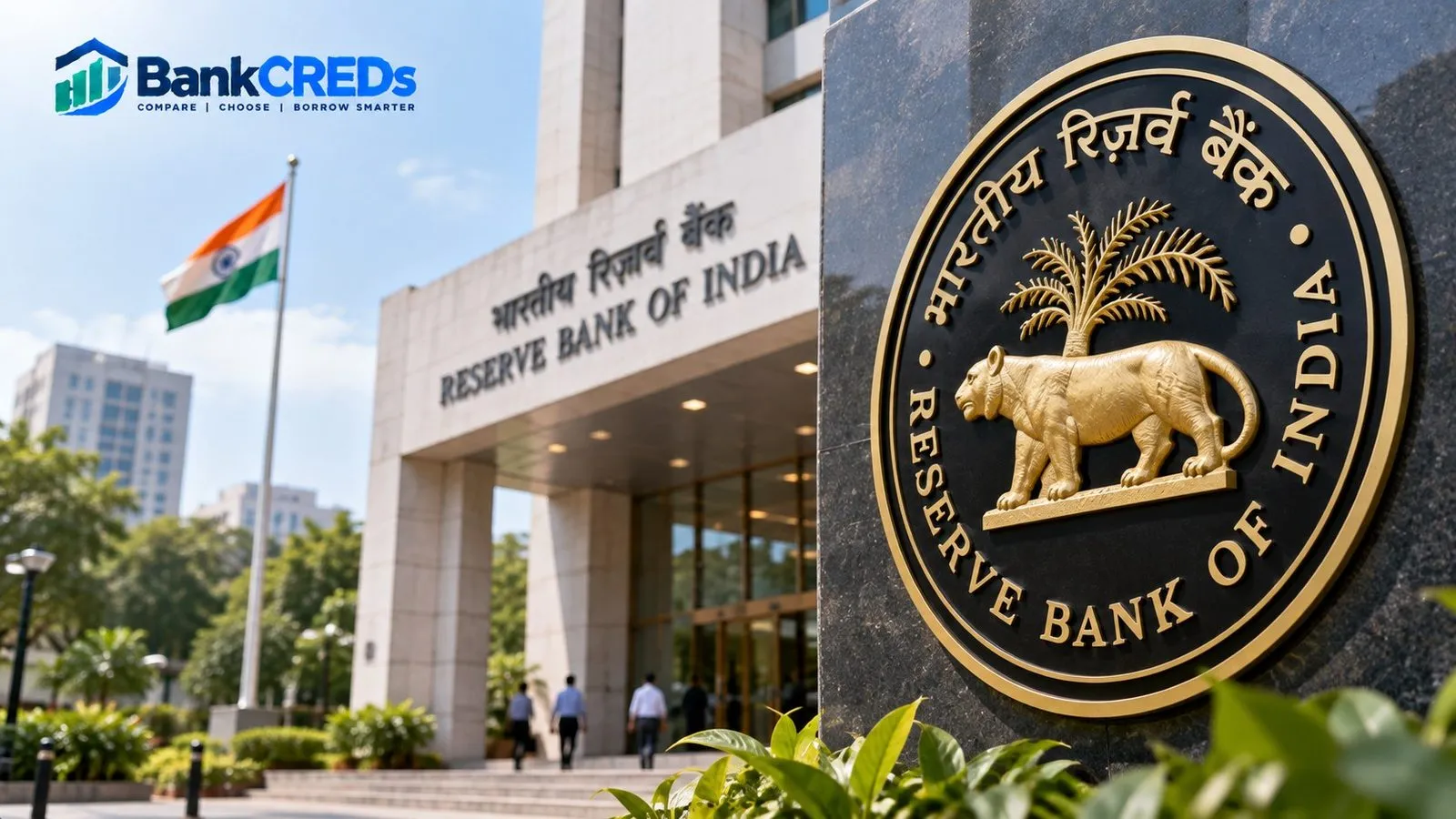
The Governor of the Reserve Bank of India has said that India's financial system has proved resilient and that the economy braved the West Asia crisis, according to reporting by The Times of India. For ordinary borrowers and savers, the plain meaning is that the banking system is functioning normally and the central bank sees no immediate stress in it.
That is reassuring, but it is not a rate announcement. The headline does not say that loan rates or deposit rates will change, and nothing in it alters your EMI today. What it does is shape the backdrop in which banks lend, price deposits and manage risk.
Below we explain what a statement like this does and does not mean, how stability connects to your EMIs and fixed deposits, and what sensible steps look like. We only know the headline as reported, so we avoid guessing at figures or quotes that the report may contain.
Key takeaways
- The RBI governor has described the financial system as resilient and said the economy coped with the West Asia crisis, as reported by The Times of India.
- A resilience message is about system health, not an interest rate decision, so your current EMI and FD rate do not change because of it.
- Floating-rate loan costs depend on the repo rate path and your lender's spread, not on speeches alone.
- Deposits are insured up to ₹5 lakh per depositor per bank, so spreading large savings remains sensible regardless of the news.
- The practical response is routine: review your loan terms, keep an emergency fund and avoid decisions made out of fear or excitement.
What the governor's statement actually says
The reported message has two parts. First, the financial system, meaning banks, non-banking lenders, markets and payment infrastructure, remained stable through a period of geopolitical stress in West Asia. Second, the broader economy absorbed the shock without serious damage. Both are assessments of the past and present, not promises about the future.
We have not seen the full remarks, so we do not know which indicators were cited or what caveats were attached. Central bank speeches usually combine reassurance with a warning that risks remain, and readers should expect the same tone here. Treat the headline as a summary, and read the original reporting if you want detail.
It is worth noting why such statements are made. Confidence is itself a part of financial stability. Depositors who trust their bank do not rush to withdraw, and lenders who trust the system keep lending. A governor speaking plainly about resilience is partly describing conditions and partly helping to sustain them.
How a regional crisis can reach Indian households
A conflict in West Asia matters to India for reasons that are standing knowledge. The region is a major source of crude oil and a large destination for Indian workers, whose remittances flow home. It also sits on important shipping routes. When tension rises, oil prices, the rupee, inflation expectations and foreign investor flows can all react.
Those channels reach households in a few ways:
- Fuel and transport costs: higher crude can push up diesel, freight and eventually food prices.
- The rupee: a weaker rupee makes imports costlier, including electronics and fuel.
- Inflation and rates: if inflation looks threatened, the RBI may be slower to cut the repo rate or may even tighten.
- Markets: equity and bond prices can swing, which affects mutual fund values and returns.
- Remittances and jobs: families with members working in the region feel the effect directly.
The governor's comment suggests that, at least by the RBI's reading, these channels did not turn into a financial crisis. That is different from saying prices or costs were unaffected for every household.
What resilience means for your loan and EMI
Most retail floating-rate loans in India, including home loans, are linked to an external benchmark, commonly the RBI repo rate. When the repo rate moves, the lender's rate moves after the reset date, and your EMI or tenure adjusts. A stability statement does not by itself move the repo rate. That decision comes from the Monetary Policy Committee, which weighs inflation, growth and global conditions.
To see what a rate difference means in rupees, here is the EMI on a ₹50 lakh home loan over 20 years at three illustrative rates. These are examples from standard EMI arithmetic, not current market quotes.
| Interest rate (illustrative) | Approximate monthly EMI | Total repaid over 20 years (approx.) |
|---|---|---|
| 8.25% | ₹42,600 | ₹1.02 crore |
| 8.50% | ₹43,400 | ₹1.04 crore |
| 8.75% | ₹44,200 | ₹1.06 crore |
Each quarter-point step is worth roughly ₹800 a month, and nearly ₹2 lakh over the whole tenure. You can test your own numbers with the EMI calculators and compare the broader picture in our home loan guides. If your loan is floating, confirm with your lender how quickly changes in the benchmark are passed on to you.
What it means for savers and fixed deposits
For savers, a calm system supports confidence in banks, but it does not set your FD rate. Banks price deposits based on their funding needs, the liquidity in the system and the repo rate. If rate cuts are expected, banks may trim deposit rates; if they are not, rates may stay flat.
Here is a simple comparison of what a ₹1,00,000 deposit earns in one year with quarterly compounding at two illustrative rates:
| Illustrative FD rate | Interest after one year (approx.) | Maturity value (approx.) |
|---|---|---|
| 6.50% | ₹6,659 | ₹1,06,659 |
| 7.00% | ₹7,186 | ₹1,07,186 |
The half-point gap is about ₹527 on a lakh. That is meaningful on large deposits, but it should not tempt you to chase the highest-paying institution without checking its safety. Deposit insurance covers up to ₹5 lakh per depositor per bank, including principal and interest, under the DICGC scheme. Anyone with more than that in one bank should consider splitting it.
Compare current tables on our interest rates page, and remember that the best FD rate on paper is not the best choice if it comes with weak safety or poor liquidity.
Who is affected and who is not
Not everyone feels this news in the same way. A rough guide:
- Floating-rate home loan borrowers: indirectly affected, because stability lets the RBI focus on inflation and growth, but no direct change today.
- Fixed-rate borrowers: not affected until refinancing or renewal.
- Personal loan and instant loan applicants: lenders' risk appetite tends to track stability, so a calm backdrop is mildly supportive, but approval still depends on your credit profile. See our personal loan guides and check eligibility before applying.
- FD investors and senior citizens relying on interest: exposed to the rate direction rather than the stability message.
- Households with Gulf-based family members: more exposed to the regional situation itself than to the financial system's health.
- Equity and mutual fund investors: markets can still swing on geopolitical news, whatever the banking system's condition.
In short, the statement is most relevant to people who worry about the safety of the system, and least relevant to anyone looking for a change in their monthly payment.
What to do now: a practical checklist
You do not need to react dramatically. These steps are sensible whether the news is good or bad:
- Check your loan type. Confirm whether it is floating or fixed, what benchmark it follows and when it resets.
- Compare your spread. If your lender charges a markedly higher spread than new borrowers pay, ask about a rate switch or consider a balance transfer after counting fees.
- Keep an emergency fund. Several months of expenses in an accessible account protects you from shocks of any kind.
- Respect the insurance limit. Keep any single bank's balance within ₹5 lakh per depositor where practical, or accept the risk knowingly.
- Deal with regulated lenders only. Check that an NBFC appears on the RBI's registered list before borrowing or depositing.
- Avoid panic moves. Do not break deposits early or prepay and drain your cash reserves because of a headline.
If you hold gold, remember that its price reacts to global uncertainty. You can track the day's price on our gold rate today page, though a stable domestic system is not a signal to buy or sell.
Common mistakes to avoid
The first mistake is reading reassurance as a rate signal. A resilient system can coexist with unchanged, higher or lower rates, depending on inflation and growth. The second is assuming that because the system is stable, every lender is equally safe. Individual institutions differ, and checking regulatory status still matters. The third is chasing returns after hearing good news, for instance locking money into long deposits or taking a large loan because conditions feel comfortable. The fourth is ignoring your own cash flow: your ability to pay an EMI depends on your income and obligations, not on macroeconomic commentary.
On outlook, much depends on how the West Asia situation develops, on oil prices and on inflation. The RBI's own communications and the next policy announcement will be a better guide to rates than any one speech. Follow developments on our news hub and plan for a range of outcomes rather than a single forecast.
Frequently asked questions
Does the RBI governor's statement change my EMI?
No. An EMI changes only when your lender revises its rate, usually after a change in the benchmark such as the repo rate, or when you alter your loan terms. A statement on financial stability is not a rate decision. Check your loan agreement for the reset schedule.
Are my bank deposits safe after the West Asia crisis?
According to the reported remarks, the governor sees the financial system as resilient. Independently of any news, deposits are insured up to ₹5 lakh per depositor per bank through DICGC, covering principal and interest combined. Keeping large sums spread across banks adds a further layer of protection.
Will FD rates rise because the economy handled the crisis well?
Not necessarily. FD rates depend on banks' funding needs, liquidity and the RBI's rate stance. A stable system does not by itself push deposit rates up, so compare offers from regulated banks rather than waiting for a trend.
Should I prepay my home loan now?
That depends on your finances, not on this headline. Prepayment reduces interest cost, but only make it after you have built an emergency fund and compared the saving with what your money could earn elsewhere. Use an EMI calculator to test the effect of a prepayment on tenure and interest.
Where can I read the original report?
The development was reported by The Times of India, and we have relied only on its headline. For the RBI's own positions on policy and stability, consult the central bank's official publications and notifications.
BankCreds analysis
The most useful reading of this story is also the least dramatic: it is a statement about the system, not about your household budget. A governor saying the financial sector stayed resilient tells you banks are adequately capitalised and payments and deposits kept working. It does not tell you that your loan rate will fall, that your FD rate will rise, or that your gold or equity holdings are safe from the next shock.
Take a salaried borrower with a ₹50 lakh home loan over 20 years. At 8.50% the EMI is roughly ₹43,400; at 8.75% it is roughly ₹44,200. A quarter-point difference is about ₹800 a month, or close to ₹1.9 lakh over the full tenure. That gap is decided by the repo rate path and your lender's spread, and neither is settled by a resilience statement. If you are comparing offers this week, the spread over the benchmark, the processing fee and the reset terms matter far more than the governor's tone.
Who gains, who does not
Savers with bank deposits gain a little in confidence, but the practical safeguard is unchanged: deposit insurance covers up to ₹5 lakh per depositor per bank, so larger sums are better spread across institutions. Borrowers on floating rates gain nothing mechanical today. Anyone hoping for a quick rate cut from this headline is over-reading it, and anyone panicking about the crisis should note that the stability message cuts against panic.
The honest takeaway is that the news is less important for your wallet than the headline suggests. This week, do the dull things: check whether your floating-rate loan has passed through earlier rate changes, confirm no single bank holds more than the insured limit of your savings, and keep an emergency fund of several months of expenses. Resilience in the system is a reason to stay calm, not a reason to change your plan.
This section is BankCreds' own assessment of what the development means for Indian borrowers and savers. It is independent commentary, not part of the source reporting above.
Sources & references
- The Times of India — originating report https://timesofindia.indiatimes.com/india/finance-system-resilient-economy-braved-west-asia-crisis-rbi-governor/amp_articleshow/134668307.cms
- Reserve Bank of India — central bank role in financial stability and monetary policy https://www.rbi.org.in/
- DICGC deposit insurance — deposit insurance cover of up to ₹5 lakh per depositor per bank https://www.dicgc.org.in/
Source links are shown as plain text, not clickable links. Copy a URL into your browser to read the original report.
Editorial note & disclaimer
How this was reported. The development above is attributed to the source or sources listed. BankCreds does not independently verify a third party's reporting; where a figure or a regulatory position is stated as fact, it is either attributed or drawn from the regulator's own published material. Everything under "BankCreds analysis" is our own assessment.
Rates and figures. Interest rates, per-gram values and premium bands quoted here are indicative, move daily, and differ by borrower profile, city and lender policy. Confirm the final number with the institution before you act on it — the sanction letter or policy schedule governs, not a news report.
Not financial advice. This article is general information for an Indian audience. It is not investment, tax, credit or insurance advice, takes no account of your circumstances, and BankCreds is not a lender, broker, distributor or advisor. Consider speaking to a SEBI-registered investment adviser or a qualified professional before acting.
Editorial policy · Fact-checking policy · Corrections policy · Our authors · About BankCreds · Contact us
Spotted an error? Corrections are published, not quietly edited — write to us via the contact page and see our corrections policy.