


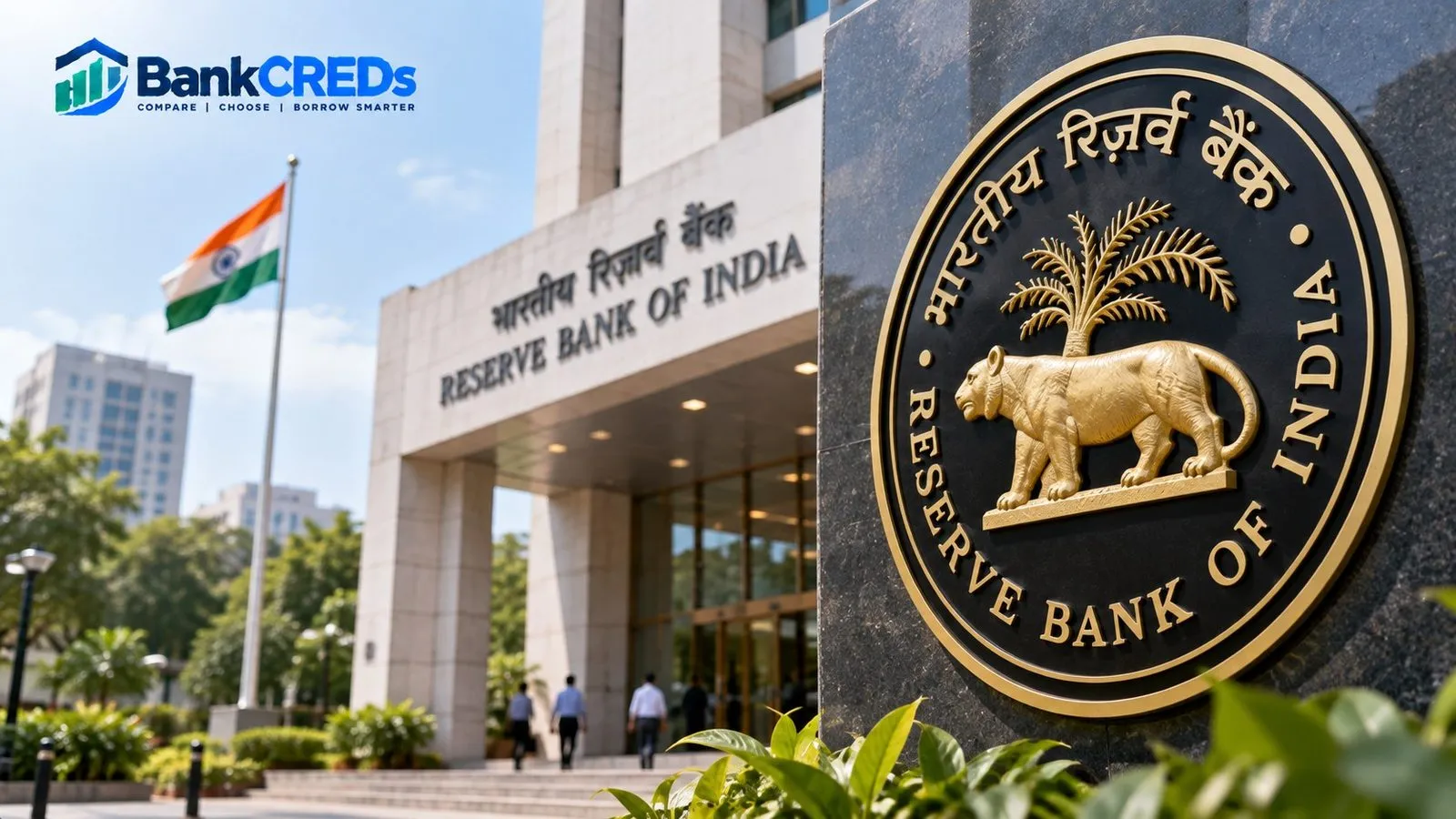
According to reporting by Business Standard, the RBI Governor has opened a financial inclusion camp in Maharashtra. The camp's focus is re-KYC, which means refreshing your identity details with your bank.
For you, the message is simple. If your bank asks you to update your KYC, do it soon. Delay can lead to limits on your account.
Key takeaways
- The RBI Governor opened a financial inclusion camp in Maharashtra, as reported by Business Standard.
- The camp's focus is re-KYC, the repeat identity check banks do.
- Banks refresh KYC every 2, 8 or 10 years, based on customer risk.
- A pending re-KYC can restrict your account, so act on any notice.
- Re-KYC is free at your own bank. Never pay a stranger for it.
What is re-KYC and how does it work?
KYC stands for Know Your Customer. It's the check a bank does to confirm who you are. You do it once when you open an account.
Re-KYC is the repeat check. Your address, phone number or documents may change over the years. So banks must refresh their records now and then.
RBI's KYC rules set how often this happens. The gap depends on how risky the bank sees your account. Most small savers fall in the low-risk group.
| Risk level | Re-KYC gap | Typical profile |
|---|---|---|
| High risk | At least every 2 years | Large or complex transactions |
| Medium risk | At least every 8 years | Moderate account activity |
| Low risk | At least every 10 years | Salaried or small-balance savers |
If nothing has changed for you, many banks accept a simple self-declaration. If something has changed, you may need fresh documents.
What changes for savers and borrowers?
The camp itself doesn't change any rule. What it does is push more people to finish their pending updates. That matters more than it sounds.
Here's a simple example. Say you opened a savings account ten years ago. It holds Rs 10,000 and earns about 3% a year, or roughly Rs 300.
Now your bank sends a re-KYC notice and you ignore it. The bank may limit your account until you update. You can't withdraw your money easily.
It gets worse if a loan EMI of Rs 6,000 is set to auto-debit from that account. A failed debit can bring a bounce fee. It can also hurt your credit record. You can check what a monthly instalment costs with our EMI calculator.
Who is affected by the re-KYC push?
Almost every account holder is affected in some way. Some groups need to pay extra attention:
- People whose accounts are ten years old or more.
- Anyone who has moved house or changed phone number.
- Senior citizens who rarely visit a branch.
- Farmers and homemakers in villages, where camps like this reach.
- Borrowers whose EMIs come out of a single savings account.
If you plan to apply for a loan soon, clean KYC helps. Lenders check your records. You can see where you stand with our eligibility check.
What should you do now?
Start with a few easy steps. None of them cost money.
- Look for SMS, email or app messages from your bank about KYC.
- Check that your address and mobile number are current.
- Visit your bank branch, or use the bank's own app or website.
- Carry your ID and address proof if you must go in person.
- Keep the acknowledgement slip or message after you update.
Be careful of fake calls and links. Scammers often claim your account will close today unless you share an OTP. Your bank never needs your OTP, PIN or card number for re-KYC. If you want to compare what your savings earn, see our interest rate tables.
Frequently asked questions
Is re-KYC the same as opening a new account?
No. Re-KYC only updates your records on the account you already have. Your account number stays the same.
What happens if I don't complete re-KYC?
Your bank may put limits on the account after giving you notice. You can usually restore full use once you submit the update.
Do I have to go to a camp to do re-KYC?
No. You can do it at your own bank branch. Many banks also offer it through their app or website.
BankCreds analysis
Don't over-read this news. A camp is an outreach event. It isn't a new rule, and it doesn't change your deadline.
The real value is for people who are easy to miss. Think of a farmer or a homemaker with an account from ten years ago. A frozen account can bounce a Rs 6,000 loan EMI. The bounce fee can be a few hundred rupees plus GST. Your credit record can also suffer. That costs far more than the ten minutes re-KYC takes.
What to do this week
Check your bank's messages and your passbook. If your address or phone number changed, say so. If nothing has changed, many banks let you just confirm it. Don't pay anyone for this. Re-KYC is free at your own bank.
This section is BankCreds' own assessment of what the development means for Indian borrowers and savers. It is independent commentary, not part of the source reporting above.
Sources & references
- Business Standard — originating report https://www.business-standard.com/finance/news/rbi-guv-opens-financial-inclusion-camp-in-maharashtra-focuses-on-re-kyc-126112100936_1.html
- RBI Master Directions — KYC rules and periodic updating of customer records https://www.rbi.org.in/Scripts/BS_ViewMasDirections.aspx
- Reserve Bank of India — Regulator that sets KYC norms for banks https://www.rbi.org.in/
Source links are shown as plain text, not clickable links. Copy a URL into your browser to read the original report.
Editorial note & disclaimer
How this was reported. The development above is attributed to the source or sources listed. BankCreds does not independently verify a third party's reporting; where a figure or a regulatory position is stated as fact, it is either attributed or drawn from the regulator's own published material. Everything under "BankCreds analysis" is our own assessment.
Rates and figures. Interest rates, per-gram values and premium bands quoted here are indicative, move daily, and differ by borrower profile, city and lender policy. Confirm the final number with the institution before you act on it — the sanction letter or policy schedule governs, not a news report.
Not financial advice. This article is general information for an Indian audience. It is not investment, tax, credit or insurance advice, takes no account of your circumstances, and BankCreds is not a lender, broker, distributor or advisor. Consider speaking to a SEBI-registered investment adviser or a qualified professional before acting.
Editorial policy · Fact-checking policy · Corrections policy · Our authors · About BankCreds · Contact us
Spotted an error? Corrections are published, not quietly edited — write to us via the contact page and see our corrections policy.