


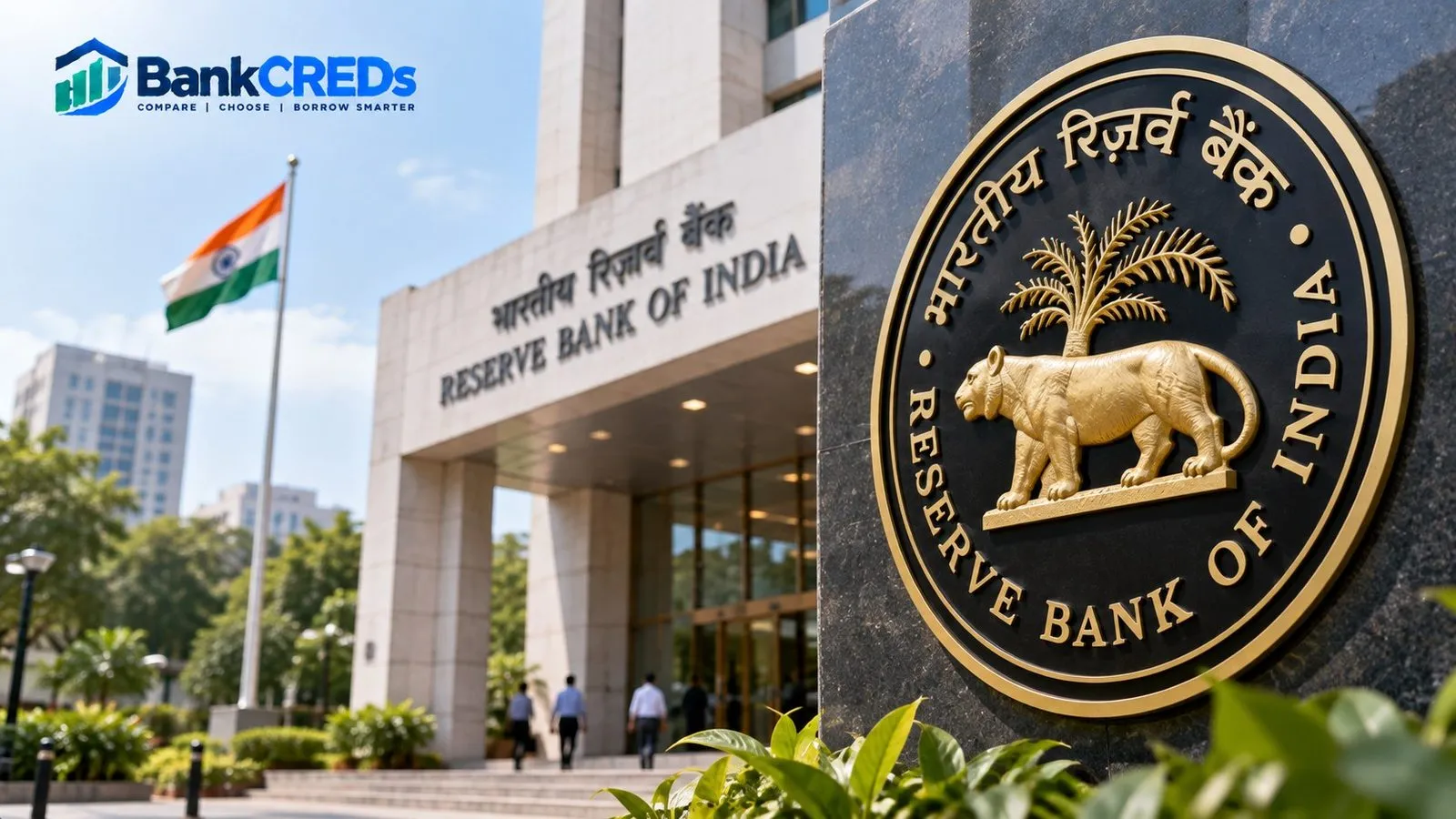
The Reserve Bank of India (RBI) has tightened its rules on rupee derivatives, according to reporting by Business Standard. The same report says RBI has widened a 20% cash reserve requirement.
For most households, nothing changes today. Your EMI (the fixed monthly loan payment) and your savings rate stay as they are. Any effect would reach you slowly, if at all.
Key takeaways
- RBI has tightened rupee derivatives rules, as reported by Business Standard.
- A 20% cash reserve requirement has been widened.
- Your existing EMI and deposit rates don't change because of this news alone.
- Watch for bank rate announcements over the coming weeks, not today.
- The RBI notice has the exact details, so read it before drawing big conclusions.
How rupee derivatives and cash reserves work
A derivative is a contract whose value depends on something else. Here, that something is the rupee's price against other currencies. Companies and banks use these contracts to protect themselves from sudden currency swings. Some traders also use them to bet on where the rupee will go.
Rules decide who can trade, how much they can trade, and what safety money they must keep aside. When RBI tightens these rules, it usually wants less risky betting and a steadier rupee.
A cash reserve is money set aside and kept safe. It can't be lent out or used for trading. A wider 20% requirement means more money gets locked up.
The headline doesn't spell out exactly who must hold this reserve. We won't guess. The RBI notice carries the exact scope. You can follow updates on the news hub.
What changes for borrowers and savers
Money locked in a reserve can't earn a return. That's a cost for the institution holding it. Banks sometimes pass such costs on slowly, through slightly higher loan rates or fees. That's a possibility, not a promise.
Here's a simple example. Take a ₹30 lakh home loan for 20 years. The table shows how the EMI moves if a bank's rate changed by small steps. These numbers are illustrations, not forecasts.
| Interest rate | EMI on ₹30 lakh, 20 years | Change from 8.50% |
|---|---|---|
| 8.25% | about ₹25,563 | ₹472 lower |
| 8.50% | about ₹26,035 | no change |
| 8.75% | about ₹26,510 | ₹475 higher |
| 9.00% | about ₹26,992 | ₹957 higher |
Even a quarter-point rise adds only about ₹475 a month on this loan. You can test your own numbers with the EMI calculators.
Savers are even less likely to notice a change. Fixed deposit rates depend mostly on RBI's policy rate and on how much money banks need.
Who is affected
- Banks and firms that trade rupee derivatives feel it first, because their rules and costs change.
- Importers and exporters who hedge (protect themselves from) currency swings may see higher costs.
- Floating-rate borrowers could feel it later, only if banks raise their lending rates. A floating-rate loan is one whose rate moves with the market.
- Fixed-rate borrowers and fixed deposit holders are unlikely to notice anything.
What to do now
You don't need to rush. A calm check is enough.
- Don't switch loans or break deposits because of this headline.
- Check whether your loan is floating or fixed.
- Note your current interest rate and compare it with the rate tables.
- Read messages from your bank about any rate change.
- If you plan to borrow soon, run your numbers on the EMI calculator first.
Frequently asked questions
Will my home loan EMI go up because of this?
Not directly. This is a rule change for derivatives and reserves, not a repo rate hike. Your EMI only changes if your bank changes its lending rate.
What is a cash reserve requirement in simple words?
It's money that must be kept aside and can't be lent out. A higher requirement locks up more money. That makes it a little costlier for the institution to do business.
Does this affect my fixed deposit or savings account?
It's unlikely. Deposit rates follow RBI's policy rate and bank funding needs. This news doesn't change either one by itself.
BankCreds analysis
This headline sounds big, but your wallet barely feels it this week. Rules like this target traders and banks, not savers or home buyers.
Here's the over-reading to avoid. A tighter derivatives rule isn't a rate hike. RBI's repo rate matters far more for your EMI. That's the rate at which RBI lends to banks.
Who gains and who loses
A salaried borrower with a ₹30 lakh floating loan has little to fear. A small exporter who hedges the rupee may pay more for cover. Say hedging costs rise ₹5,000 per shipment. Over ten shipments, that adds ₹50,000 a year. Such firms should ask their bank for a fresh quote. Everyone else can wait for the full details.
Treat this as a watch item, not an action item. Check your own loan type before anything else.
This section is BankCreds' own assessment of what the development means for Indian borrowers and savers. It is independent commentary, not part of the source reporting above.
Sources & references
- Business Standard — originating report https://www.business-standard.com/finance/news/rbi-tightens-rupee-derivatives-rules-widens-20-cash-reserve-requirement-126101300045_1.html
- Reserve Bank of India — RBI is the regulator that sets rules for banks and currency markets https://www.rbi.org.in/
- RBI notifications and circulars — Where RBI publishes the full text of rule changes https://www.rbi.org.in/Scripts/NotificationUser.aspx
Source links are shown as plain text, not clickable links. Copy a URL into your browser to read the original report.
Editorial note & disclaimer
How this was reported. The development above is attributed to the source or sources listed. BankCreds does not independently verify a third party's reporting; where a figure or a regulatory position is stated as fact, it is either attributed or drawn from the regulator's own published material. Everything under "BankCreds analysis" is our own assessment.
Rates and figures. Interest rates, per-gram values and premium bands quoted here are indicative, move daily, and differ by borrower profile, city and lender policy. Confirm the final number with the institution before you act on it — the sanction letter or policy schedule governs, not a news report.
Not financial advice. This article is general information for an Indian audience. It is not investment, tax, credit or insurance advice, takes no account of your circumstances, and BankCreds is not a lender, broker, distributor or advisor. Consider speaking to a SEBI-registered investment adviser or a qualified professional before acting.
Editorial policy · Fact-checking policy · Corrections policy · Our authors · About BankCreds · Contact us
Spotted an error? Corrections are published, not quietly edited — write to us via the contact page and see our corrections policy.