


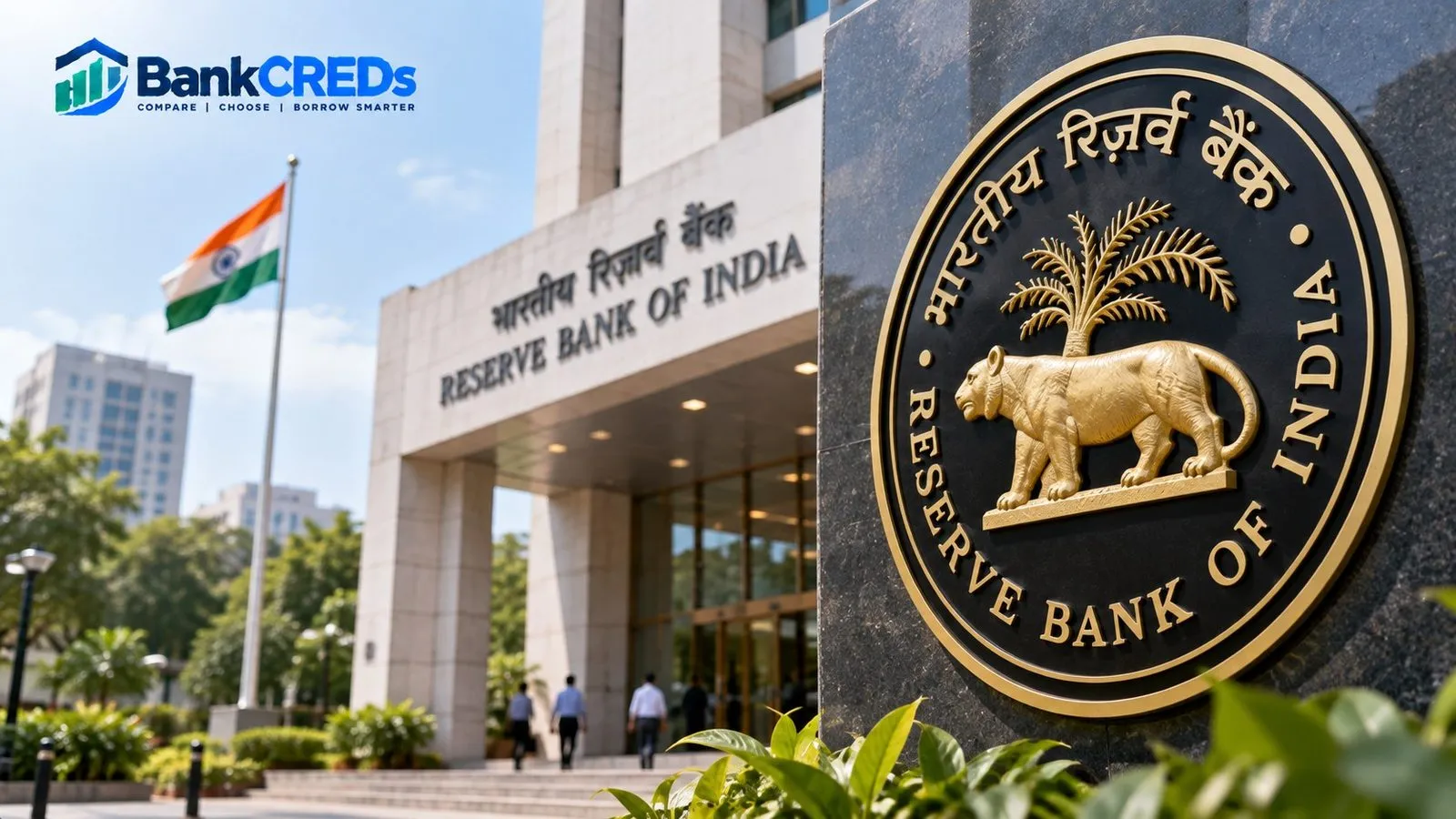
Business Standard reports that RBI has already answered its own listing question in the case of Tata Sons. In simple words, the regulator's earlier position appears to cover this matter.
For most borrowers and savers, nothing changes today. Your EMI, your deposit rate and your loan terms stay the same. This is a story about how big finance companies are regulated.
Key takeaways
- The report says RBI's own earlier stand already speaks to the Tata Sons listing question.
- This is about regulation of a large company group, not about your loan rate.
- Your EMI and deposit returns don't change because of this news.
- Check that any lender you use is registered with RBI.
- Watch for official RBI notices before you act on any headline.
How RBI treats big NBFCs, in simple terms
An NBFC is a non-banking finance company. It lends money like a bank but isn't a bank. RBI watches these firms closely.
Some years ago, RBI began sorting NBFCs into layers by size and risk. The biggest ones sit in an "upper layer." They face tougher rules because their failure could shake the wider system.
As a general rule, RBI's framework says upper layer NBFCs should list on a stock exchange. Listing means shares are open to the public. It brings more disclosure, and more people can see how the company is run.
According to the Business Standard report, RBI has already answered its own question on listing in this case. We only know the headline. So we won't guess at dates, numbers or what happens next.
What changes for borrowers and savers
Short answer: very little, right away. A listing or regulatory call on one company group doesn't set your loan rate.
Your rate starts with RBI's repo rate. That's the rate at which RBI lends to banks. Your lender's costs and your credit score also play a part. Here's a simple example. Say you take a ₹5 lakh personal loan for 3 years.
| Interest rate | Approx. monthly EMI | Approx. total interest |
|---|---|---|
| 10% a year | ₹16,134 | ₹80,800 |
| 12% a year | ₹16,607 | ₹97,900 |
| 14% a year | ₹17,088 | ₹115,200 |
See how the rate drives the cost? A 2 point gap changes your total interest by about ₹17,000. That matters far more than any listing news. You can test your own numbers with our EMI calculator.
Who is affected
The people most affected are the company's owners, investors and regulators. They care about disclosure rules and ownership.
Ordinary borrowers and depositors are affected only in a very indirect way. Stronger rules for large NBFCs aim to keep lenders safe. Safer lenders are good news for the whole system.
If you borrow from an NBFC, your loan agreement stays valid. Your repayment dates stay the same. Nothing in the headline asks you to do anything.
What to do now
You don't need to rush. Use this news as a prompt to tidy up your own money habits.
- Check your lender's name on the RBI list of registered NBFCs.
- Read your loan agreement for the rate type, fixed or floating.
- Compare your rate with today's market on our interest rates page.
- If your credit score has improved, ask your lender for a lower rate.
- Follow our news hub for official updates.
If you're planning a new loan, start with our personal loan guides. Compare at least three offers before you sign.
Frequently asked questions
Does this news change my loan EMI?
No. Your EMI depends on your loan rate and tenure. A regulatory decision on one company group doesn't change it.
What is an upper layer NBFC?
It's one of the largest and most important NBFCs, as sorted by RBI. These firms face tougher rules, because their problems could spread to others.
Should I worry about my deposits or loans with Tata group companies?
The headline gives no reason to worry. Check each lender's RBI registration, and read official notices for any change.
BankCreds analysis
This story matters more to company watchers than to everyday borrowers. Your loan rate depends on the repo rate (the rate RBI charges banks) and your own credit score. It doesn't depend on whether one holding company lists.
Take a ₹5 lakh personal loan for 3 years. At 12% your EMI is about ₹16,607. A listing decision can't change that number. Only a rate change or a better credit score can.
What not to read into it
Don't treat this as a signal about your bank or NBFC. Stricter rules for the biggest NBFCs are meant to make the system safer, not riskier. If you hold deposits, check that your lender is registered with RBI. That check is worth more than any headline.
This section is BankCreds' own assessment of what the development means for Indian borrowers and savers. It is independent commentary, not part of the source reporting above.
Sources & references
- Business Standard — originating report https://www.business-standard.com/opinion/columns/rbi-has-already-answered-its-own-listing-question-in-case-of-tata-sons-126112401094_1.html
- Reserve Bank of India — RBI rules for NBFCs, including the upper layer category https://www.rbi.org.in/Scripts/BS_ViewMasDirections.aspx
- RBI list of registered NBFCs — check whether a lender is registered https://www.rbi.org.in/Scripts/BS_NBFCList.aspx
Source links are shown as plain text, not clickable links. Copy a URL into your browser to read the original report.
Editorial note & disclaimer
How this was reported. The development above is attributed to the source or sources listed. BankCreds does not independently verify a third party's reporting; where a figure or a regulatory position is stated as fact, it is either attributed or drawn from the regulator's own published material. Everything under "BankCreds analysis" is our own assessment.
Rates and figures. Interest rates, per-gram values and premium bands quoted here are indicative, move daily, and differ by borrower profile, city and lender policy. Confirm the final number with the institution before you act on it — the sanction letter or policy schedule governs, not a news report.
Not financial advice. This article is general information for an Indian audience. It is not investment, tax, credit or insurance advice, takes no account of your circumstances, and BankCreds is not a lender, broker, distributor or advisor. Consider speaking to a SEBI-registered investment adviser or a qualified professional before acting.
Editorial policy · Fact-checking policy · Corrections policy · Our authors · About BankCreds · Contact us
Spotted an error? Corrections are published, not quietly edited — write to us via the contact page and see our corrections policy.